Top California Winery Releases Cool Climate Chardonnay And Pinot Noir Wines

As the sun glistened off the crystalline, turquoise-colored water, it consumed the young man with its sheer exquisite transparency, knocking the wind out of him as he couldn’t fully imagine its effect on him, as the pictures couldn’t do it justice. Then, a quick, deep breath filled his lungs with the unadulterated air, which gave his weary bones, subjected to too many harsh winters, a jolt of renewed life that was much needed.

Jeff Crawford, when recently graduated from high school in Minnesota, sought a different type of life experience and ended up living in Hawaii, working for an artisanal oyster mushroom farmer. Although he initially thought it would be an ideal way to briefly recharge after the intense pressures of having to map out his future, he ended up staying a lot longer than he intended.

It turned out that the man who ran the mushroom farm had once been a winemaker in Sonoma and introduced Jeff to many of California’s great wines. The aromas, flavors and textures blew his mind, and it opened his eyes to the transcendent experience these wines can have on the drinker. Wine quickly became a passion of his, especially since his boss, also a man he calls his mentor, would occasionally return to Sonoma to make wine as a hobby at one of his friend’s places. At a certain point, Jeff moved from Hawaii to Sonoma, where he assisted his mentor with winemaking to learn as much as possible. He became fascinated by every nuance involved in vineyards and wineries.

Jeff ended up working at a top winery in Napa Valley, Merryvale Vineyards, and through time worked himself up to the head winemaker position. One of the projects he is currently overseeing is relocating their Pinot Noir and Chardonnay production from Carneros to the Sonoma Coast, making a stronger commitment to Merryvale’s goal of crafting refreshing wines in a European style.

Merryvale Vineyards

Merryvale
Photo Credit: Merryvale Vineyards

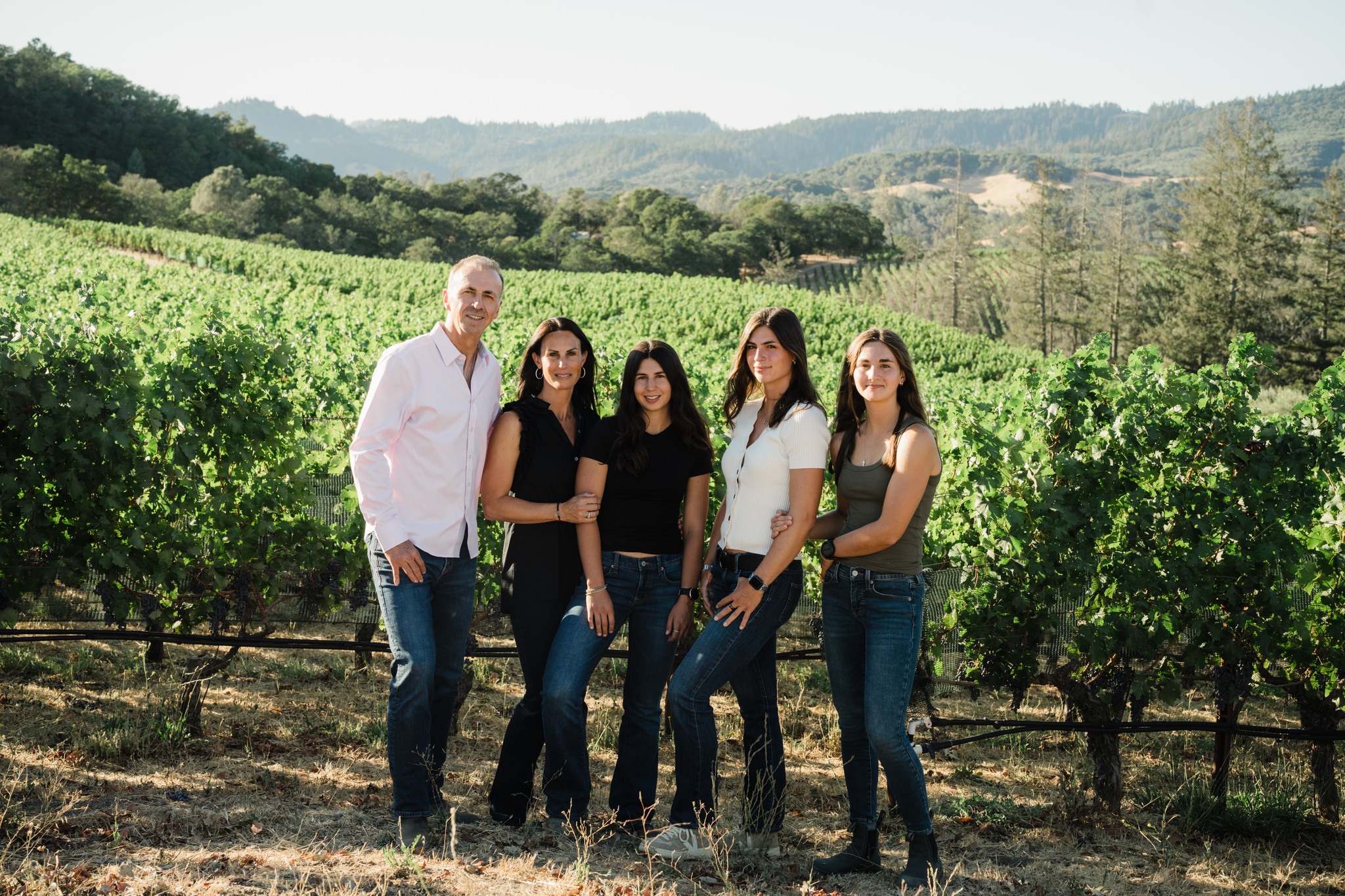
Merryvale Vineyards has a long history dating back to 1933 when it was established in St. Helena, Napa, under the name of Sunnyhill Winery, and a handful of wine legends made wine there. Its modern history began in 1983 when a small group of partners purchased the property, renaming it Merryvale. In 1991, Swiss-born Jack Schlatter joined that partnership, bringing his son, René, on board a few years later. The Schlatter family eventually became the sole owners of Merryvale, and put an intense focus on elegance-driven wines that possessed an overall European finesse.

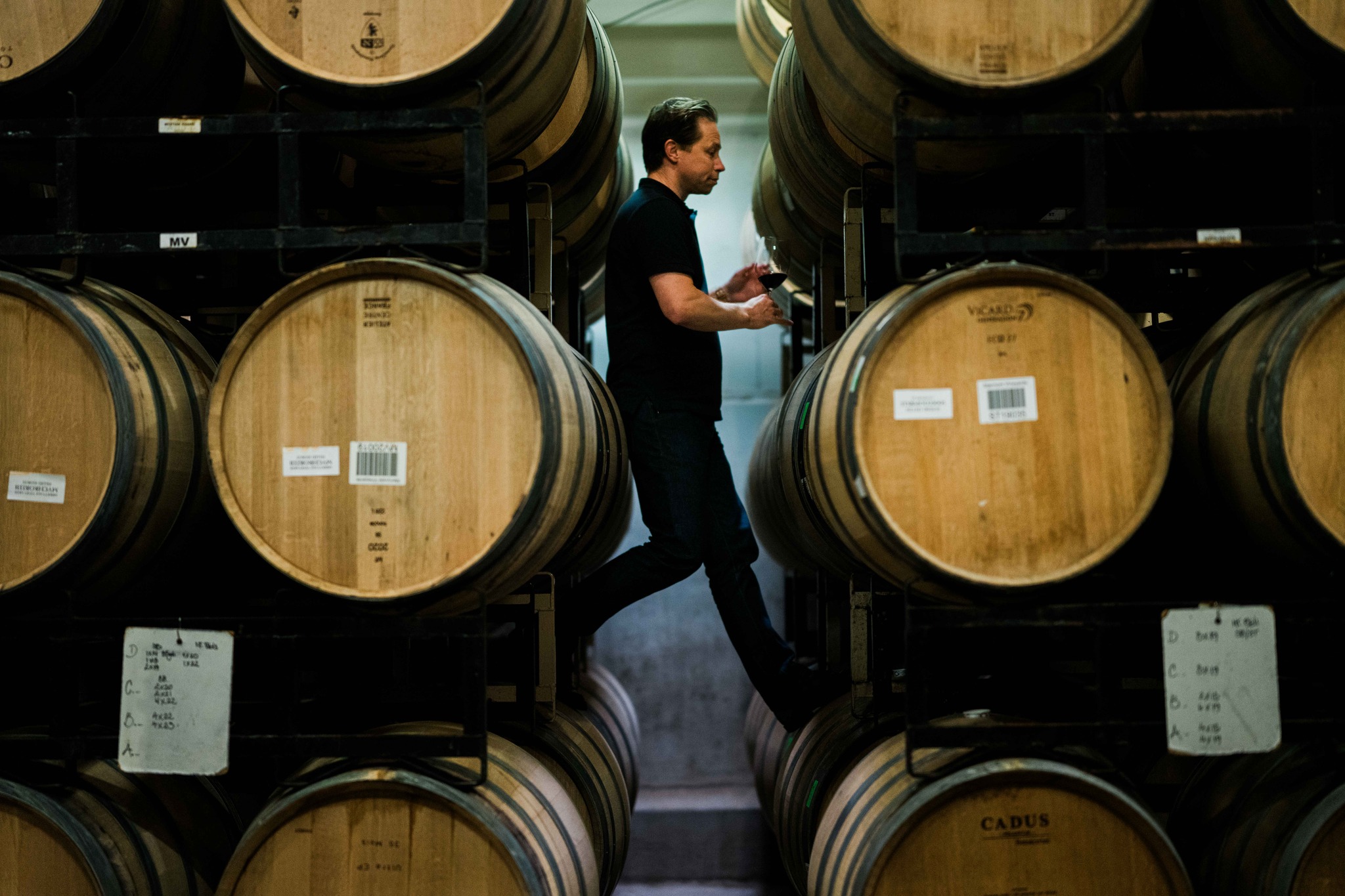
Jeff Crawford
Photo Credits: Merryvale Vineyards

As one would expect, Jeff Crawford ended up at such a leading Napa producer after attending one of the best universities for winemaking, U.C. Davis. However, what was unexpected was that he pursued a degree in economics, as wine had become such a wonderful passion in his life that he didn’t want to lose that passion by turning it into a career. But going to Davis allowed him to take a few viticulture and winemaking classes. As time went on, he started spending more time thinking about winemaking than he did economics. One day, he noticed an announcement for a job fair for viticulture and winemaking, and since they weren’t checking one’s degree at the door, he walked in and started talking to a bunch of different producers, telling them his story. He ended up getting hired by Merryvale for their sister winery, Starmont, which makes varietal wines from the cooler Napa sub-region of Carneros at an affordable price. First, he worked in their lab, making several small-batch fermentations and finding all the subtle adjustments that ideally conveyed the character of that particular grape from that area. Jeff has always been a detail-oriented person, which helped him in his degree in economics, but it gave him an incredible talent for zeroing in to the most minute qualities and having the passion to never stop trying to bring a precision, for example, such as learning to blend different plots by truly knowing the plots in a given vintage.

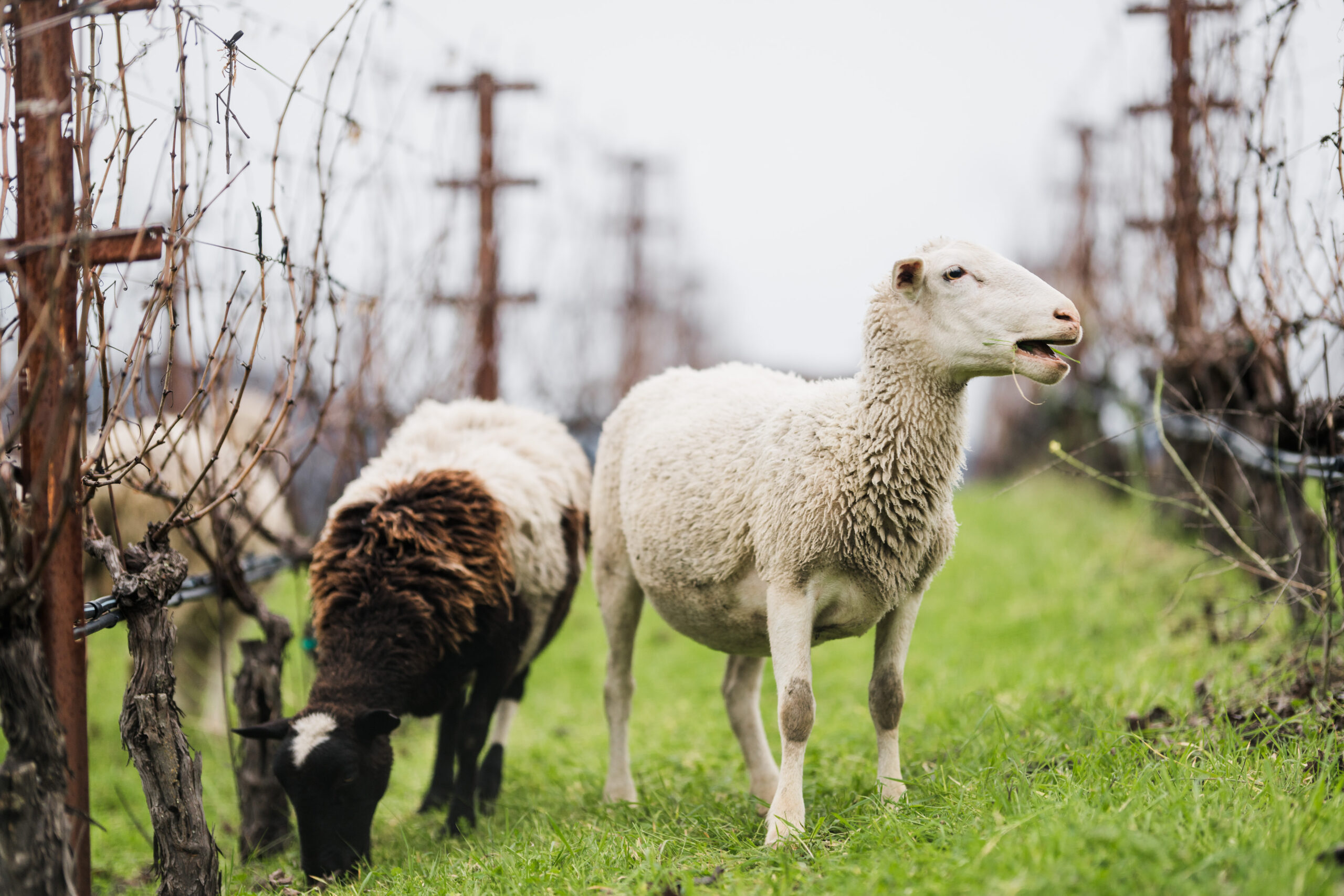
Sheep in their vineyards
Photo Credit: Merryvale Vineyards

Jeff was quickly promoted to cellar master of Starmont, and then, through time, he became the assistant winemaker and, finally, the winemaker. Early last year, he was promoted to the head winemaker position at Merryvale, as well as Starmont. In total, he has been working for Merryvale for 18 years, which is highly uncommon nowadays as the California wine industry typically experiences a lot of movement. But Jeff couldn’t be happier working for the Schlatter family as they are just as detail-oriented, and Jeff also shares their mission to express the most elegant aspects of Napa and Sonoma wines.

Previously, Merryvale made their ultra-premium Chardonnay and Pinot Noir wines from their Carneros vineyards, but they are now ready, with Jeff at the helm, to move closer to creating the epitome of elegance with these wines by relocating the production to the much cooler Sonoma Coast. They have released the inaugural vintage of their Sonoma Coast wines, 2022, and Burgundian techniques are employed in the winery, including the use of native yeasts for both wines and sur lie aging for ten months for the Chardonnay, as well as hand punch-downs for the Pinot Noir.

A Resume Only Says So Much

Schlatter Family
Photo Credit: Merryvale Vineyards

Every employer wants to find ideal employees, especially if they are eyeing a person who could fill one of the most critical roles in the future. Although there are obvious markers on one’s resume to look for, that doesn’t necessarily mean it will be a good long-term fit. The Schlatter family has, in the past, walked an unconventional path, as when they took over Merryvale in the early ’90s Napa was still young and the consensus among many other producers was to make big, bold wines. But Schlatter believed in Napa’s elegant beauty and stayed true to their values, and they were willing to invest more time and resources into seeking and preserving those graceful qualities.

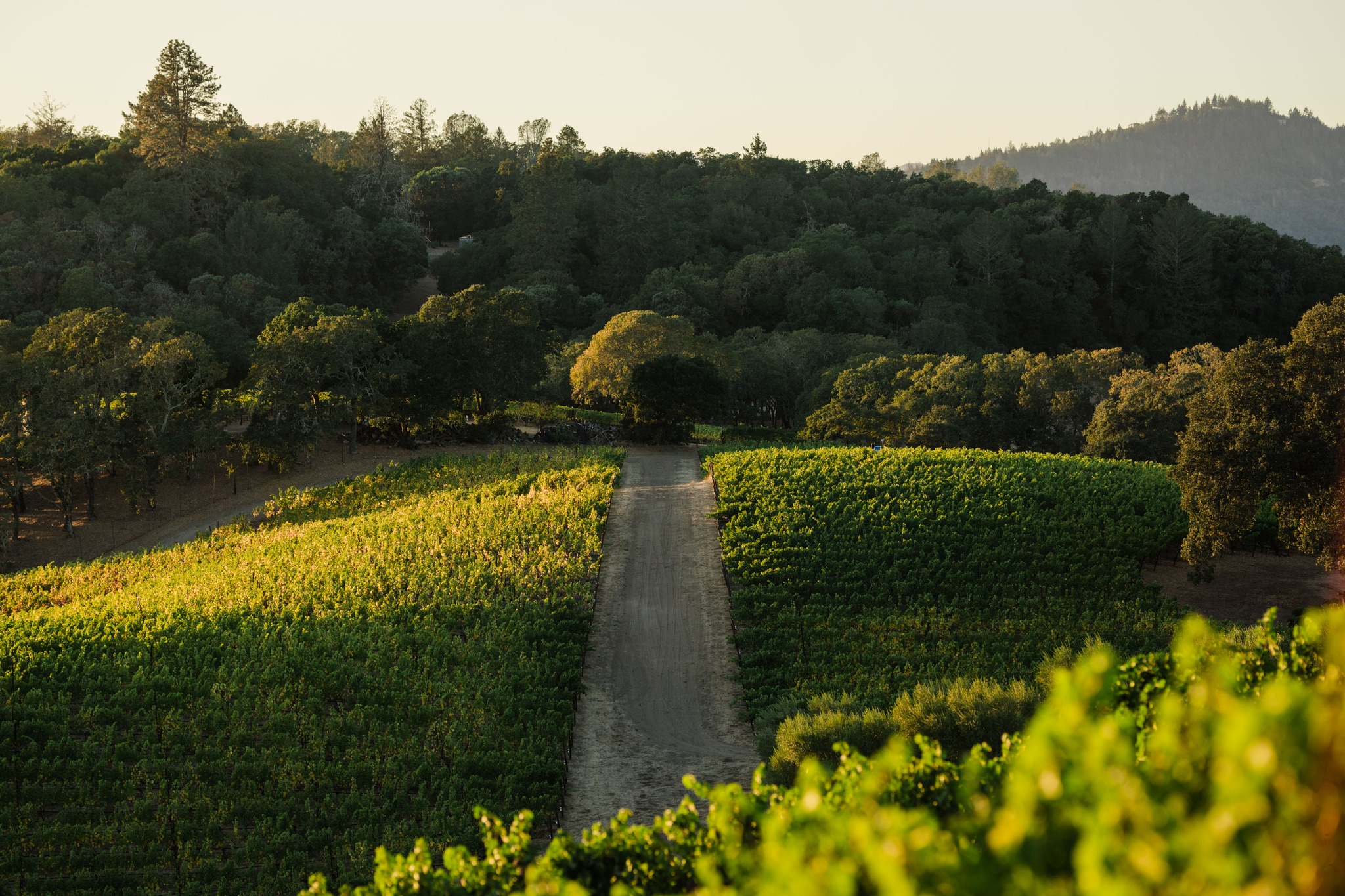
Profile Estate Vineyard
Photo Credit: Merryvale Vineyards

Perhaps they saw that passion in Jeff, not only a passion for drinking wine, but also for going beyond what is expected to achieve finding an ideal balance. This balance should have plenty of concentration yet harmony and nuanced complexity and texture, bringing an overall refined quality to the wines. Perhaps they saw someone who loved the details so much that he would be meticulous at every step of the way and thrived from such conscientious work that it filled him with enthusiasm. As Jeff explained perfectly, “There is a reason I have been here so long,” as he beamed with a genuine smile that showed a man who was right where he wanted to be.

It is interesting to think back to Jeff’s early life, the beginning of his journey into the world, and how afraid he was to lose his passion for wine if he made it his career. While he noted that U.C. Davis has a great economics program, there are many other universities he could have attended, and he chose the one with the prestigious winemaking program as well. But he could have never guessed that his own tendency to want to delve into every facet would significantly increase his love for wine as a winemaker rather than destroy it.

Sometimes, looking beyond the resume and getting to know the person can be extremely beneficial to a business, especially one that is near and dear to family owners, such as the Schlatters. And sometimes, it is the right step to take that leap when one is young so there are no regrets down the line. What destroyed others’ love for wine once they became a winemaker might be the very things that intensify that love for others.

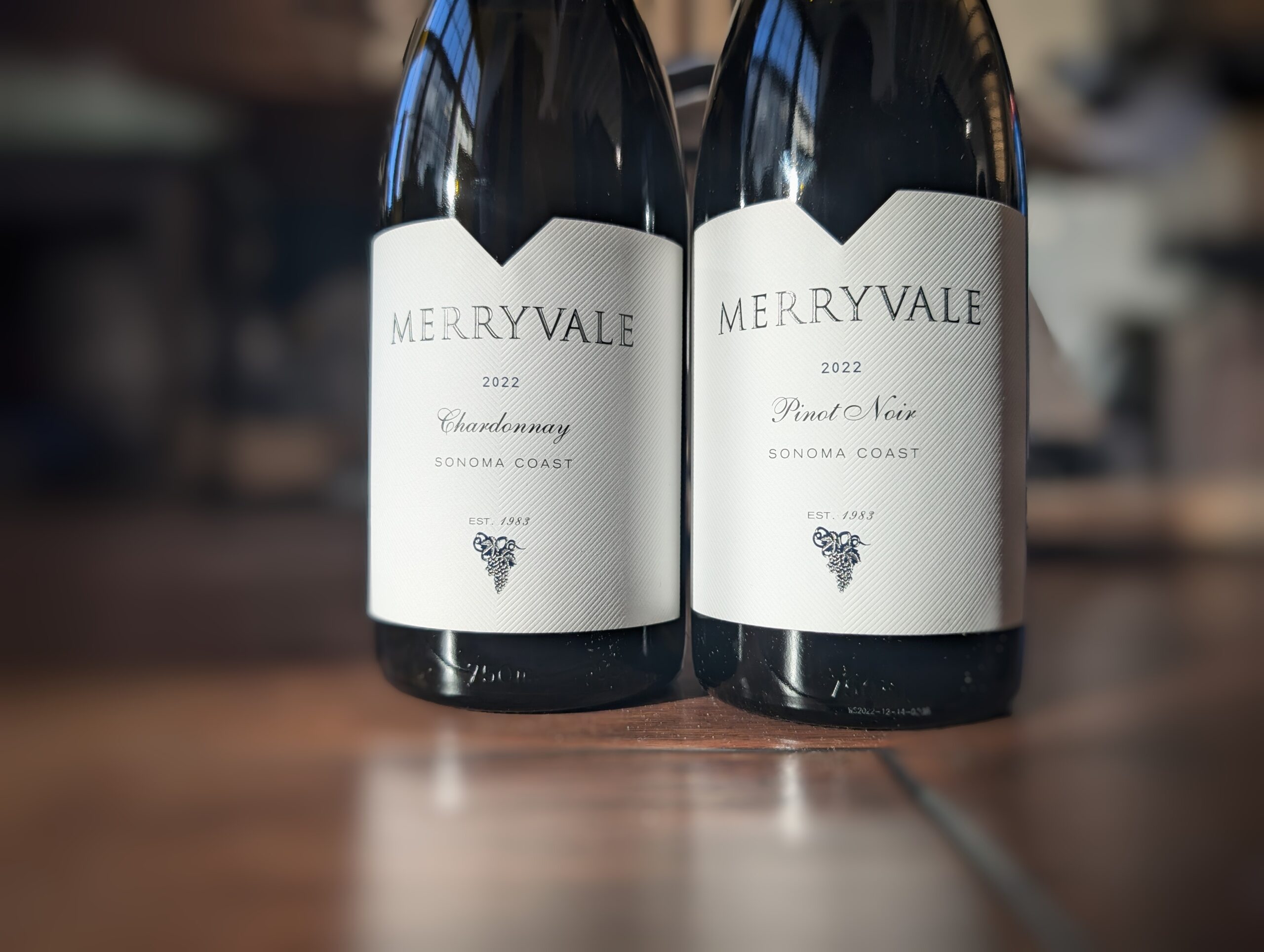
Merryvale, Sonoma Coast, Chardonnay and Pinot Noir
Photo Credit: Cathrine Todd
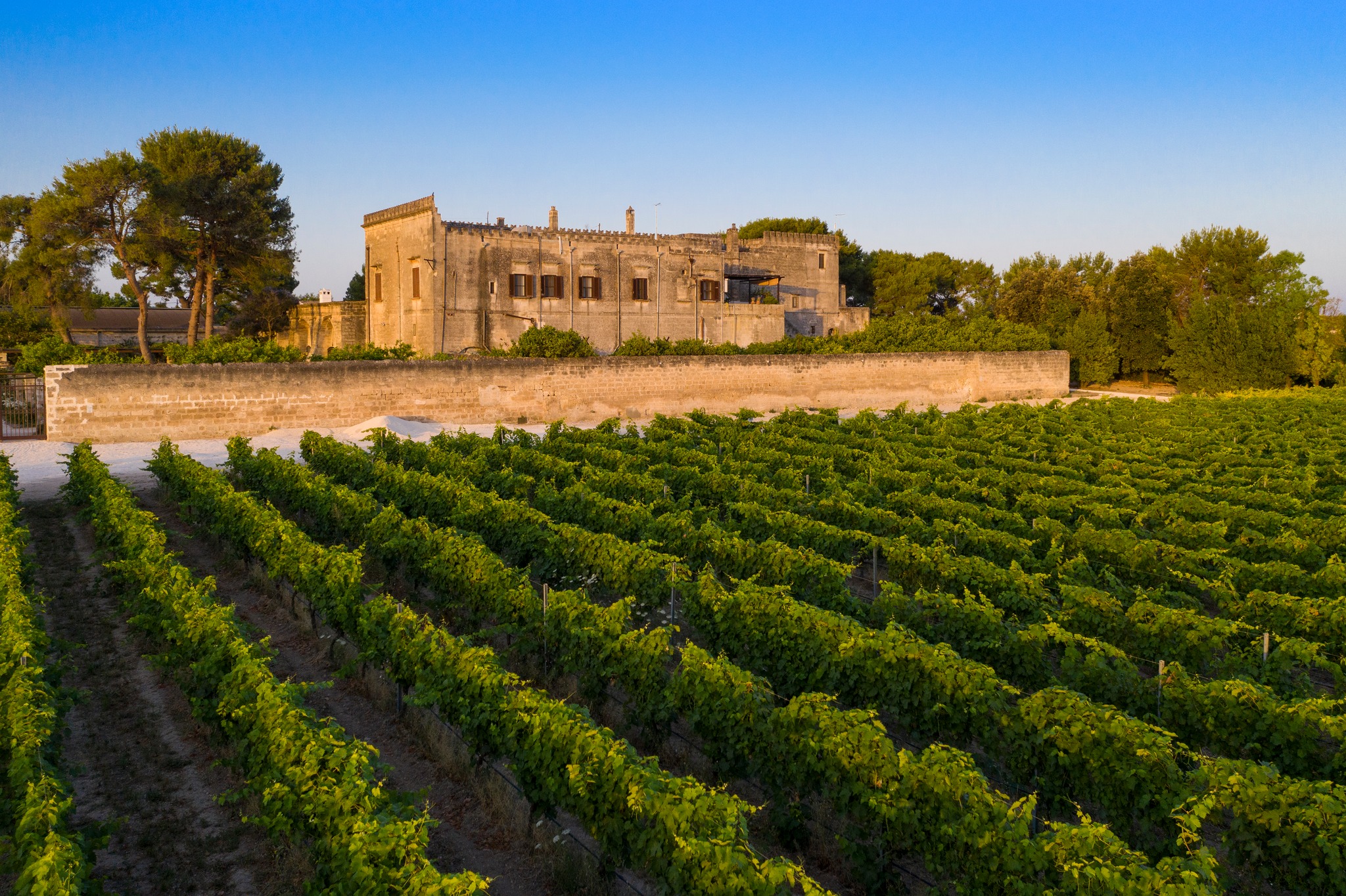
2022 Merryvale, Chardonnay, Sonoma Coast, California: 100% Chardonnay from the Keller Estate Vineyard, Taylor’s Crown Vineyard, Sunchase Vineyard and Stanly Ranch Vineyard. A multifaceted Chardonnay with wet river stones and lemon curd with a hint of spice that has lots of finesse on the palate with pristine nectarine fruit and lots of vitality with marked acidity that has a long, expressive mineral finish.

2022 Merryvale, Pinot Noir, Sonoma Coast, California: 100% Pinot Noir from the Sunchase Vineyard and Durell Vineyard. A strong sense of place from this Pinot Noir with broken earth and dry bark mingled with a juicy core of wild blackberries that is framed by fine tannins and finishes with delightful notes of grated nutmeg and sandalwood along the long length of flavor.

Merryvale, Sauvignon Blanc
Photo Credit: Cathrine Todd
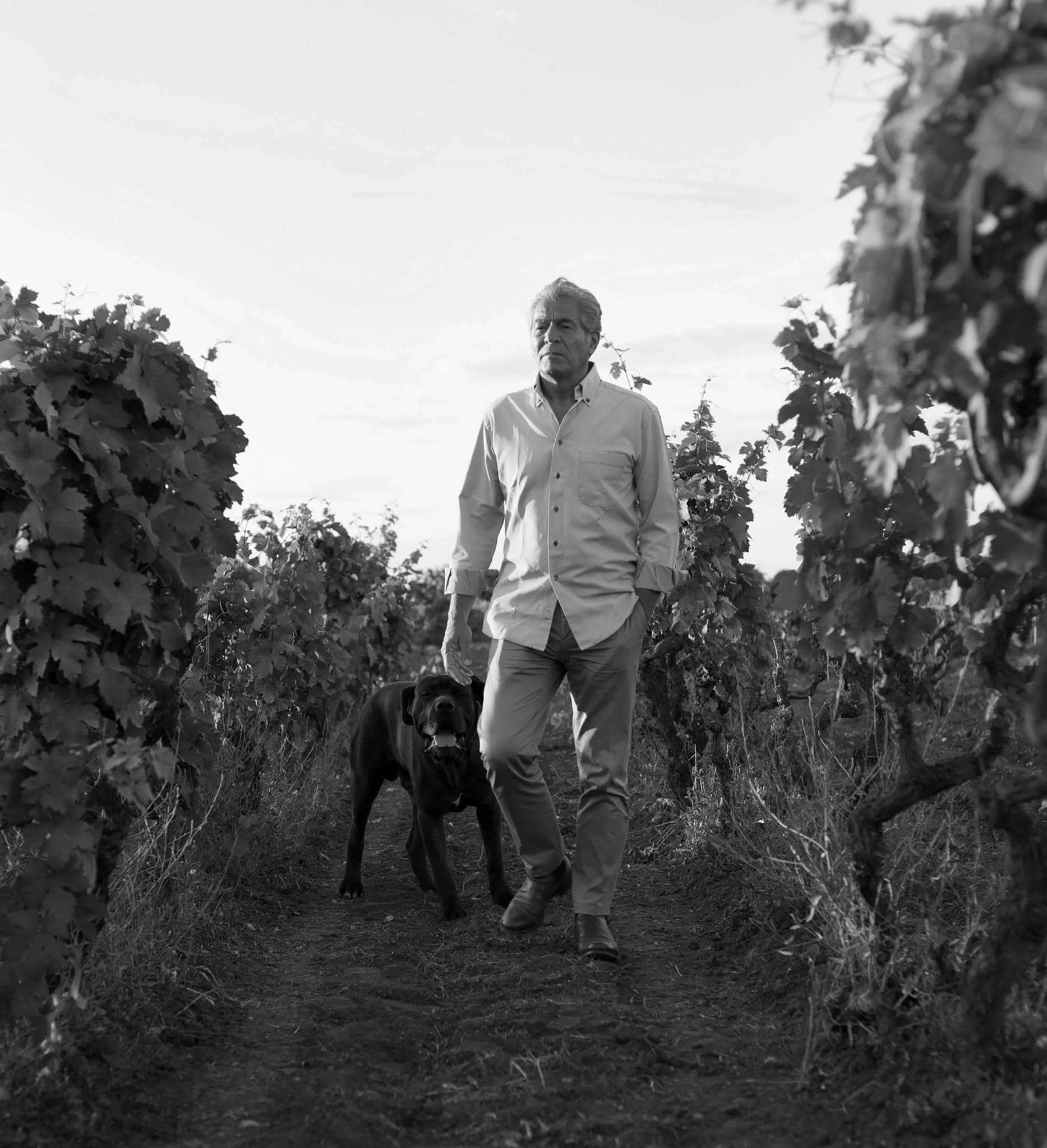
2023 Merryvale, Sauvignon Blanc Napa Valley, California: 100% Sauvignon Blanc from Whisky River Ranch Vineyard, Grigsby Vineyard and Fritz Vineyard. An overall harmonious quality to this Sauvignon Blanc, such as mouthwatering acidity with lots of fleshy fruit of peach cobbler flavors and honeycomb with a floral lift and exotic note of lychee syrup that brings another dimension.

2018 Merryvale, Cabernet Sauvignon, Napa Valley, California: 77% Cabernet Sauvignon, 17% Cabernet Franc, 4% Petit Verdot and 2% Malbec from the Profile Estate Vineyard, Stagecoach Vineyard, Hardman Vineyard, Stanton Vineyard, Sugarloaf Vineyard, Skellenger Vineyard and Amoenus Vineyard. A seamless balance and a truly class act with this meticulous, expressive Cab with blackcurrant fruit infused with tobacco and violets that becomes expansive on the palate with manicured tannins.

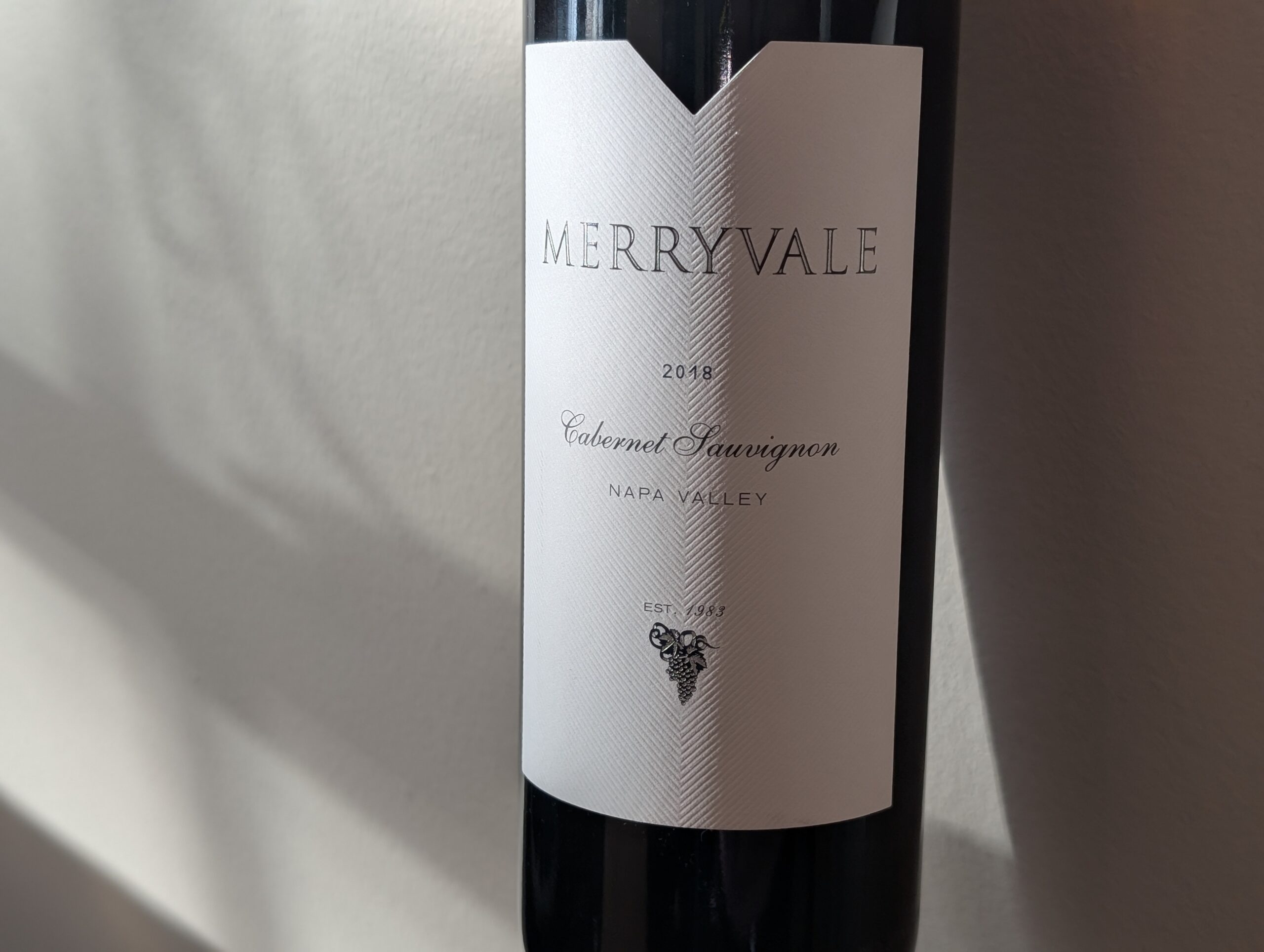
Merryvale, Cabernet Sauvignon
Photo Credit: Cathrine Todd
2018 Merryvale, Cabernet Sauvignon, St. Helena, Napa Valley, California: 98% Cabernet Sauvignon and 2% Petit Verdot. Sourced from Merryvale’s renowned hillside Profile Estate Vineyard, located at 800 feet in elevation, which solely sources their flagship wine ‘Profile.’ The grapes from this prestigious plot that make wine for long-term aging go into their top wine ‘Profile’ while the grapes that are more accessible in their youth will go into this St. Helena Napa Cab. Intriguing aromas of smoldering earth, cassis and graphite with a muscular, broad-shouldered structure balanced by mouthfilling fleshy fruit layered with olive leaves and slate with a prolonged length of flavor on the finish.

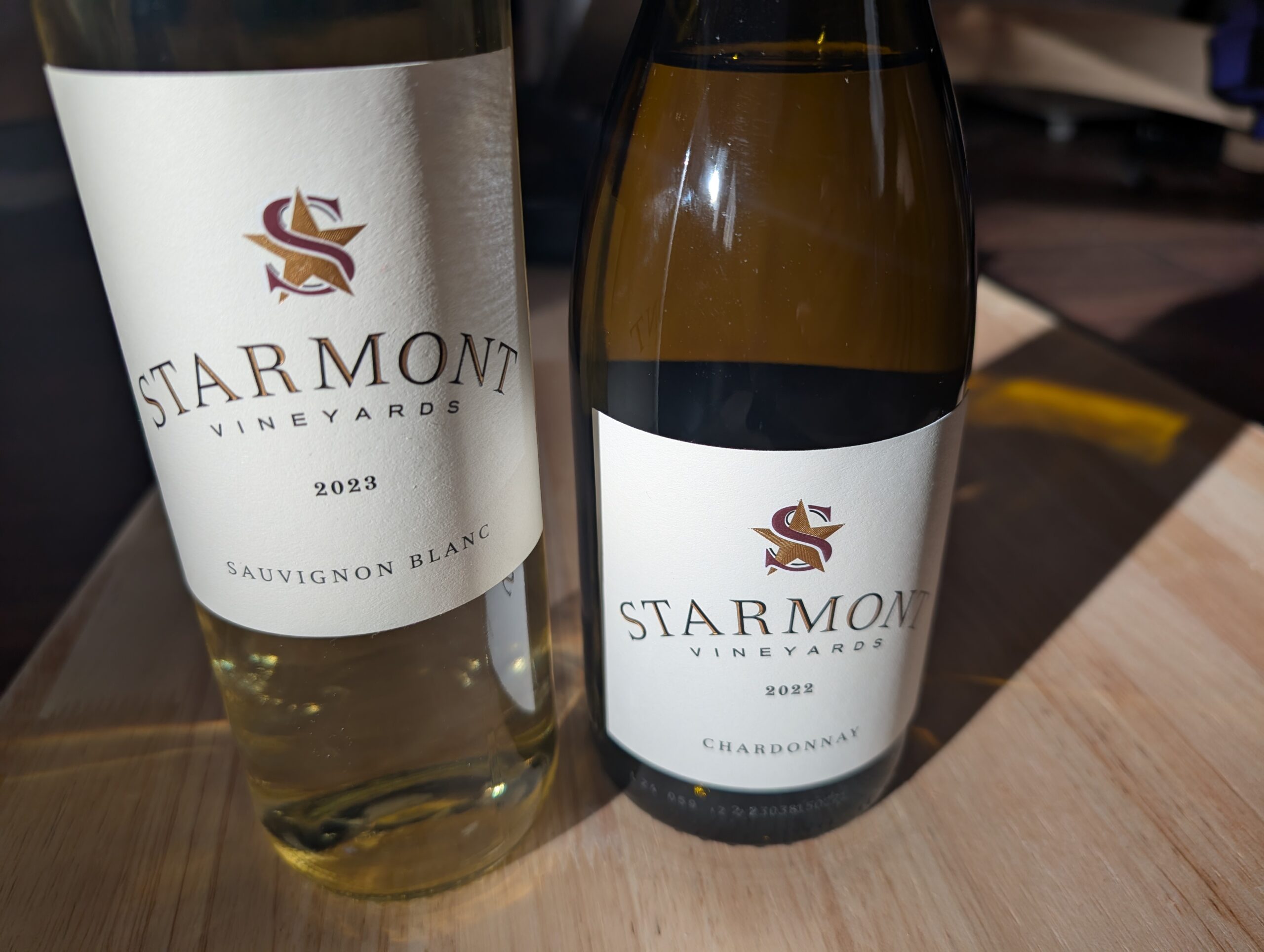
Starmont wines are single-varietal wines made in a fresh, classic style from cool climate regions in the North and Central Coast regions of California.

Starmont, Sauvignon Blanc and Chardonnay Photo Credit: Cathrine Todd
2023 Starmont, Sauvignon Blanc, North Coast, California: 100% Sauvignon Blanc. Even though this wine retails around only $20, it is impressive and shows Jeff’s attention to detail when blending as it has the brightness and zesty lift, the ideal amount of fruit and a touch of structure, giving it drive with lemon confit, apricot skin and kaffir lime leaf flavors, and it is simply just really delicious.

2022 Starmont Chardonnay, Tri-County, California: 100% Chardonnay. Priced similarly to the Sauvignon Blanc – another impressive bottling for the price point as it has a touch of complexity with chalky minerality, almonds and mandarin oil aromas merging with a hint of spice and lemon confit.

Posted in Dame Wine | Tagged , | Leave a comment

An Elegant Napa Valley Cabernet Sauvignon Wine With Finesse-Driven Power

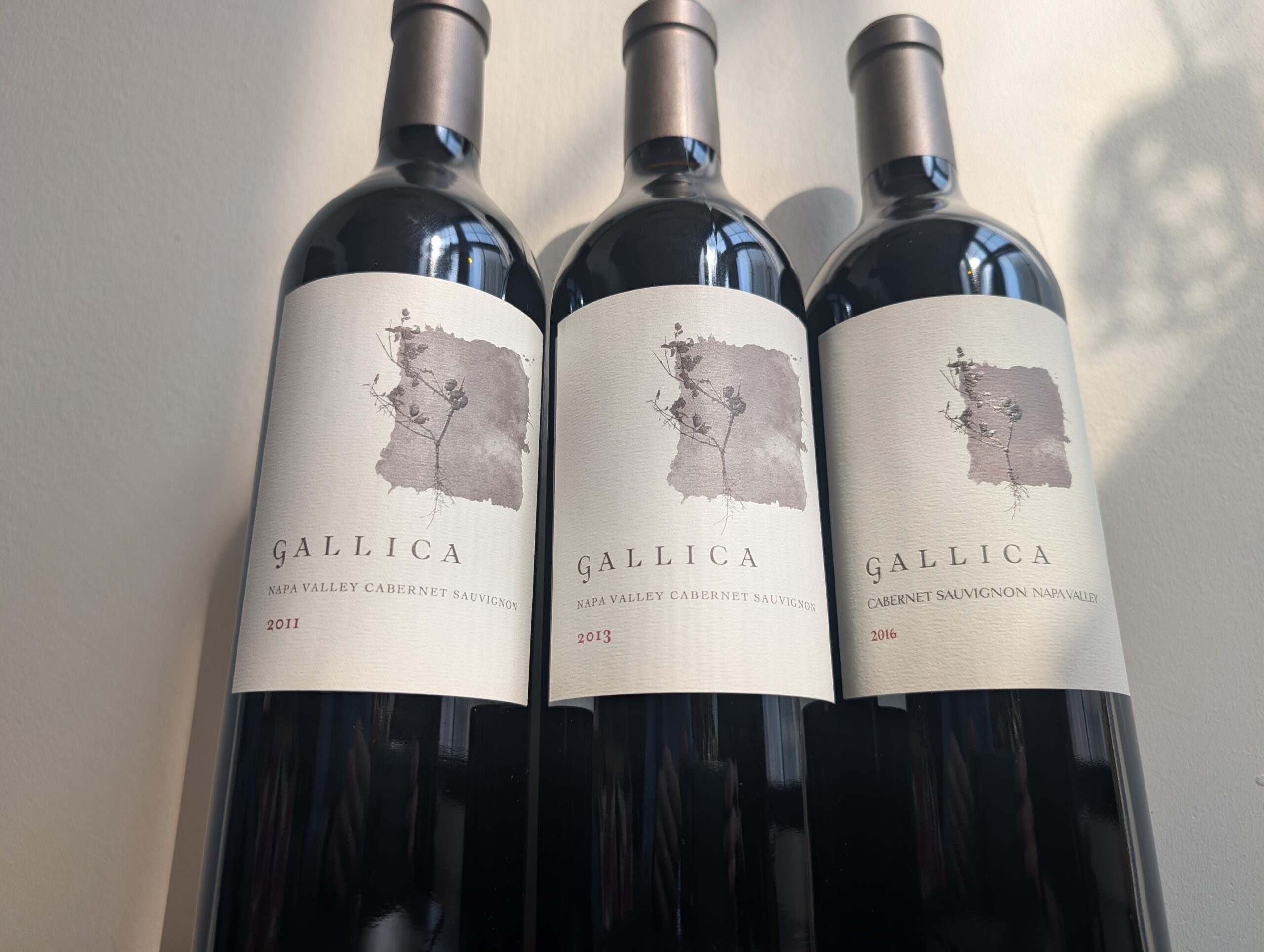
Gallica Cabernet Sauvignon
Photo Credit: Cathrine Todd
Each piece of cypress wood was precious as they came from a Japanese forest that was most prized for its timber, every piece aged for over 20 years, increasing their structural durability. The construction workers were not typical in the sense of hammering nails, gluing or using metal in the structure; no, it was as if they were artisans who had treated each segment of lumber with reverence as if they were lost artifacts. Yet, unlike an artifact, they use their extremely sharp tools to cut out shapes with precision, creating an ideal joint between two pieces of wood – no nails needed. But if just one of these joints is a little off, then it may be detrimental for the traditional Japanese home being built; in rare circumstances, a structure can last 1,000 years if enough excruciating care and detail are taken with each section, such as one of the oldest wooden structures in the world, the Hōryū-ji Temple in Nara, Japan.

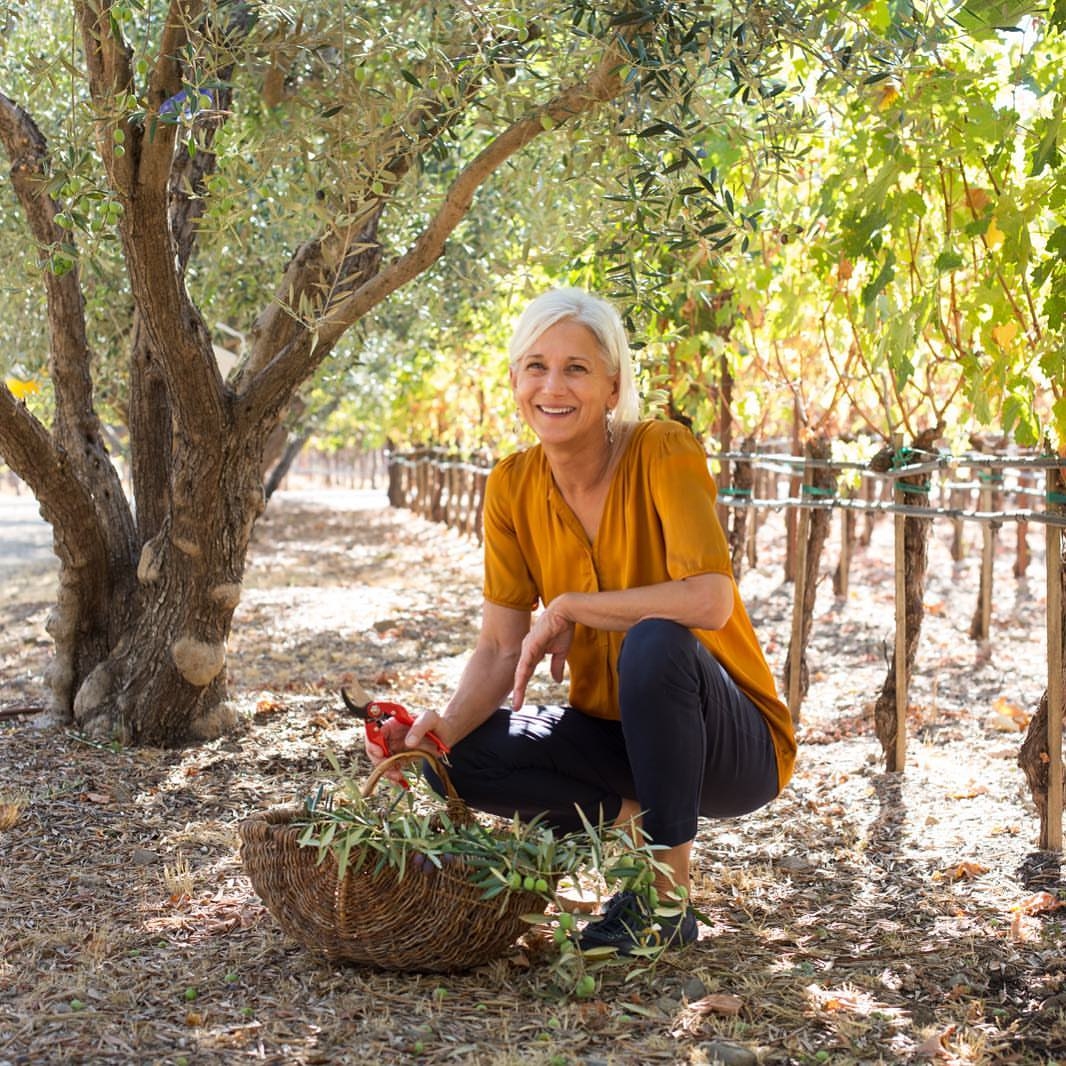
Rosemary Cakebread, winemaker and proprietor of Gallica Wine located in St. Helena, Napa Valley in California, is rooted in the best aspects of Japanese and California culture, and the results are some of the most aromatic, elegant Napa Cabernet Sauvignon wines with breathtaking purity at their core.

Intertwining Roads

Rosemary traveled a lot as a kid as her father’s work had taken them around the U.S. and, eventually, to Japan. Her family lived there for four years when she was an adolescent, and it opened her eyes to a whole new world. Over time, she became inspired by Japanese ceramics and art, evident in her wine labels. Much of Japanese aesthetic philosophy lies in accepting what nature gives and avoiding adulterating that at all costs, as once it is altered to fit a mold that it was not meant to fit, it loses its profound authenticity. This concept is expressed in art and plays a significant role in dealing with nature.

She finished high school in Sonoma, California, as her family wanted to make sure they relocated again so she could have an American education. But it took a little while for her to find her place in the small town of Petaluma, in Sonoma County, after living in a huge city like Tokyo. Just like how a mound of clay will inform the artist of how to shape it, bringing out its natural qualities and essence, it seems that Rosemary’s inner clay was destined to become a winemaker as she got a summer job on the bottling line at the historic Sebastiani winery. She was utterly overwhelmed with the legacy of the place – the founder came to Sonoma in the late 1800s as a stonemason and mined the Sonoma hills for cobblestones that were used to establish San Francisco’s streets, and after a time, he saved enough money to start his own winery. It was the type of story that seemed like an impossible fairytale, but there she was, in one of those dreams that seemed to come to fruition that was so particular to California.  

Those two periods in her life, happening at an age when one is open to major growth and evolution, intertwined into building the foundation for Rosemary’s wine career.

Gallica Wine

Rosemary Cakebread
Photo Credit: Gallica Wine

After graduating from U.C. Davis’s Viticulture and Enology program, she worked at a few different wineries, with Spottswoode located in St. Helena, Napa Valley, notably being one of them. Their vineyard was certified organic, so Rosemary received a lot of hands-on experience working with organic vineyards at a very early stage of her career, and today, with her Gallica wines, she only works with organically farmed grapes. Despite loving the places she worked, she wanted to make her own wines where every choice represented her mission to find the finesse within powerful wines, such as those Cabernet Sauvignon wines produced in Oakville, Napa Valley.

Rosemary’s Napa Cabernets have garnered a small, strong following since she has quietly made them without needing to promote them on a grand scale as she only produces around 1,000 cases per year. She makes other wines, such as an Albariño white wine from Lodi and a Grenache from Sonoma, all from organically certified vineyards. Yet, she is always grateful for those who appreciate her wines enough to become part of her mailing list membership, as those are the devoted customers that drive her to keep delivering that beautiful purity that she has become known for over the years. She will also keep her cellar stocked with past vintages, holding back more of the best years to release them to Gallica Wine members once she feels that they have evolved to express other fascinating facets of that vintage.

Trusting What Nature Gives

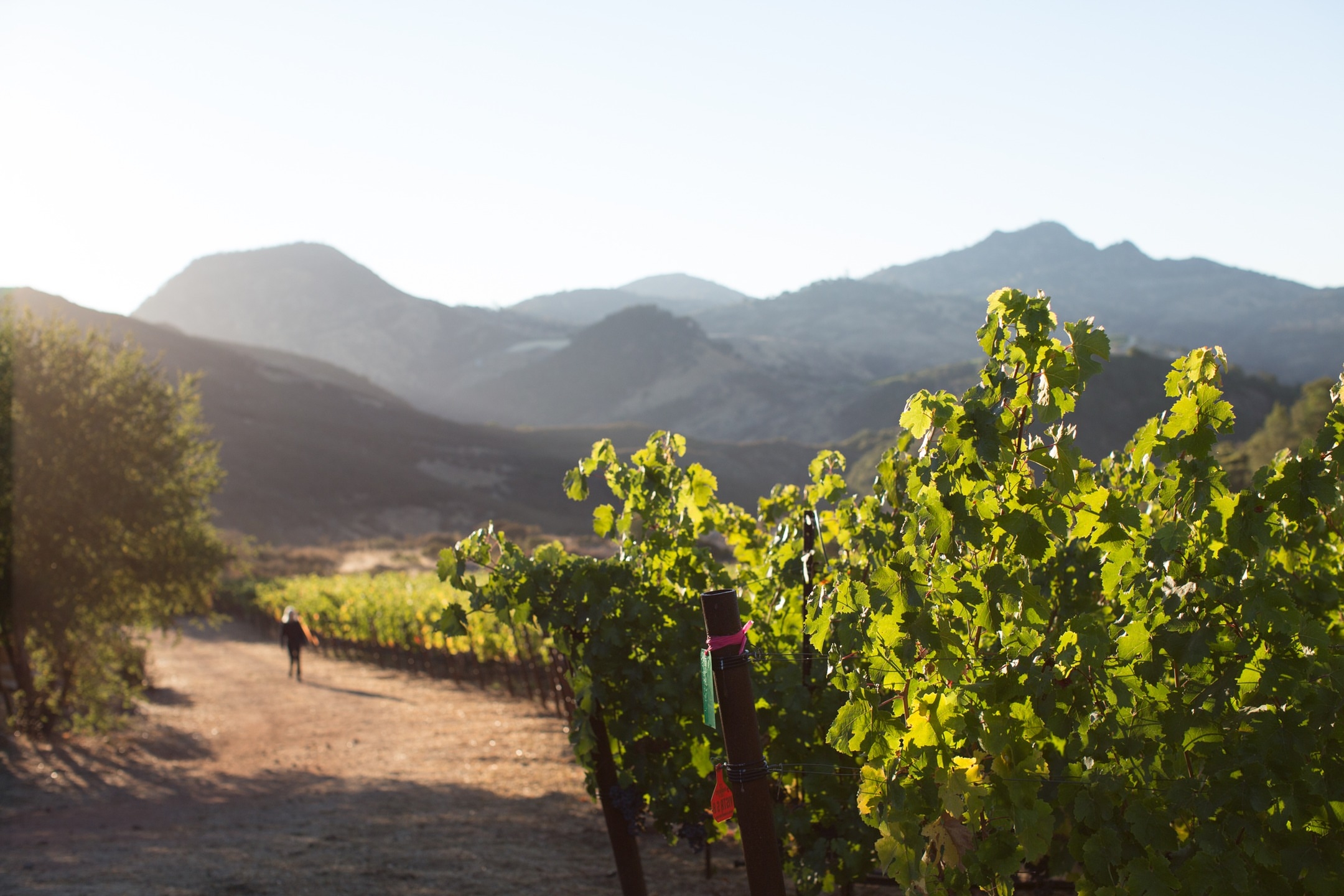
Oakville Ranch Vineyard
Photo Credit: Gallica Wine

“I try to build elegance at every stage,” noted Rosemary, from the vineyards through all the different stages in the winery. But now she is taking it a step further, a big step further, as she and her husband are replanting their estate vineyard in St. Helena, Napa Valley. They pulled out the vines on their two-acre property after the 2024 harvest, then prepared the ground – the previous vineyard was certified organic, and the future one will be as well. A cover crop was planted on their low-fertility Cortina soils, and she will plant Cabernet Sauvignon Clone 4, which produces low yields with small berries that will be head-trained as bush vines, and she intends to dry farm. Hence, much care is being taken to set up the vineyard so that irrigation will not be needed. Since there are only two acres, it will be a tiny production, but it will bring Rosemary closer to her mission of building elegance at every stage.

Rosemary knows the idea of looking for elegance in Cabernet Sauvignon is counterintuitive as it is known as a big, structured wine that can age for decades, and she is replanting a vineyard that will seemingly produce very concentrated fruit. Yet true elegance comes from allowing nature to create its own sense of balance, understanding that one’s main job is to protect that essence, which is more profound than any highly manipulated process could achieve. Rosemary noted that she is always looking to keep those beautiful aromatics, finesse in the mouthfeel and potential for extended aging, but if she can get that with a wine that is also a showstopper that, in her mind, is when it becomes amazing. She feels that she has found that with the 2023 vintage, which is thrilling to note considering her ability to make uniquely exquisite wines even in less celebrated vintages, so one can only imagine what she can achieve in an exceptional year.

Just like in the Japanese culture, she will always respect what nature will give, just like an artist needs to respect the essence of that piece of wood or mound of clay. So she embraces the generosity of the California sun that allows for ripe fruit and tannins by not adding too much in the vineyards or the winery which would take away from the pure expression of what nature is giving in a particular moment, and like the traditional Japanese home, going beyond what is necessary to skillfully and patiently carve out those pieces that form structurally sound joints so nails are not needed – allowing for the beauty of the wood pieces to speak for themselves.

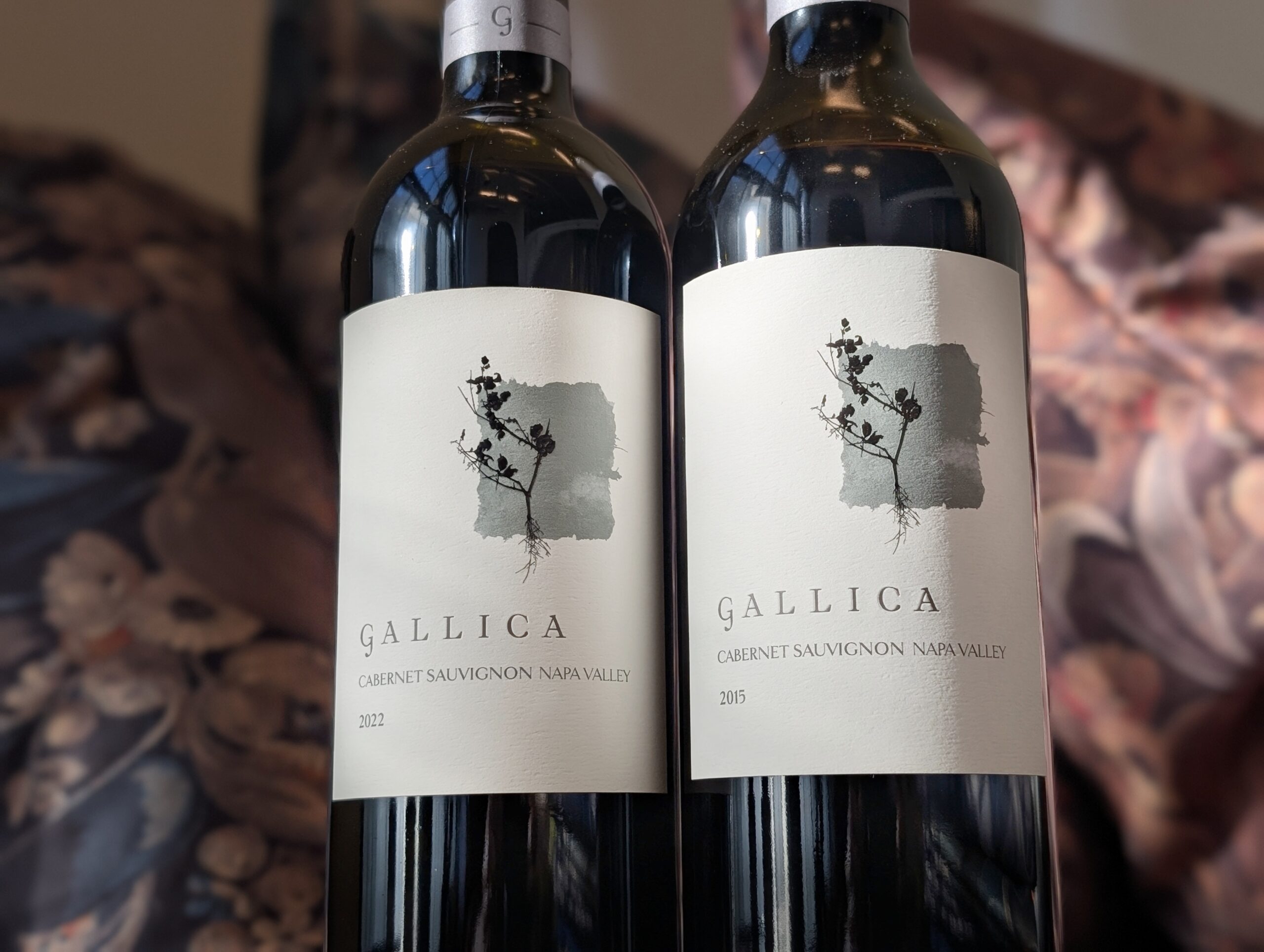
Gallica Cabernet Sauvignon
Photo Credit: Cathrine Todd
2022 Gallica, Cabernet Sauvignon, Oakville Ranch Vineyard, Napa Valley, California: 84% Cabernet Sauvignon and 16% Cabernet Franc from the Oakville Ranch Vineyard located between 900-1,200 feet in elevation that is California Certified Organic Farming. The 2022 vintage received plenty of water during the winter, fortifying the soil well for the vines to successfully handle the warm, dry season with a heat wave during Labor Day weekend; those who picked before the heat wave, like this vineyard, did very well. Lifted aromatics immediately enchant with multilayered notes of pressed rose petals, forest floor and bright red cherry fruit with a touch of plushness on the palate and fine textured tannins with lots of brambly fruit that has a lot of drive on the expressive finish.

Gallica Cabernet Sauvignon wines
Photo Credit: Cathrine Todd
2016 Gallica, Cabernet Sauvignon, Oakville Ranch Vineyard, Napa Valley, California: 83% Cabernet Sauvignon and 17% Cabernet Franc. Rosemary noted that this was a “modern yet cooler growing season.” An inviting wine with notes of blueberry cobbler intermixed with engaging layers of fresh thyme and tar with flavors of red cherry coulis and tobacco leaf with a background aroma of graphite that has silky tannins and a linear finish that concentrates the flavors into a powerful articulation of its core notes.

2015 Gallica, Cabernet Sauvignon, Oakville Ranch Vineyard, Napa Valley, California: 75% Cabernet Sauvignon and 25% Cabernet Franc. The fourth year in a row of drought and cold weather during flowering led to a lower crop yield, and many excellent wines have been made, yet it is not as consistent across the board as the 2016 and 2013 vintages. Intriguing nose of smoldering earth that is balanced by perfumed notes of violets and warm raspberries with juicy cassis flavors with a firmer structure than 2016 yet there is a graceful quality to the texture with a fierce minerality underneath the delectable fruit.

2013 Gallica, Cabernet Sauvignon, Oakville Ranch Vineyard, Napa Valley, California: 75% Cabernet Sauvignon and 25% Cabernet Franc. Rosemary noted that the 2013 was “a classic vintage for the Napa Valley.” A potent terroir-driven nose with gravelly rocks, Mediterranean brush and crushed stones with dark fruit flavors slightly enhanced by a note of Black Forest cake and scents of Earl Grey tea and every nuance of this wine is interwoven with a delineated minerality that is all wrapped up in etched tannins that form an intricate lace-like structure.

2011 Gallica, Cabernet Sauvignon, Napa Valley, California: 96% Cabernet Sauvignon and the rest Petit Verdot and Cabernet Franc. A “cold 2011 predicted for doom aging into greatness,” as she illustrates with this lovely 2011, after 14 years of aging, that has over-delivered by evolving into a deliciously complex wine. A multidimensional bouquet with an impressive complexity of strawberry compote sprinkled with ribbons of basil with a hint of black pepper intermixed with tree bark and cigar box with well-integrated tannins that has a satin finish.

Below is the Albariño white wine and Grenache red wine that Rosemary produces:

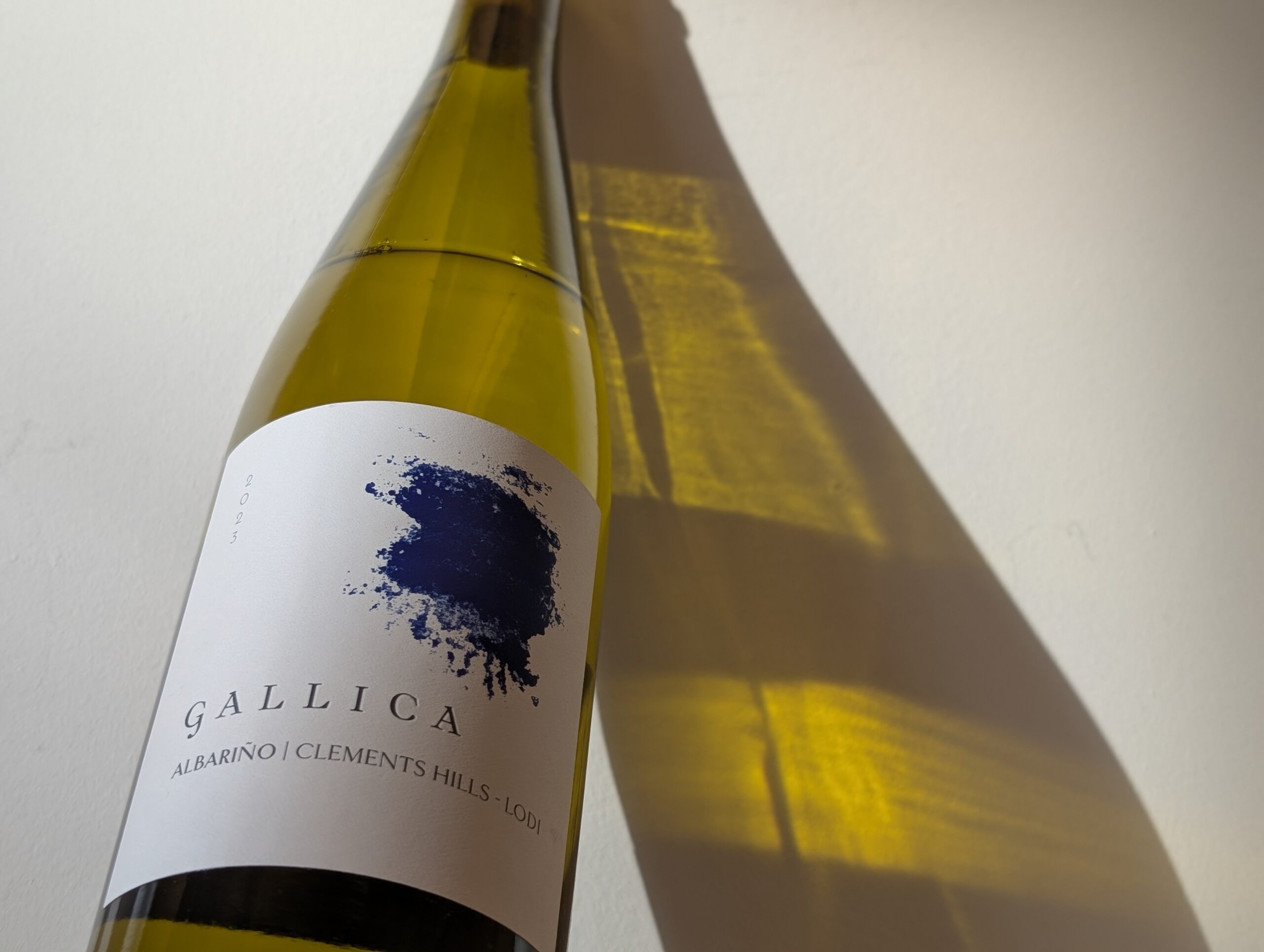
Gallica Albariño
Photo Credit: Cathrine Todd
2023 Gallica, Albariño, Terra Alta Vineyard, Clements Hills, Lodi, California: 100% Albariño from the Terra Alta Vineyard, which the Bokisch family organically farms on gravelly clay loam with vines sourced by massal selection (using the cuttings of old vines to propagate new ones) from the homeland of Albariño located in Rías Baixas, Spain. A tantalizing nose with lemon confit and oyster shell and a touch of white pepper with white peach and lemon curd on the palate with a saline minerality and crisp acidity.

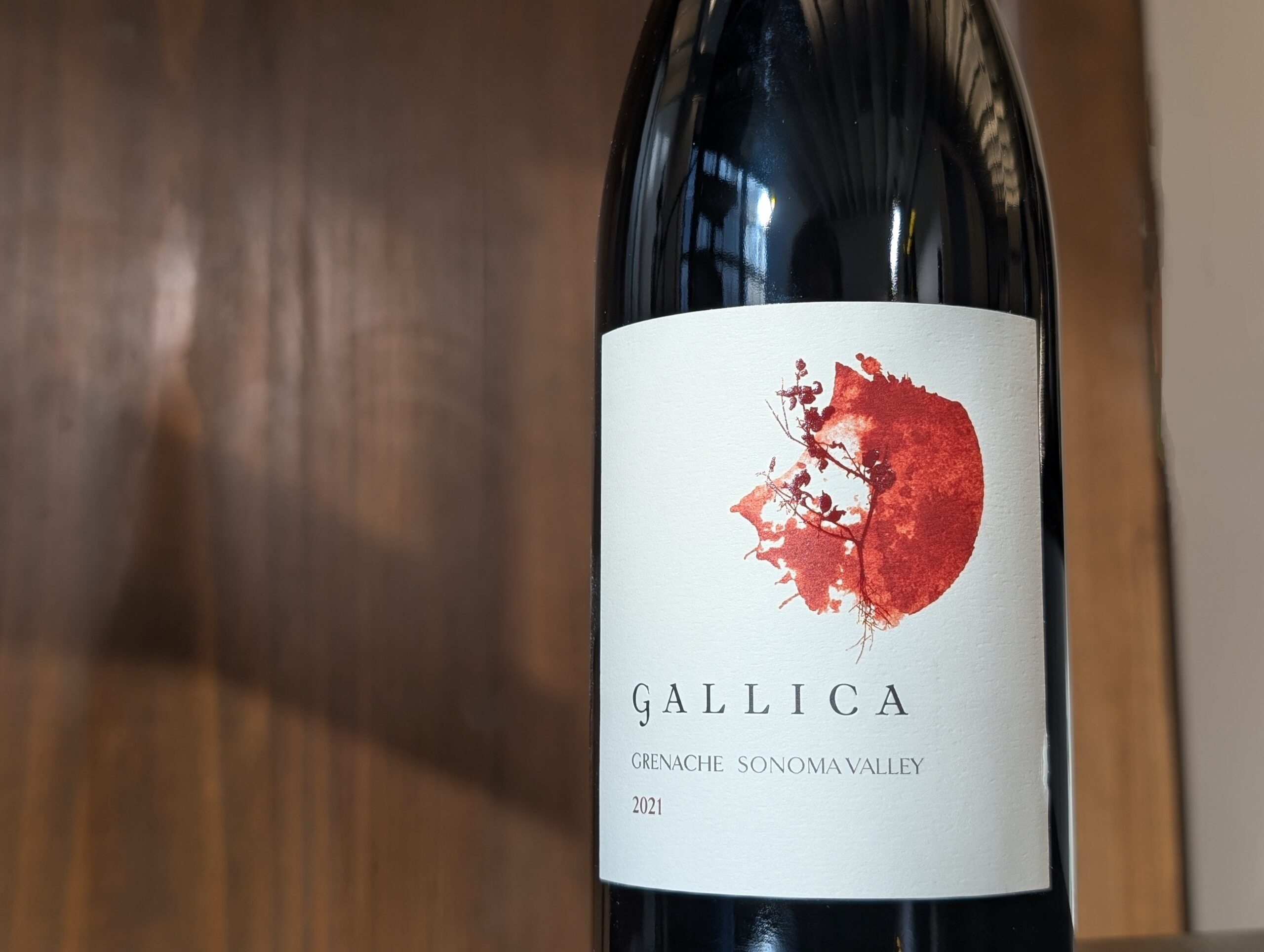
Galiica Grenache
Photo Credit: Cathrine Todd

2021 Gallica, Grenache, Rossi Ranch, Sonoma Valley, California: 100% Grenache from the Rossi Ranch (California Certified Organic Farming) owned by Sandy Otellini and farmed by Phil Coturri’s team that has soils of fine clay loam with some light volcanic ash. Rosemary produces this in a Burgundian style by using some whole grape bunches during fermentation. Bursting with impressions of mingled bright cherries and mulberries with candied lilacs and vibrant notes of orange zest with an incredible juiciness with black raspberry liqueur and a round texture that caresses the palate, finishing with a mineral-infused flavorful finish.

Posted in Dame Wine | Leave a comment

The Luxury Champagne Sparkling Wine That Expresses Intense Sense Of Place

The cold air brought a serene silence that washed out all the angst-filled thoughts that constantly plagued her mind. Among the snow-covered landscape, there seemed to be little, bare bonsai trees without their foliage that whimsically curved to the side with such grace, adding to the otherworldliness of this place. These plants are dormant during their winter rest, yet it is a perfect opportunity to truly view their diminutive stature without their canopies giving the false impression of heft. Although this place, happily, didn’t resemble anything in the daily grind of the woman experiencing this much-needed escape, it was indeed very real; so real that the expression of this land in a glass of Champagne was so distinctive that the drinker was taken aback of how much the sense of chalk within the soil dominated every nuance of this libation.

These were the exceptional vineyards of Champagne Cristal, where the nutrient-poor, chalk dominant soils caused the grape vines to struggle so much that they seemed more like tiny bonsai than the typical big, broad vines that are more prevalent worldwide. That is why the chef de caves of Cristal, Jean-Baptiste Lécaillon, nicknamed these particular vines “bonsai” because they were rare, even compared to the other vines in his beloved wine region of Champagne, France.

Champagne Cristal

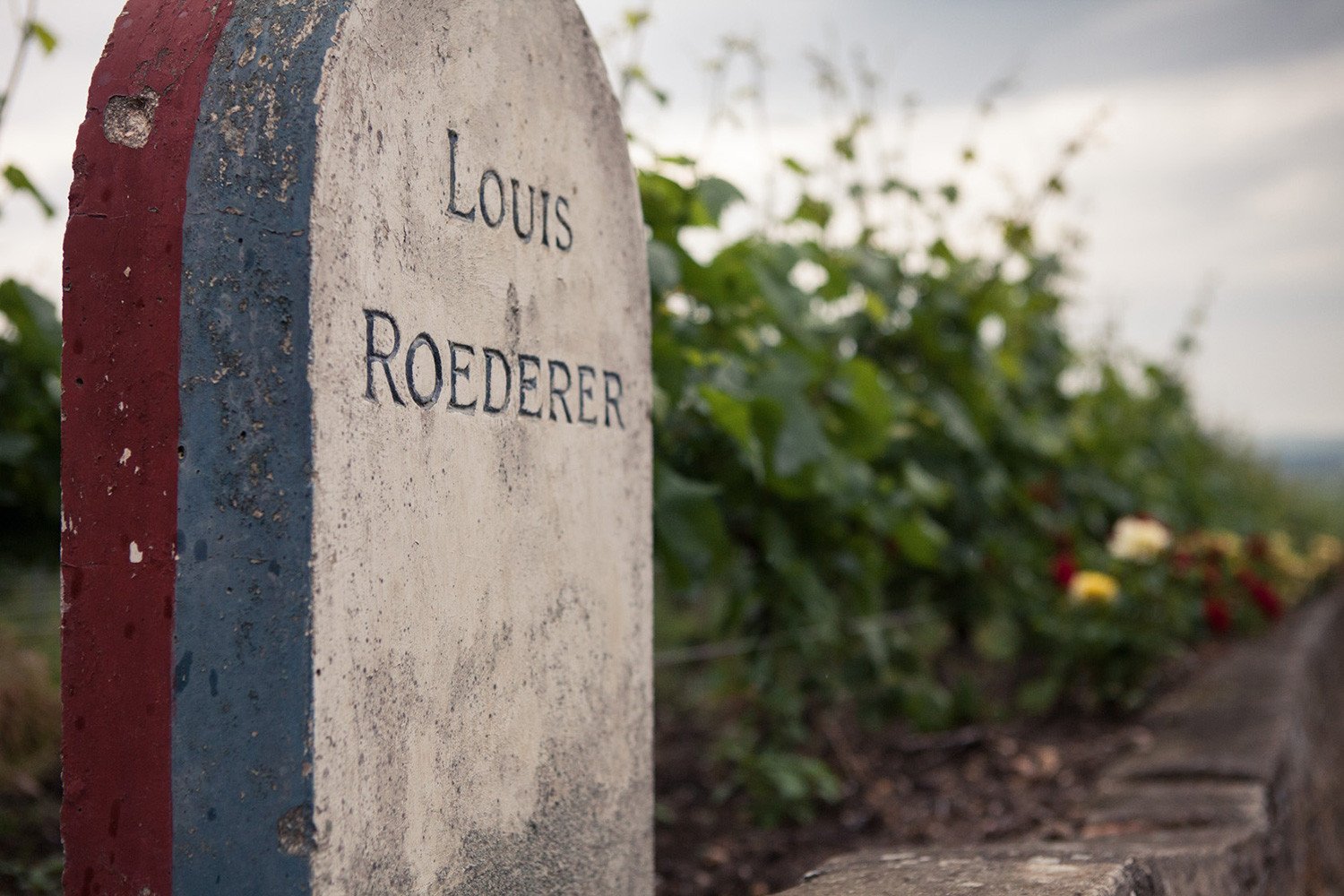
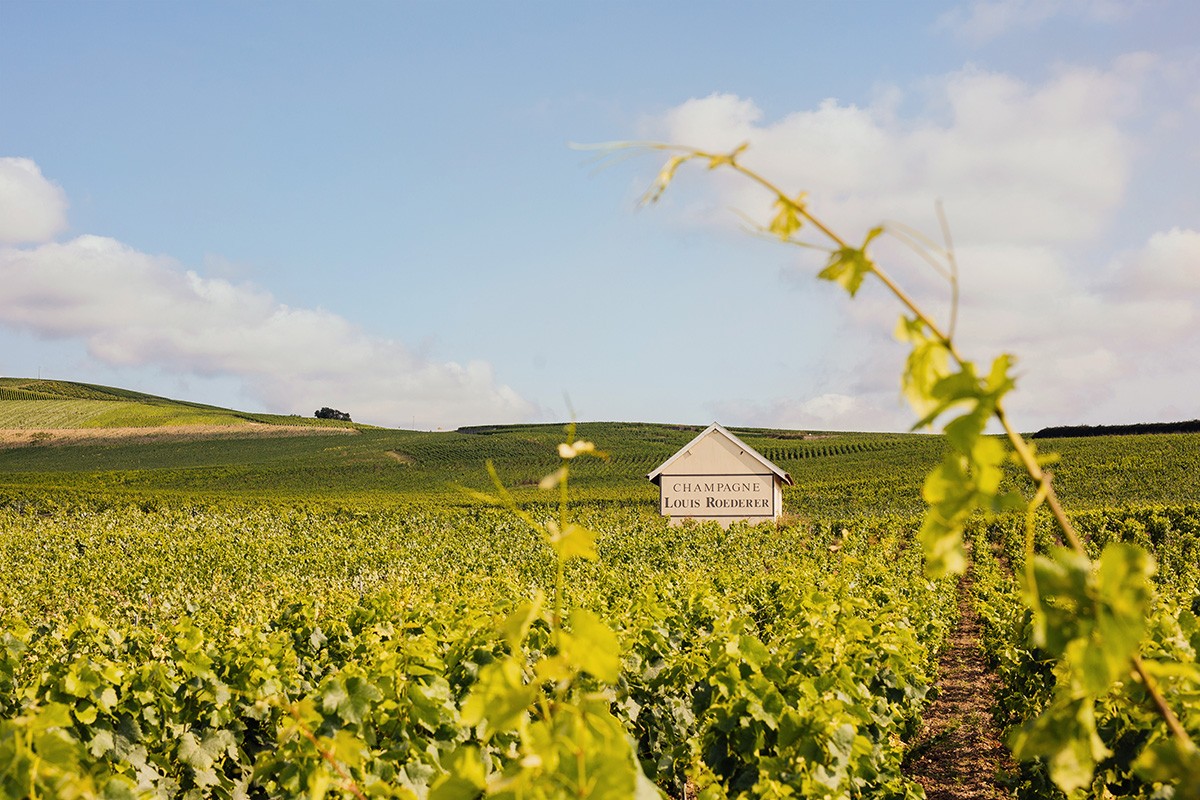
Louis Roederer Tombstone
Photo Credit: Champagne Louis Roederer

In a world where many of the top luxury wines are being bought out by corporate entities, the Louis Roederer Champagne house has remained an independent, family-owned company with seventh-generation Frédéric Rouzaud currently leading the way. In 1876, they selected their best vineyards to craft one of the most distinguished Champagnes ever, Champagne Cristal, and part of their success has been rooted in the family’s knowing from very early on that the greatness of Champagne laid in the vineyards that would express the depth of terroir a.k.a. sense of place.   

In 1816, a man named André Jullien published a seminal book called Topography of All Known Vineyards (Topographie de tous les vignobles connus) that included a classification of vineyards in the Champagne region. Louis Roederer inherited the Champagne House in 1833 and just a little over a decade later, followed André Jullien’s classification and started to make a significant investment in buying stellar vineyards.

Louis Roederer vineyards
Photo Credit: Champagne Louis Roederer

Today, many of the best vineyards in Champagne are the ones that Jullien chose over a century ago, and the easiest way to take a tour of some of Jullien’s noted top sites is to visit the vineyards that go into making Champagne Cristal.

Whether it is the Basses Coutures vineyard in the Champagne village of Verzenay, where there is silt and chalk in the soil, or the biodynamic Bonnotte-Pierre-Robert vineyard with its limestone bedrock in the Aÿ village, all of the plots blended into Cristal express a multifaceted picture of the most outstanding aspects of the Champagne region. Even the various chalky soils that differ in form will make different qualities within the wines – as chef de caves Jean-Baptiste Lécaillon says, the Verzernay vineyard is like the Burgundy Grand Cru vineyard of Chambertin, with its “power and strength,” and the Aÿ vineyard is like the Grand Cru Musigny in Burgundy so it has a lovely “perfume and softness.”

But Louis Roederer is not resting on their laurels as they have implemented many programs to explore ways to find an ideal balance within the vines and protecting their longevity to encourage long life. They also use modern scientific disciplines to identify the broad diversity of clones within their vineyards that have thrived through massal selection (using the cuttings of exceptional, old vines to propagate new ones).

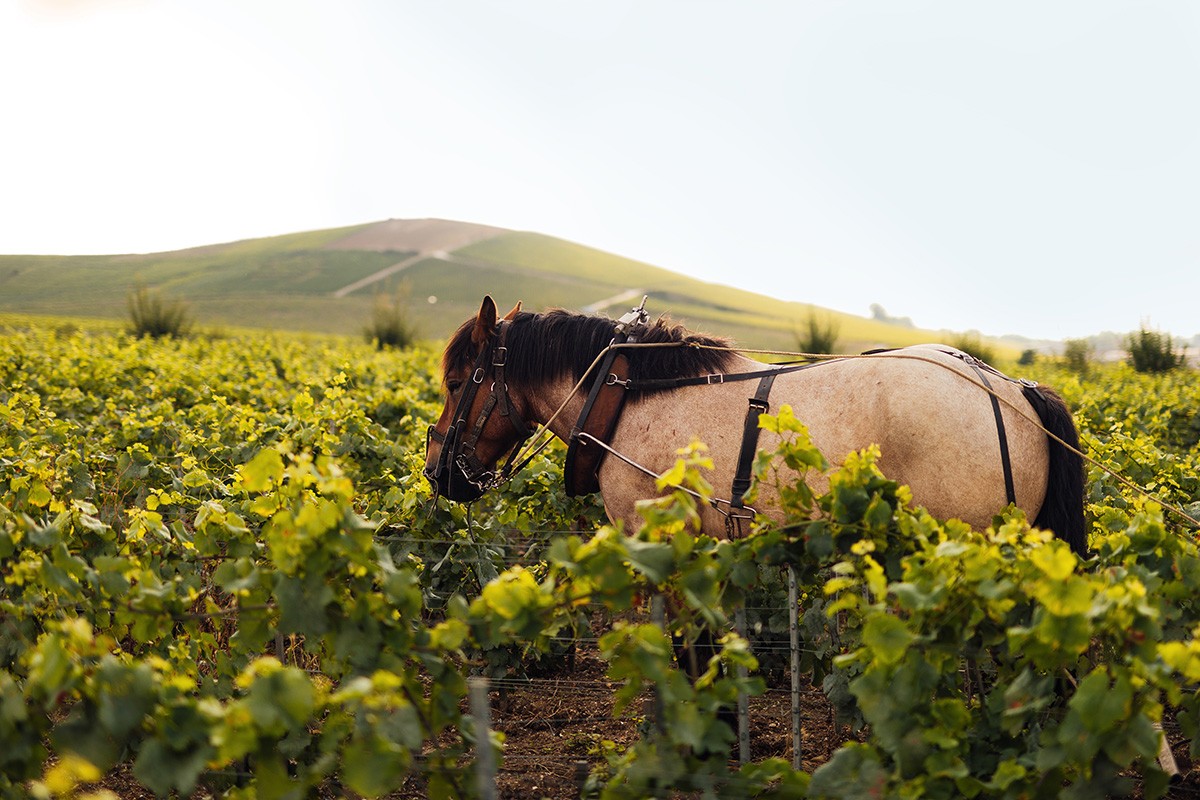
Champagne Louis Roederer uses horses to plow the vineyards so the roots aren’t damaged
Photo Credit: Champagne Louis Roederer

In 2002, they started a project called In Vinifera Aeternitas, gathering experts such as Lilian Bérillon, a nursery owner specializing in massal selection of the best estates all over the world, and Professor Jean-Michel Boursiquot, one of the most talented ampelographers (a person who identifies and classifies grapevines) to help accomplish their goals. One of the things they have achieved is employing pruning techniques of the vines that “respect the sap flow” to ensure a longer life while also implementing a permaculture philosophy that centers around creating sustainable and resilient systems that mimic natural ecosystems, which goes hand in hand with their organic and biodynamic practices.

When it comes to their organic and biodynamic practices, Jean-Baptiste Lécaillon said that he has noticed that the pH of their wines is lower than before they converted to organic, increasing their acidity.

Finding Terroir In Champagne

The wine region of Champagne is a worldwide marketing success story as many houses have created brands that dominate the luxury wine market with incredible packaging, lavish events and placement in some of the top high-end clubs around the world, yet many of those luxury brands are owned by big corporations. Although that success has hurt the family-owned houses that avoid such marketing blitzes as they don’t want such a frenzy to overshadow the soul of their Champagnes, expressing some of the best vineyards.

There has been a backlash against these famous brands with a revolution of grower Champagnes, where growers make tiny quantities of Champagne wines, many who used to sell their grapes to large brands, and many times their bottlings are single vineyard wines. Despite many of these Champagnes being excellent examples of an expression of a particular plot, it is wrong to think these bottlings are the only true expression of place coming out of the region. Historically, Champagne is a blended wine, and yes, in many cases, it is for this reason that it can develop a consistency of style, even to a certain degree with the vintage bottlings. Yet the vintage Champagne Cristal wines take it to another level when creating an intricately layered experience of those soils that initially made this region legendary.

That is part of the reason why Cristal can shock the first-time drinker who is used to drinking a wide variety of top Champagnes, as it can come across as not being big enough or bold enough to knock one’s socks off at the first sip. But it is intense and concentrated in ways like no other Champagne on this level, as its power is not in the fruit but in the intensity of terroir expression. Once a drinker surrenders to the unknown, a type of depth they have not experienced, they understand why some connoisseurs consider this Champagne to be in its own category. When it comes to a multidimensional expression of the sense of place from those extraordinary vineyards classified over 100 years ago, there is a strong argument that no other luxury Champagne can live up to Cristal. 

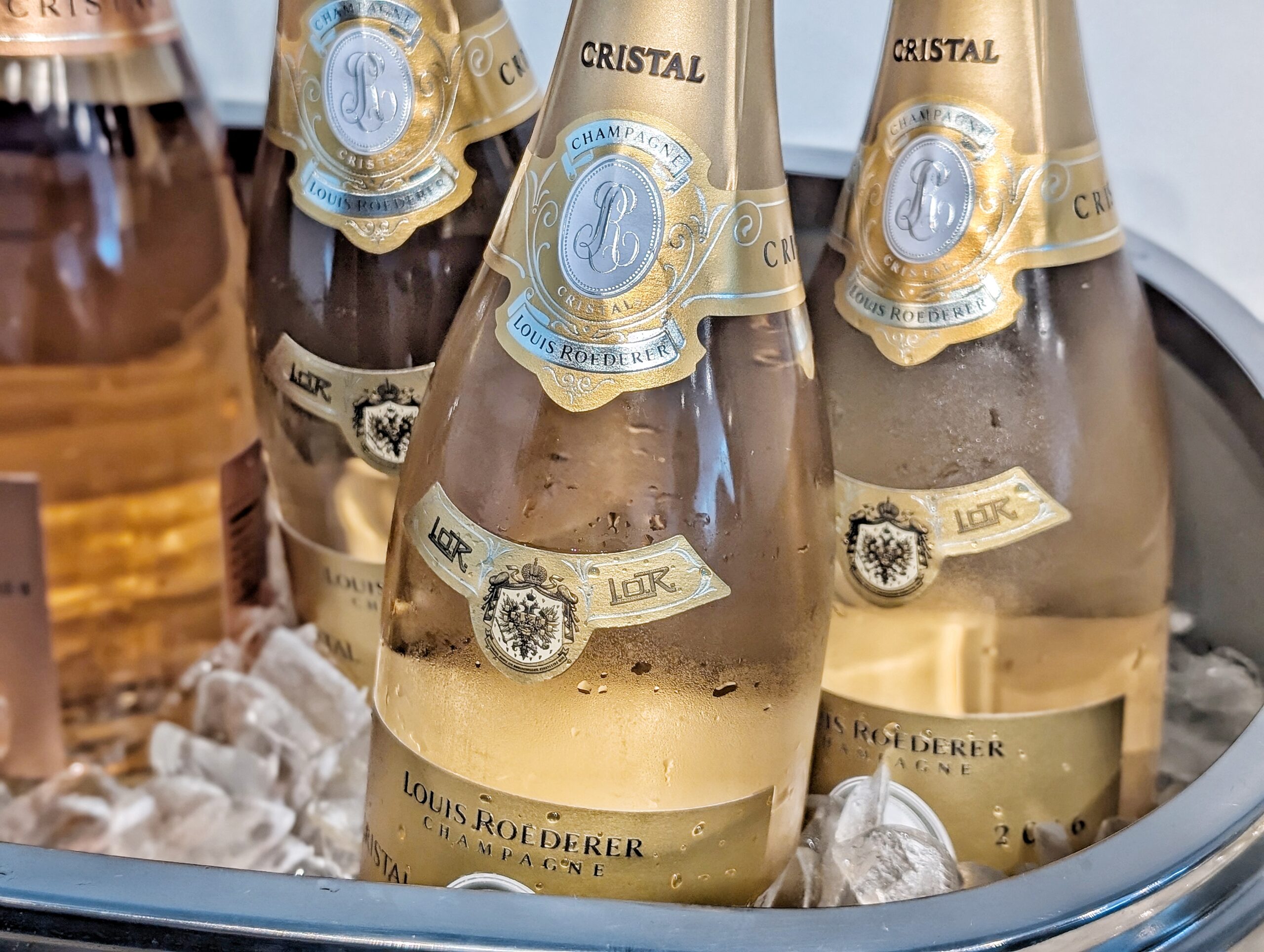
Bottles of Cristal
Photo Credit: Cathrine Todd
2002 Champagne Cristal, Champagne, France: 55% Pinot Noir and 45% Chardonnay. Jean-Baptiste Lécaillon became the chef de cave in 1999, so he considers 2002 his “Welcome to the Roederer family gift” as the vintage had almost perfect growing conditions. A gorgeous evolution that happened to this beauty over two decades with peach cobbler and lemon meringue flavors with a broad body and a creamy texture with crisp acidity highlighted by mineral aromas and a long finish with notes of hazelnut.

2012 Champagne Cristal, Champagne, France: 60% Pinot Noir and 40% Chardonnay. This is from a warmer vintage, yet one could not tell at this stage as Jean-Baptiste said that he thought that, through time, it would become bigger and richer, as that is what tends to happen with Cristal. Still, this vintage is returning to the heart of their vineyards with oyster shells and wet stones dominating with a touch of honeysuckle in the background and a mouthwatering acidity with a weighty yet linear-driven palate.

2008 Champagne Cristal, Champagne, France: 60% Pinot Noir and 40% Chardonnay. Jean-Baptiste compared 2008 to the iconic 1996 vintage. However, ’96 is a controversial vintage – some note it is one of Champagne’s best in modern history while others feel the wines were too austere with sky-rocketing acidity. But learning from the ’96s, Jean-Baptiste decided to wait a week longer than 1996 to harvest this 2008. An addictive, fierce acidity with that Cristal minerality that intertwines itself in every aspect of the wine with a very lifted floral note and plenty of nectarine fleshy fruit to balance out the acidity that gives thrilling electricity to this vintage.

2016 Champagne Cristal, Champagne, France: 58% Pinot Noir and 42% Chardonnay. This vintage was challenging and broke many growers’ backs as they battled a wet spring with mildew. Surprisingly, especially considering that all of the vineyards used for this vintage were farmed organically, it is an outstanding showing. There is a breathtaking purity; I would have never guessed this was from a vintage that battled mildew. The 2015 vintage received more fanfare as it was a riper vintage with few problems. Jean-Baptiste said that some challenging vintages, such as this 2016, get unfairly judged with a sweeping statement that all the Champagnes are lesser quality, but for those who dare, who are extremely vigilant with their practices in the vineyards, like Roederer, something special can be produced. And the results are indeed impressive. A nose of lemon blossom, white peaches and crumbled chalk with a marked acidity laced with a saline quality and a salivating finish.

2013 Champagne Cristal Rosé, Champagne, France: 55% Pinot Noir and 45% Chardonnay. This makes my list for one of the greatest Champagnes I have ever had… not just the greatest rosé but one of the greatest, period. I was not expecting such an experience since the 2013s were typically noted to be lovely in their youth yet subtle and not worth blockbuster status. But this 2013 evolved into such an exquisite example of what makes Cristal in a class of its own as the terroir is so defined and powerful with the right amount of fruit and acidity. Jean-Baptiste noted that making rosé for them is about adding another layer of terroir expression to the wine. Starting in 2008, with their new experimental winery, they began experimenting with a gentle “infusion” technique for the Pinot Noir grapes before the fermentation, allowing for more sense of place extraction from the skins without the astringency. Alluring bouquet of a labyrinth of aromas with cherry blossoms, wild strawberries, saline minerality and hint of marzipan dance and prance along the enthralling maze of flavors and textures that are lifted by an exhilarating acidity, which gives the wine a fierce tension and a very fine structure with bubbles that are so tiny that they caress like satin while still tantalizing with their hundreds of micro bursts along an extremely prolonged finish that keeps those delightful aromatics in one’s head for several minutes.

2014 Champagne Cristal Rosé, Champagne, France: 55% Pinot Noir and 45% Chardonnay. A gorgeous nose with pear drop, peach tart and singed orange peel, and is open in its relative youth according to Cristal standards, yet the minerality of crushed rocks and pulverized chalk still dominates despite having a generous fruit flavor with a round body that has a long, flavorful finish, but the minerality is what stays with the taster the longest.

Posted in Dame Wine | Tagged , | Leave a comment

Superb Napa Valley Cabernet Wine Made By Famous Winemaker Is A Hidden Gem

When pieced together, fragments of the beginning of a life give a picture of where one’s place is in the world when there is a pattern of what brings joy. The tapestry of smells from walking the streets of Chinatown, startled halfway down the basement stairs by the popping of corks ejecting from grandpa’s homemade wine, excitement flooding the brain after tasting a top Bordeaux wine for the first time, being surrounded by the surreal enchantment of the Loire Valley, in France, by driving around the historic towns on a moped, taking in the most exquisite châteaux on the planet….

Such a life of snippets from childhood to young adulthood shows the initial foundation of a journey driven by great wine and fantastic food, shared in an atmosphere of generosity and wonderment. Yet this is not just one life but two, a married couple lucky enough to meet early in life, merging their paths in the mid-1980s with a combined mission to devote their lives to bringing such moments that were pivotal to them in their youth to the wider world.

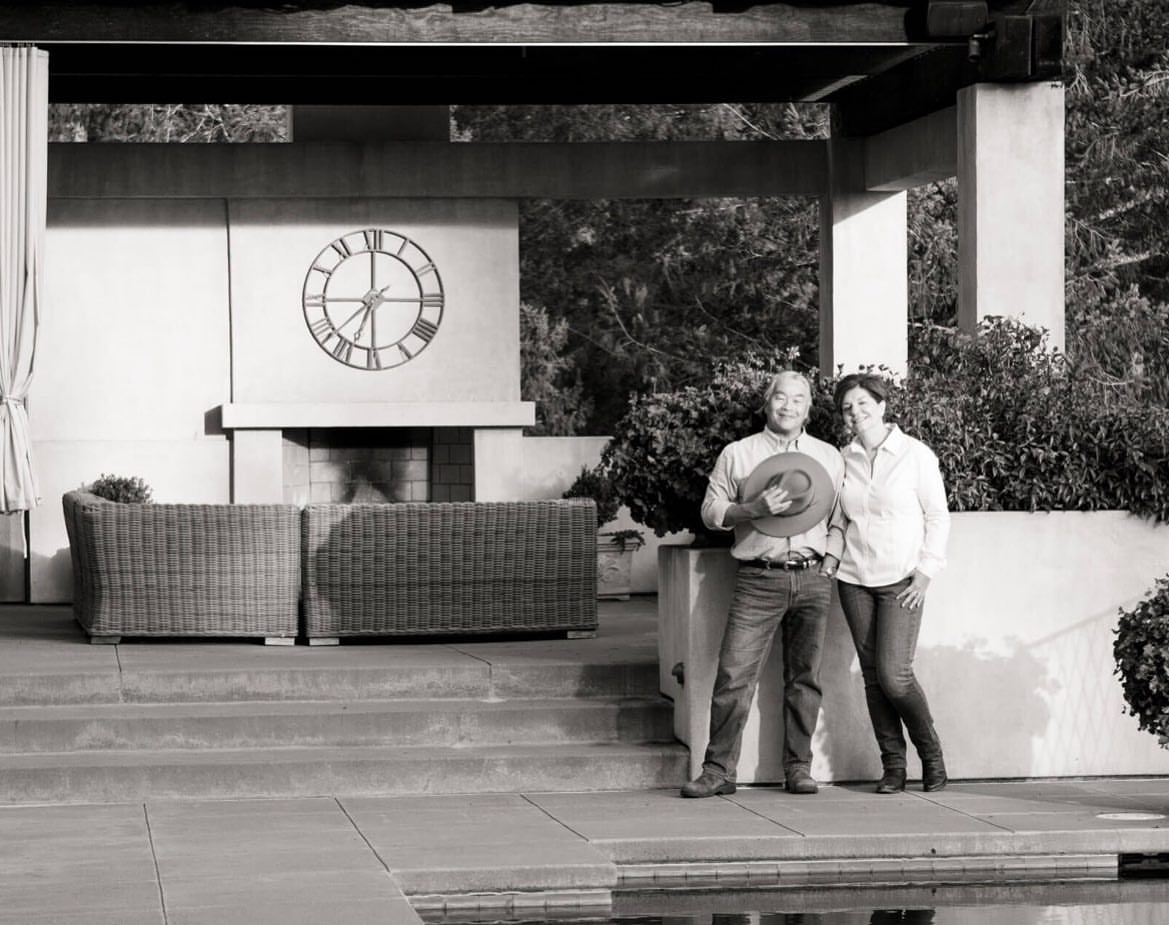
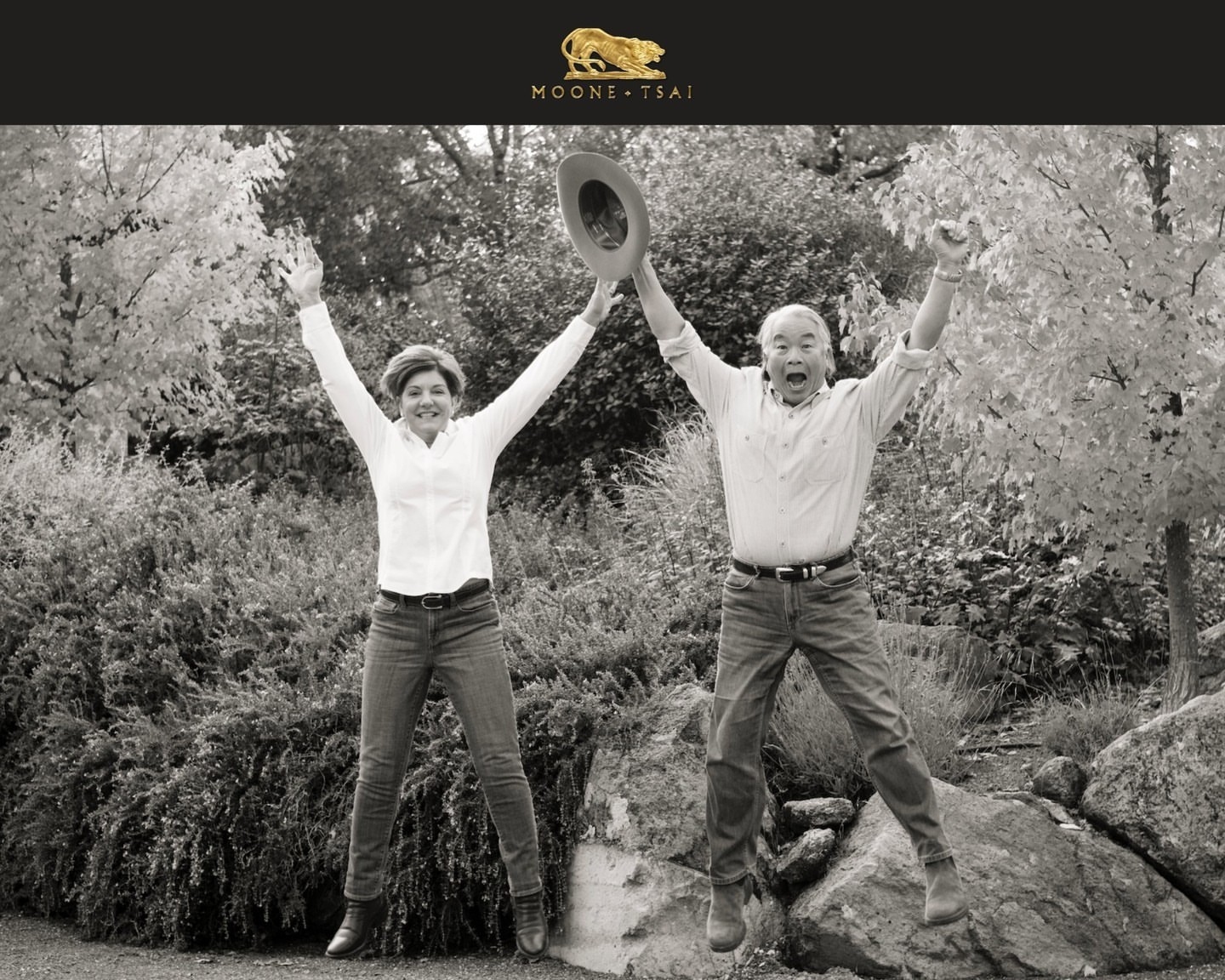
Larry and MaryAnn Tsai
Photo Credit: Moone Tsai Wines

Today, this husband and wife, Larry and MaryAnn Tsai, are making a stunning Napa Valley Cabernet Sauvignon as a wine producer under the name Moone Tsai Wines. One of the most acclaimed wine consultants worldwide, Philippe Melka, is making their wines. Since they produce a tiny amount and have a great relationship with Philippe, he is able to be their full-time winemaker, which is unheard of as Philippe typically works in an advising capacity for most wineries. Yes, it is incredible that MaryAnn and Larry have a winemaker who has won several 100-point scores, worked for some of the most famous producers in the world and is truly a master blender of various vineyards when it comes to creating a harmonious wine, but he is a also a wonderful person who has become a good friend which is just as important to them.

Learning, Growing And Responsibilities

MaryAnn and Larry may have each had a different childhood than the other, as one is Italian American and the other Chinese American; one lived in Boston, the other in Long Island, NY; one studied abroad in France and the other worked at a local Long Island restaurant getting the chance to taste ultra-premium wines; yet at the core of their cultural values laid a commitment to centering one’s life around tasting amazing things with family and friends. As a first-generation Chinese American, Larry was introduced to Asian flavors and aromas from an early age. However, growing up on Long Island gave him plenty of opportunities to expand into other cultural sensorial experiences, and further travel just intensified his deep desire to build a life on such olfactory pleasures. MaryAnn grew up in Boston in an Italian American home. As a child, she witnessed the miraculous process of making wine from her grandfather, albeit as a hobby, yet it was a hobby that brought so much joy to her grandfather’s life.

MaryAnn would not only get to study abroad in France, but she would fulfill a rare dream as a middle-class Italian American and get her MBA at Harvard while Larry had already received his MBA from Stanford. While they were living in New York City as a married couple, they decided to take the plunge to move to “The Golden State.” MaryAnn could pursue her dream by working in the wine business and Larry would delve into food and beverages since MaryAnn loved the European way of life that was rooted in wine and Larry fell in love with California when he attended Stanford. However, both would initially have to go down the corporate route, despite their dreams of entrepreneurship, as, unlike today, that seemed impossible, and the corporate route was the only way for MBAs.

While Larry was working with gourmet food and coffee, MaryAnn started working for Beringer in 1989. At the time, the Swiss company Nestlé owned Beringer and wanted to increase their portfolio by purchasing ultra-premium wineries as well as increasing their vineyard holdings in Sonoma County and Napa Valley. Ten years after MaryAnn started, Beringer had accumulated an extra 750 acres in the Sonoma and Napa Valley areas, and MaryAnn was a key part of acquiring such valuable vineyards. Along the way, she gained incredible knowledge about where the best sites are situated, especially those plots that suited her personal preference for elegance, freshness and balance. During her time at Beringer, they were awarded three #1 slots on Wine Spectator’s “Wine of the Year” list.

Larry and MaryAnn Tsai
Photo Credit: Moone Tsai Wines

There were many moments, although brief, that connected to the joy of MaryAnn and Larry’s childhoods while they were working for Fortune 500 companies: that surprising addictive aroma, a gorgeous texture, talking to those who crafted such delectable delights and learning about the process, yet schedules and pace were unrelenting and there was never time to savor the experiences truly. But after a time, as they found a few moments to take deep breaths and reflect on their lives, which included raising two lovely daughters, those fragmented memories of their early years came flooding back, but this time, the memories were more vivid and powerful; the message was clear, they needed to open their own winery, and Moone Tsai Wines was born in 2003.

Their first wine was a Cabernet Sauvignon, and they have always been a believer in mainly sourcing from vineyards that would make complex, layered wines balanced by vibrant freshness and incredible texture. Together with Philippe Melka and his 30 years of relationships with Napa Valley vineyard growers, they were able to find plots that would accomplish such a goal. Today, they work with 12 different growers, have around eight separate wines in their portfolio with a few limited releases from time to time and have grown from initially making 180 to 3,000 cases – although still tiny, and hence, keeps their goal of wanting to make each bottle a forever memory that will bring a touch of magic to the lives of their customers possible.

Ideal Partnership For Great Wine

Larry and MaryAnn jumping for joy
Photo Credit: Tsai Moone Tsai Wines

Two people living parallel lives driven by the smells, tastes and how such sensations formed uplifting bonds and the most significant bond is when MaryAnn and Larry found each other. Their combined mission has been to live an exuberant life with other wine and food lovers and make it a way of life that they would pass down to their daughters as well as inspire others to live.

Every journey starts with the incredible discoveries of those things that thrill and mystify. Then, as an adult, the road seems to be filled overnight with learning, experiences and lots of responsibility, until finally, one gets to the point where they can finally achieve the goal that they have carried in their hearts all that time… a goal that surrenders to the idea that one’s time is precious. As it is easy to toil one’s life away without ever experiencing true joy. But it is never too late, never too late to find that bottle of wine that will pulse through the weary body of someone who has worked the grind too long, pulse like a shot of electricity, opening a whole new world of wonderment.

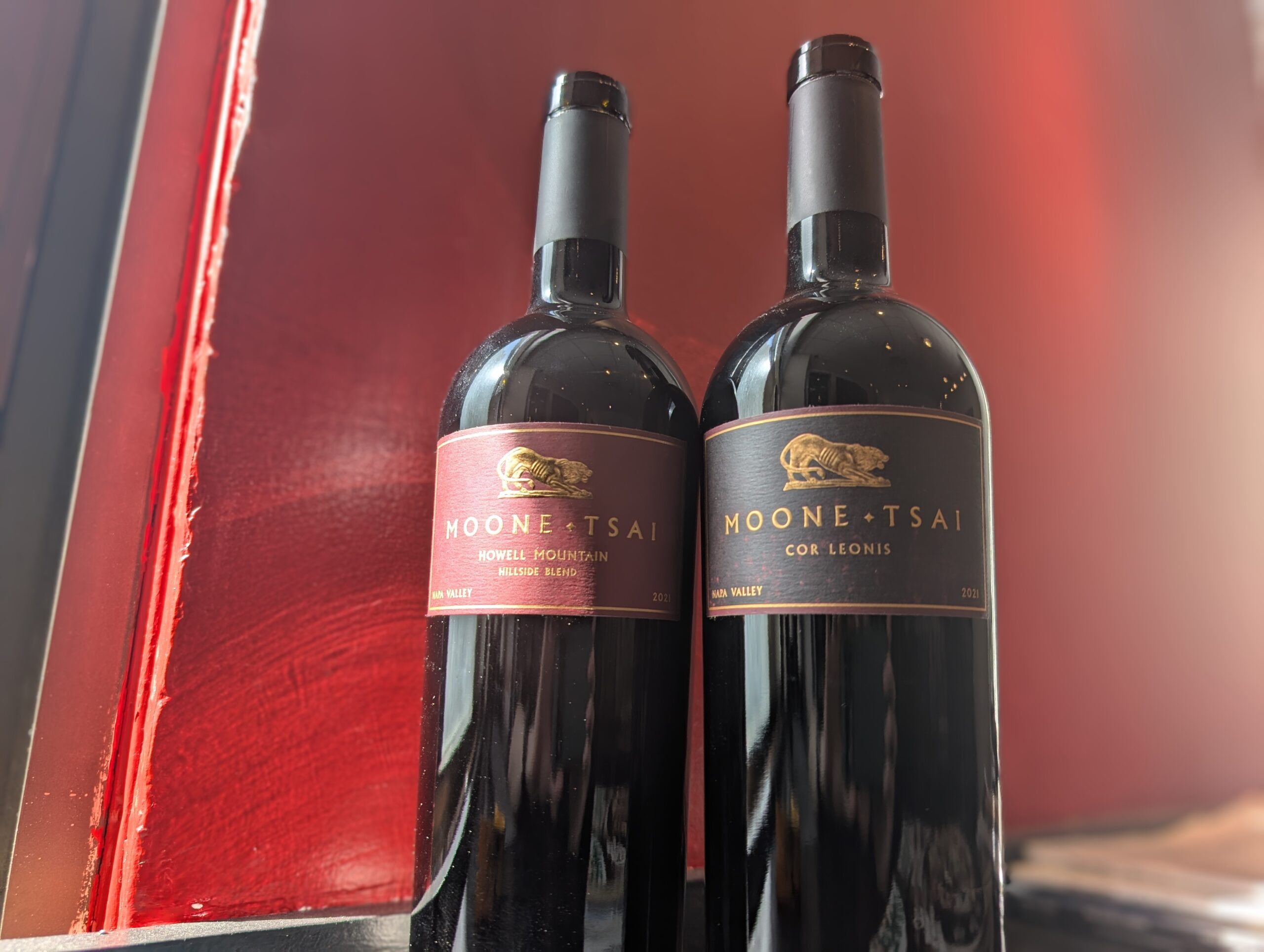
Moone Tsai, Hillside Blend, Howell Mountain and “Cor Leonis” Cabernet Sauvignon
Photo Credit: Cathrine Todd
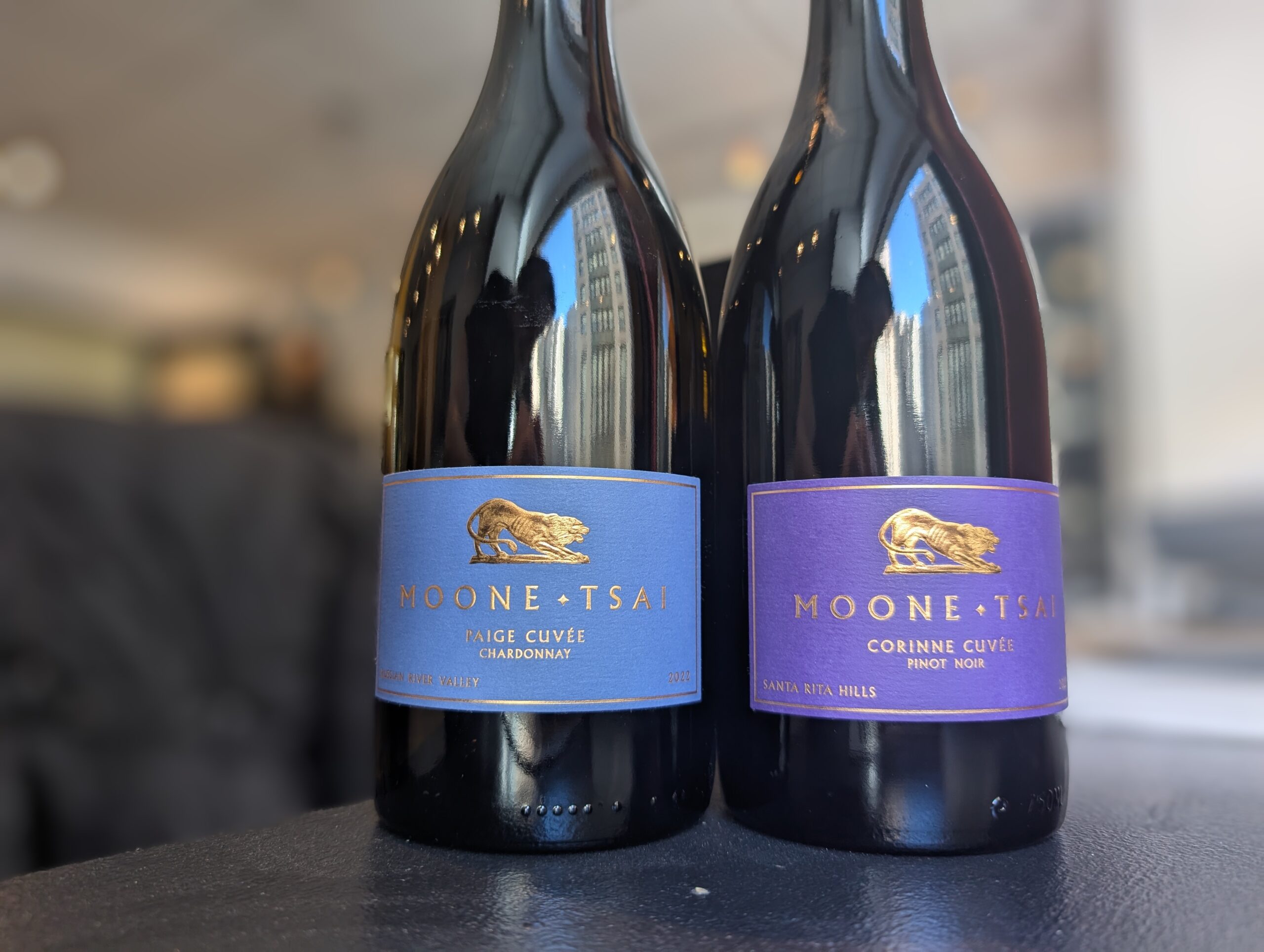
MaryAnn and Larry decided to expand into making Chardonnay and Pinot Noir from some of the top vineyards in prestigious California regions, such as the Russian River Valley and Sta. Rita Hills, allowing Philippe Melka to employ his remarkable skills in crafting wines outside of Bordeaux varieties.

Moone Tsai, Paige Cuvée, Chardonnay
Photo Credit: Cathrine Todd
2022 Moone Tsai, Paige Cuvée, Chardonnay, Russian River Valley, Sonoma County, California: 100% Chardonnay from the renowned Ritchie Vineyard. Named after their oldest daughter, Paige. A bright nose with lovely aromas of citrus blossom and stony minerality with lemon curd flavors highlighted by candied kumquat with a sustained finish, leaving the saline notes from the ocean in one’s head.

2022 Moone Tsai, Corinne Cuvée, Pinot Noir, Sta. Rita Hills, California: 100% Pinot Noir from the Our Lady of Guadalupe Vineyard. Sta. Rita Hills is an incredible place for Pinot Noir as the top sites, such as this one, get an ideal amount of ripeness while achieving mouthwatering acidity due to the fierce winds in the area. This wine is named after their youngest daughter, Corinne. The generosity of a gorgeous bouquet is enthralling on this wine, with blossoming jasmine and rose petals intermixed with star anise with silky tannins caressing the palate with multilayered fruit and an extended length of flavor on the finish. Even though Philippe and Moone Tsai have made their name on Cabernet, this Pinot Noir can certainly go head to head with some of the best in Sta. Rita Hills.

Moone Tsai, Hillside Blend, Howell Mountain Photo Credit: Cathrine Todd
2021 Moone Tsai, Hillside Blend, Howell Mountain, Napa Valley, California: 63% Cabernet Sauvignon and 37% Merlot from the hillside of Howell Mountain around 2,100 feet above the fog line. It is a wine that slowly beckons as it reveals itself with each sip and the juicy cassis flavors are an ideal counterpart for the broad tannins that allow one to sink their teeth into a wine that has an intense sense of place with notes of smoldering earth and crushed rocks with a long, spicy finish.

2021 Moone Tsai “Cor Leonis” Cabernet Sauvignon, Napa Valley, California: 100% Cabernet Sauvignon from vineyards located in the Napa sub-regions of Pritchard Hill, Coombsville and St. Helena, which shows the great blending talents of Philippe Melka. The name “Cor Leonis” translates to “heart of the lion,” and this outstanding Cabernet Sauvignon represents the pinnacle of excellence that Moone Tsai has achieved with only 300 cases made; hence, it is on allocation. The aromas astonish with exciting notes of forest floor after a refreshing rainfall with wild sage and crushed volcanic rock balanced by blackberry coulis, cocoa nibs and cherry tart flavors and a buxom body with curves in all the right places and it is simply a showstopper that combines a big wow factor with an overall harmonious finesse that is extremely impressive.

Posted in Dame Wine | Tagged , , | Leave a comment

Former Winemaker Of Top Merlot Wine Is Now Making A 100% Merlot In An Unexpected

The sound of several gasps along with widening eyes followed by broad smiles brought an exuberant energy to the room that was palpable. Few things can bring such awe to adults who have already lived a full and eventful life, as very little can catch them off guard with a joyful revelation. Yet at that moment, the words “blue clay” associated with a Merlot wine in a place other than where one would expect turned seasoned fine wine drinkers into giddy adolescents again.

Blue clay is associated with some of the most outstanding Merlot wines in the world, such as Château Pétrus, located in the Right Bank of the prestigious wine region of Bordeaux. But there is another Merlot wine that sometimes outdoes Château Pétrus in certain vintages, according to some, and that is Masseto from the impressive wine area of Bolgheri in Tuscany. Masseto has a devoted cult of collectors that will go to great lengths to acquire a range of vintages in various formats and come together with other Masseto obsessives in fantastical gatherings to bask in the glory of these wines as a devoted collective.

Château Lascombes
Photo Credit: Château Lascombes

The former winemaker of Masseto, Axel Heinz, became the estate director for both Ornellaia and Masseto properties in 2005 and had stayed there for 17 years, longer than any other estate director. Under his guidance, he had made Ornellaia and Masseto some of the most sought-after wines on the auction market, and now, he is man aging director and CEO of an estate with a longer history than his Italian predecessor, Château Lascombes on the Left Bank of Bordeaux in the eminently elegant wine sub-region of Margaux.

Legend Of Blue Clay

A piece of blue clay from the Château Lascombes Photo Credit: Château Lascombes

Blue clay, also known as smectite clay, is a soil with significant iron composition, hence, it is known to give a distinct mineral character not found in wines grown in other types of clays or soils in general. The absorption of minerals is more significant for blue clay as it has properties that increase its ability to attract those desirable substances that help a wine to transcend excellence to a level where words cannot do it justice.

Merlot has been the ideal partner for blue clay as it has enough expression of fruit potential to balance the fierce intensity of minerality that is endowed to the wine grapes that grow in this legendary soil. Also, clay has the ability to keep the ground cooler as it retains more water than other soils, so it is conducive to a grape that finds ideal balance with a slower ripening cycle. In Merlot’s case, it keeps it from becoming too overripe, to which it has the tendency under certain conditions, yet allows it to gain enough concentration and complexity to become a magnificent wine with a regal power.

Grape vine on the Château Lascombes estate Photo Credit: Château Lascombes

And as Axel has been surveying the Château Lascombes’ estate, he has found one area of their vineyard with some blue clay, and Merlot has already been planted there. Once he left Masseto and Ornellaia to go to a Bordeaux property on the Left Bank, to a Grand Cru Classé château (classified as a Second Growth in 1855), he thought that he would never make a majority Merlot, let alone a 100% Merlot wine, ever again (as Masseto, like Pétrus would sometimes add a touch of Cabernet Franc), as it is unheard of to make such a wine among the top producers on the Left Bank, unlike its neighbors on the Right Bank. But he never thought that he would find that much-desired substance that creates wines that still baffle many a wine collector who tries to make sense of their transcendental qualities.

New Day For Château Lascombes

Reassessing the multitude of vineyard plots of Château Lascombes, which broadly span the Margaux region as they have holdings in three out of the five villages of the region, has become the main priority for Axel as he wants to make sure that only the best vineyards, except those deemed for the 100% Merlot wine, go into their grand vin. The grand vin, aka top wine of the estate, is in line with the tradition of Left Bank Bordeaux, hence a blended wine of Cabernet Sauvignon and Merlot, sometimes with small percentages of Cabernet Franc and Petit Verdot grape varieties.

Like many other Grand Cru Classé châteaux, the amount of vineyards that Château Lascombes owns has significantly increased since they received the privilege of being listed within the Grand Cru Classé classification of 1855. As a Left Bank classified château is allowed to include any vineyards within the region, such as, in this case, the region of Margaux, to their grand vin; hence, Château Lascombes has added plots that were acquired after 1855 to their top wine in the past. But Axel is changing that “modern” concept and going back to a more “traditional” idea, an idea that deemed Château Lascombes as a Second Growth over a century and a half ago, and he is only placing those original vineyards from the 1855 classification into their top-tier wine.

Axel Heinz in the Château Lascombes vineyards
Photo Credit:
Château Lascombes

Yet he is not against progress when it is true to the terroir matching the expected quality level of the wine, and that is why he is making the 100% Merlot from those vineyards with the blue clay – it is a top-tier wine that defies all convention. It is all about the sense of place of the vineyards being utilized in the most appropriate ways.

Axel was born in Germany but fell in love with wine while he studied winemaking in Bordeaux and worked in the area after graduating. It was an incredible opportunity for him to become the estate director and winemaker of Ornellaia and Masseto in 2005. Yet, he says he never thought he would stay so long as he always figured he would return to Bordeaux. And no matter how much glory there is at an estate that is an international sensation, through time, one starts to reassess one’s priorities in life, and it was time for Axel to go back to his spiritual home.

Yet he returns to the special place that ignited his passion with a wealth of experience from overseeing the most sought wines in the world with the mission of elevating a great château to the level of international sensation. And being a man who has worked with outstanding vineyards, he knows that delving into the soil is the path to preeminence.

2022 Château Lascombes
Photo Credit:
Château Lascombes

The 2022 vintage was generally warm and dry for Bordeaux, so these wines are riper than usual. Yet they all still display a freshness and vibrancy despite the warmer temperatures.  

2022 Chevalier de Lascombes, Margaux, Bordeaux, France: 68% Merlot and 32% Cabernet Sauvignon. This is the second wine of Château Lascombes’ grand vin wine. A nose that is lovely and inviting, with aromas of freshly picked raspberries during a sunny day, is enhanced by a complex note of tar with a concentrated mid-palate underpinned with lots of blueberries and plum fruit and continues with an incredible depth of flavor until the finish. 

2022 Chevalier de Lascombes Photo Credit:
Château Lascombes

2022 Château Lascombes, Margaux, Bordeaux, France: 67% Cabernet Sauvignon, 30% Merlot, 3% Petit Verdot and Cabernet Franc. Multifaceted bouquet of sage, dried flowers and fresh leather dance with vivacity in one’s head with deeply concentrated blackberry fruit on the palate framed by finely sculpted tannins with an intense lifted energy along the finish that balances out the rich fruit.

2022 La Côte Lascombes, Margaux, Bordeaux, France: 100% Merlot from plots that have soils with clay over limestone with veins of blue clay throughout. Aromas that intrigue with dark, brooding fruit entice the drinker to dive into this abyss filled with delight and wonder. Slowly, the wine unravels its secrets with notes of crushed violets, sea spray and smoldering earth with a voluptuous quality on the body that satisfies on many levels, yet there is always something held back, so with each sip, more is revealed among the big velvety tannins and bright acidity that are seamlessly integrated along the sustained finish. 

Posted in Dame Wine | Tagged , , | Leave a comment

Great Pinot Noir Wines Made By 2nd-Generation Oregon Farmers Turned Wine Producer

A 12-year-old boy with a deep tan, illustrating how much of his free time he spent outside in his farmland paradise, ran off his school bus with his tuba in tow with such an intense burst of energy one would think that he was racing to start shenanigans with his friends which is a time-honored tradition among adolescent boys. But this young boy was in a unique situation as his father was a vineyard manager at one of the top wineries in picturesque Willamette Valley, Oregon, and so, the school would always drop him off where his father worked and by osmosis he would take in the wisdom at a very young age of how an ultra-premium Willamette Valley winery made great Pinot Noir, sparkling wine and eventually Chardonnay.

Jackson Holstein with one of his kids
Photo Credit: Granville Wine Co.

Yet his exposure to practical knowledge went deeper as this boy’s father owned a prime vineyard in the Dundee Hills AVA, a precious sub-region of Willamette, reaching up to 740 feet in elevation with exposure to plenty of sunlight and cool winds from the Pacific. His father was fortunate enough to buy a top vineyard spot before Willamette became such a hotspot for big wine companies, hence driving up prices. His father was happiest working the vines, growing stellar fruit but not taking the risky investment of making his own wine.

Although that 12-year-old tuba-carrying bright-eyed boy would go on to become a winemaker, it would not be in the conventional sense of how a modern winemaking journey looks, yet his path does harken to a different time.

In One’s DNA

“It is in his DNA” can often refer to wine producers, especially in Europe, who have been part of several generations of winemakers and wine growers, sometimes going so far back – such as 15 generations – it is dizzying to think about. Immediately, it sounds like an impressive fact. Despite some of those wine families being extraordinary, many others with such a lineage find there are various detriments of such a heritage: lack of innovation by getting held back by centuries of tradition and no sense of autonomy felt by the family member running it will both top the list, as it gets in the way of the direct personal transmission from the living human making the wines to those who are drinking it.

Jackson and Ayla Holstein
Photo Credit: Granville Wine Co.

Compared to a much older wine-producing area such as Europe, two generations of working with vines may pale in comparison to centuries-old wine growers at just a superficial level. However, looking deeper, there can be fantastic opportunities to discover rising wine stars among the second generation. One such one is Jackson Holstein, who was that 12-year-old boy with the tuba, now making outstanding wines where he grew up, in partnership with his wife, Ayla Holstein, another second-generation farmer, who grew up on the same hill as Jackson.

However, wine can be in one’s DNA as a second-generation grower and first-generation winemaker if that person was into all aspects of the wine-growing/making process from a very early age. In recent times, Oregon has gotten tons of attention as a place that some have proclaimed to produce Pinot Noir wines on the level of stellar Burgundy wines, and it was a thrilling place to grow up, as one could see in real-time that Oregon was carving out a prestigious reputation in just a matter of a couple of generations. When one examines much older wine families that go beyond a century, in some cases, it can seem more like an obligation, a heavyweight, which one must bear without the ability to consider any other path in life. It is not always that way, but it is worth considering that being only a couple of generations old as a family business, especially when the kids are given every opportunity to pick another path, can have the main benefit of it being a real choice.

Granville Wine Co.

Initially, Jackson worked in cellars locally and in other countries. He imagined settling down as a winemaker for another producer, even taking viticulture and winemaking classes. Yet, he found those less helpful as he felt the textbook answers of how one works to manage grapes in Willamette Valley, Oregon, were erroneous, with no real experience behind those academic lessons. His wife, Ayla, who worked harvests in New Zealand and Australia as well as in Oregon, became a wine buyer for a prominent local restaurant in Willamette. Yet they never envisioned becoming their own wine producer, as they knew firsthand that they didn’t have the capital as well as Ayla’s experience as a wine buyer showed her how fiercely competitive the wine market could be.

The currency of a grower
Photo Credit: Granville Wine Co.

One day, Jackson’s father decided he could no longer handle his estate vineyard, Holstein Estate. He would have to sell or lease it, with many vineyard leases running at least ten years, if not much longer, and either Jackson and Ayla wanted to take it over, or he would have to consider the other two options. It was a terrifying moment, as they didn’t know if they could survive, now surrounded by many big wine companies and famous Burgundy producers who dominated the Oregon wine scene. But it terrified them more to think that Jackson’s father would quickly be given a price to sell that he couldn’t refuse, as they had seen many of the family vineyards around them do the same, and then they would have lost that opportunity forever.

So, in 2014, they started their own wine company, Granville Wine Co., with the idea of producing a small amount of wine; today, it is only 4,000 cases in total. They are interested in bottling from top vineyards sourced from key sub-regions of the Willamette Valley, Dundee Hills and Eola-Amity Hills AVAs, including their family estate Holstein. Jackson and Ayla know the vineyards like the back of their hands and they have close connections with the growers that were established even before they were born, so sourcing outstanding fruit is not an issue for them.

Their wines have a beautiful purity of fruit, gorgeous texture, and addictive, vibrant juiciness on the palate, yet their single vineyard bottlings are incredibly distinctive with an intense sense of place. This shows how first-time family winemakers, who come from farmers, can make thrilling wines not held back by tradition yet know how to honor and express the sense of place of each vineyard.

Granville’s Holstein Vineyard
Photo Credit: Granville Wine Co.

Ayla’s farming family never grew wine grapes, yet the vineyards surrounding her where she grew up were still a part of her daily existence. She has witnessed the amazing wine journey for Willamette Valley wine producers going from obscurity to becoming a huge hotspot for those who want to make gorgeous Pinot Noir. She is thankful that such well-known California and Burgundy producers have invested in her home, bringing attention to the region.

Yet there is the fear that one day, Willamette Valley, Oregon, will no longer have a community of families that even remember the founders, let alone have a personal connection with those who started the Oregon wine dream. As she looks at her and Jackson’s two young children, she knows that they have to do everything in their power to keep a healthy balance of internationally recognized producers counterpoised with the second-generation, and hopefully the third – who will keep alive the founders’ fierce passion that was able to create wines that rivaled Burgundy against all odds.

2023 Granville, Basalt & Holstein Estate Vineyard Pinot Noir wines
Photo Credit: Cathrine Todd
Oregon grows a wide range of grape varieties in small quantities, but Chardonnay has become the latest star, which makes sense as Burgundy makes great Pinot Noir and Chardonnay wines, so if one does well in an area, usually the other will thrive too. In the past, Oregon Chardonnay was never that successful as most of the grapes were planted in much cooler vineyards to make Champagne method sparkling wine, so it wasn’t ideally suited for still Chardonnay. But in recent years, the Chardonnay still wines have become stars in their own right, as new vines were planted in prime vineyards, and the wine producers have had plenty of time to work with still Chardonnay wine in their cellars to achieve an ideal balance. Also, Oregon has already made a name for itself with its sparkling wines, which go back over 30 years, and the winery where Jackson was dropped off as a kid, where his father worked, is one of the top Oregon sparkling wine producers.

The Granville Pinot Noir wines are a must-try, but for those who like ultra-premium sparkling wine and/or Chardonnay wines with freshness and minerality, these should also be on the list.

2023 Granville, “Basalt” Pinot Noir, Willamette Valley, Oregon: 100% Pinot Noir sourced from vineyards in Dundee Hills & Eola-Amity Hills. Granville’s “Basalt” wines come from organically farmed vineyards with rich volcanic basalt soils. A vivacious wine with lots of juicy, bright fruit of black cherry intermixed with rhubarb crostata with a hint of underbrush with a fine, delicate tannic structure and vibrant acidity. Only 500 cases made.

2023 Granville, Holstein Estate Vineyard, Pinot Noir, Dundee Hills, Willamette Valley, Oregon: 100% Pinot Noir sourced from the Holstein estate single vineyard in Dundee Hills, which is rich in both iron and clay with fractured basalt bedrock underneath, and it is organically farmed. An exciting bouquet on the nose with lilacs, raspberry crisp, crushed rocks and dry tree bark with big, rounded tannins and deep concentration of fruit on the palate that has a long, flavorful finish with an aromatic lift. Only 350 cases made.

2023 Granville, Basalt & Koosah Vineyard Chardonnay wines
Photo Credit: Cathrine Todd
2023 Granville, “Basalt” Chardonnay, Willamette Valley, Oregon: 100% Chardonnay sourced from Dundee Hills & Eola-Amity Hills vineyards. Granville’s “Basalt” wines come from organically farmed vineyards with rich volcanic basalt soils. Pristine notes of pear drop, wet river stones and freshly made brioche with enchanting scents of honeysuckle and orange blossom slowly revealing themselves. Only 400 cases made.

2023 Granville, Koosah Vineyard, Chardonnay, Eola-Amity Hills, Willamette Valley, Oregon: 100% Chardonnay sourced from the Koosah single vineyard in Eola-Amity Hills. Koosah Vineyard was established by the Chambers Family in 2016, who pushed the boundaries with data-driven biodynamic farming, and is one of the highest and steepest vineyards in Willamette Valley. Despite the family selling this vineyard to Louis Jadot in 2022, Jackson and Ayla will still be able to work with this vineyard. A wine that wows just from the aromas with electric notes of lemon confit and quince paste with hints of delectable marzipan with a fierce undertone of saline minerality and a slightly creamy texture perfectly balanced by crisp acidity. Only 225 cases made.

2022 Granville, Basalt Sparkling, Willamette Valley
Photo Credit: Cathrine Todd
2022 Granville, “Basalt” Sparkling, Willamette Valley, Oregon: 90% Chardonnay and 10% Pinot Noir sourced from vineyards in Dundee Hills & Eola-Amity. Granville’s “Basalt” sparkling wines come from organically farmed vineyards with rich volcanic basalt soils. Lemon sorbet and violet petals are irresistibly enticing on the nose, along with freshly baked apple pie, sea spray and torn lemongrass stalks with a creamy mid-palate created by very fine bubbles that has a long persistence. Only 200 cases made.

Posted in Dame Wine | Tagged , | Leave a comment

First Single Vineyard Italian Wine In Sicily Celebrates 55 Years

There are ancient Greek ruins at one corner; at another, a baroque hilltop town; then, walking through a medieval village near a gorgeous coastline with the pristine turquoise water rhythmically lapping up onto the golden sand and then all of a sudden, lava is flowing a short distance away on one of the most active volcanoes in the world – Mount Etna. It would seem that this journey throughout many different extraordinary areas happens within a continent. But no, it is the Italian island of Sicily, which, understandably, many think of as a continent in itself for many reasons.

Sicily is a land filled with a wealth of diversity that not only ranges from landscapes but also in heritage, as Greeks, Romans, French, Arabs, Austrians, French and many more migrated to Sicily at one time or another, and one can see it in the culture, architecture, food and language.

Also, they have over 65 native wine grape varieties, planted in various types of terroirs with different aspects and climatic conditions, and remarkably, even though Sicilians have kept old traditions alive by prioritizing a close relationship to the land, growing an abundance of crops that thrive in their splendid Mediterranean paradise, they have been highly sophisticated in cutting-edge agricultural research programs that have heavily focused on their native grape varieties. Hence, Sicily is an ideal place to experience the multidimensional qualities of various native grapes produced using the highest quality techniques.

How could such a dichotomy of an old world connection with the land and some of the most progressive research in Italian grape varieties exist? Part of the answer has to do with a handful of multigenerational Sicilian families that have been at the forefront of leading the charge for Sicilian wines, and one of those families founded their first winery 195 years ago as well as established the first recognized single vineyard in Sicily 55 years ago.

Tenuta Regaleali

Tenuta Regaleali
Photo Credit: ©Benedetto Tarantino

The Tasca family is one of the vital pillars in the Sicilian wine community with their handful of estates across Sicily, and their first estate, Tenuta Regaleali, has been passed down for eight generations, celebrating its 195th anniversary this year.

Many notable distinctions can be made about the Tasca family, and one crucial distinction is the establishment of the first single vineyard in Sicily, which is made under the label “Rosso del Conte,” planted in 1959; the first official single vineyard bottling was released in 1970. Two indigenous red grape varieties are grown in this vineyard: Nero d’Avola, the king of Sicilian grapes, and Perricone, an ancient grape that makes well-rounded wines with a lovely fruit expression overall. The grape vines are trained as bush vines, one of the oldest forms of trellising that often lends itself to producing more concentrated fruit at an elevation of over 1,500 feet.

One of Tenuta Regaleali’s old bush vines
Photo Credit: ©Antonio Pistillo

Today, Alberto Tasca is leading Tenuta Regaleali to a better tomorrow and he has undoubtedly had some great role models in his life as his grandfather planted the single vineyard many decades ago. During that time, France was known for having the greatest wines, so his grandfather traveled to Châteauneuf-du-Pape (CdP), in the Rhône Valley, located towards the south of France, as it was a great wine region with a Mediterranean climate like Sicily, although the Tenuta Regaleali estate has cooler temperatures at night due to higher elevations with the protection of mountains surrounding it. The vines are typically grown on bush vines in CdP, and interestingly enough, the Perricone grape resembles the Grenache grape, an essential component of the acclaimed red blends of CdP. That is where his grandfather’s inspiration started, and he brought those ideas back to Sicily and connected them to the Sicilian soul by using native varieties.

Earth from Tenuta Regaleali estate
Photo Credit: Francesco Bellina

When it comes to Sicily, Alberto is tremendously proud of everything that makes it unique, with 70% of the island consisting of hills with a mosaic of soils that were created by the collision of two tectonic plates (Eurasian and African) as well as the two volcanoes on the island, one of them being Europe’s most active, and Sicily being a melting pot with a wide range of influences from a multitude of cultures.

Alberto’s passion and commitment to keep raising the bar for Sicily is evident by his overseeing the island’s sustainability practices as chairman of Fondazione SOStain Sicilia and conducting a long-term research project on specific site expressions on his vineyards located on the active volcano Mount Etna, to name a couple.

Echoes Of The Past

Although this famed single vineyard wine is known by the name Rosso del Conte, the vineyard name itself holds a special connection as it is called San Lucio Vineyard, named after Alberto Tasca’s great-grandfather and father. Alberto’s father, Lucio, was one of a few men who ushered in the modern age of Sicilian wines, and Sicilian wines would not be the international sensations they are today if it wasn’t for him; sadly, Lucio died in 2022. The Tasca family has many stellar vineyards around the island of Sicily, yet this particular one holds a very special place in the family’s heart. Yes, it is the first single vineyard, inspired by a historically prominent French wine region, and so it represented a bold move to signal Sicily’s intention to become part of the great wines of the world. But more importantly, it is a precious reminder of the deeply personal mission of the family.

In those vines live the hopes and dreams of men who wanted something better for their beautiful island, and that mission is now passed down to Alberto, who continues to take on the biggest challenges of the times with the echoes of his beloved family cheering him on.

Tenuta Regaleali lineup
Photo Credit: Cathrine Todd
2023 Tenuta Regaleali “Cavallo delle Fate” Grillo, Sicily, Italy: 100% Grillo. Grillo is a Sicilian white grape variety that is a cross between two other Sicilian varieties: Zibibbo and Catarratto. It has the aromatic complexity of Zibibbo and the fresh acidity of Catarratto, so it has become an extremely popular wine. This 2023 Tenuta Regaleali has a fabulous nose with honeysuckle and lemon zest with crisp acidity on the palate and an intense saline minerality. 

2022 Tenuta Regaleali “Nozze d’Oro” Sicily, Italy: A white blend of 59% Inzolia and 41% Sauvignon Blanc. The Inzolia vines were planted in 1972, and this Italian white grape is an excellent partner to the international white grape variety, Sauvignon Blanc. Intense stony minerality intermixed with lemon confit and sea spray with a long, expressive finish.

2012 Tenuta Regaleali “Nozze d’Oro” Sicily, Italy: A white blend of Inzolia and Sauvignon Blanc. Many like to focus on the top red wines of Sicily, but they have outstanding whites that can age, and this 2012 illustrates that point perfectly. Extremely intriguing nose with lanolin, fresh sage and a smoky minerality with lemon meringue flavors layered with dried orange peels with a powerful finish of rich, complex flavors.

2022 Tenuta Regaleali “Vigna San Francesco” Chardonnay, Sicily, Italy: 100% Chardonnay. Tenuta Regaleali was the first estate in Italy to plant Chardonnay in 1985 and this single vineyard is located above 2,100 feet above sea level. An enchanting nose with citrus blossom and marzipan, freshly baked apple pie flavors, and incredible length of flavor, with a creamy mid-palate and lots of bright acidity.

2009 Tenuta Regaleali “Vigna San Francesco” Chardonnay, Sicily, Italy: 100% Chardonnay. This 2009 Chardonnay has aged gracefully with a very complex bouquet of crème brûlée, peach cobbler and a hint of saltwater taffy with an incredible texture that gives it an overall elegant feeling and a very, very long finish laced with mineral aromas. 

2022 Tenuta Regaleali “Lamùri” Nero d’Avola, Sicily, Italy: 100% Nero d’Avola. Many Nero d’Avola wines are big and bold, although this is an elegant expression with lots of finesse with a basket of freshly picked berries such as mulberry, blackberry and red cherry that has deliciously delicate hints of spice and cocoa powder with a laser intensity on the finish.

2018 Tenuta Regaleali “Rosso del Conte” Sicily, Italy: A red blend of 53% Nero d’Avola and 47% Perricone. Aromas are reminiscent of beautiful Sicilian fields of wildflowers and olive trees with blackberry compote, fresh black currants with sweet tobacco, and a marvelous finishing note of smoldering earth that goes on and on along the sculpted tannins. Impressive!

1999 Tenuta Regaleali “Rosso del Conte” Sicily Italy: A red blend of Nero d’Avola and Perricone. Multilayered, complex aromas of scorched earth, wild mushrooms and chestnuts with a pure, charming expression of fruit even at the advanced age of 26 years old and integrated tannins that give a velvety texture with a lingering note of toasted aniseeds delightfully wafting in one’s head.

2021 Tenuta Regaleali “Guarnaccio” Perricone, Sicily, Italy: 100% Perricone sourced from the San Lucio Vineyard, like the Rosso del Conte wine. The grape growers started calling the Perricone vines Guarnaccio in 1735, yet it is officially registered as Perricone today. So, this wine honors the long history of this native grape in Sicily. A wine that shows the grace of the old world with vibrant flavors of crushed ripe strawberries sprinkled with a touch of black pepper and a hint of violets in the background with a round, silky texture that delicately caresses the palate with fresh raspberry flavors.

Posted in Dame Wine | Tagged , | Leave a comment

Ukraine Wine Producer Winning Top Wine Competitions Helps Those In Need

A breeze gently moved the light brown hair off the shoulder of an elegant woman, a Mediterranean beauty with big, almond-shaped eyes and a golden tan that seemed to be kissed by the sun as she radiated health and grace on the stone veranda that seemingly hovered over one of the most enchanting areas of the world, Lake Como in Northern Italy. The soft sunlight made the vibrant blue water glimmer as if the lake knew it was part of a rare pocket of the world that could bewitch anyone with its serene charm. This refined woman was staying at the Villa d’Este hotel, a classical Italian villa, and she envisioned all the tsars, marquises, sultans and princesses who stood where she was standing right at that moment. Even more importantly, she was one of the lucky few to attend one of the most prestigious European wine symposiums with some of the greatest wine producers attending the Villa d’Este Wine Symposium.

The week of the Villa d’Este Wine Symposium was filled with many tastings and seminars led by such fine wine leaders as Aubert de Villaine, co-owner of the iconic Burgundy estate Domaine de la Romanée-Conti, and Richard Geoffroy, the soon-to-be-retired legendary chef de cave of Dom Pérignon.

One of the exciting parts of the agenda that week was the Cabernet Sauvignon wine competition results, where only ten Cabernet wines were invited to be judged by 120 wine journalists and wine trade, and a Ukrainian Cabernet Sauvignon placed ahead of First Growth Bordeaux such as Château Haut-Brion and Château Margaux. The judges were comprised of a surreal selection of people including the likes of Aubert de Villaine, Richard Geoffroy and Vega-Sicilia owner Pablo Álvarez. The Ukrainian wine producer was SHABO and in the past 20 years, they have received more than 600 awards, many from top international wine competitions such as IWC (International Wine Challenge), and became the first Ukrainian producer to receive two gold medals from the prestigious Decanter World Wine Awards in 2021 and they have gone on to win more.

SHABO is not only worth the wine enthusiasts’ interest because they are wines from Ukraine, that make wonderful international variety wines like their Cabernet Sauvignon as well as thrilling native varieties such as their mineral-driven Telti-Kuruk white wine, but they are a must-try wine producer because of the great quality of their wines.

SHABO Winery

SHABO vineyards
Courtesy of SHABO Winery

SHABO Winery is the oldest Ukrainian winery in the village of Shabo, and it is just under a two-hour car ride from the port city of Odesa, located on the western part of the Black Sea (with an estuary on the other side) in the south of Ukraine. CEO and co-founder of the modern age of SHABO, Giorgi Iukuridze, said that the area first had vineyards planted by ancient Greeks more than 2,500 years ago on the coast of the Black Sea. Then, Swiss colonists settled in the village of Shabo and started a movement toward quality vineyard plantings and management and higher-quality winemaking, and that was the very beginning of the SHABO legacy. However, during Soviet times, the wines were restricted to the Iron Curtain. Still, on a positive note, it was mainly used as research vineyards, helping to discern the best grape varieties to grow on the estate.

Giorgi Iukuridze
Courtesy of SHABO Winery

Yet there was a big turning point for this winery in 2003 when the Iukuridze family, a Georgian family, from the country of Georgia, who immigrated to Ukraine, bought the estate and proceeded to invest over 110 million euros from 2003 until 2019, significantly improving the vineyards, updating the winery as well as building two more wineries that are specific for their sparkling and brandy production as well as building a hospitality center that is on the same impressive level as top producers in Napa Valley. But what is remarkable is the idea of the humble beings of the Iukuridze family as Giorgi’s father, Vaja, was a Georgian winemaker before he decided to buy SHABO, and all the money they have invested as a family comes from loans and their only business is SHABO, hence all of their focus is devoted to their wines.

Giorgi spoke about the great lengths they go to to ensure that all bottles are consumed by their customers who want to age the bottles. They offer cellaring within their facilities, and they taste all the wines and vintages meant for aging every year so they can report to their customers whether they should hold or drink particular bottles.

The wonderful quality of their wines, made from various international and local grape varieties, has already started to greatly impress a few U.S. markets, such as Washington D.C.  Recently, SHABO has become listed on a wine list at Imperfecto, a Michelin restaurant in Washington, D.C..

Giorgi lukuridze
Courtesy of SHABO Winery

SHABO’s white Telti-Kuruk, with its mineral edge and ability to age, is a stunning example. The red Saperavi grape native to Georgia, sharing roots with the Iukuridze family, is blended with Merlot and spends time in qvevri (a traditional Georgian clay vessel used for fermenting and aging wine) and is a wine with the ideal balance of multidimensional aromas and texture yet still being delectably delicious; its biggest issue has been keeping it in stock. They have brought 30 qvevri from Georgia to use in some of their winemaking.

Giorgi Iukuridze’s father already has extensive Georgian winemaking experience, so he knows how to find the balance when making Qvevri wines. Yet they took a further step by bringing in the legendary French consultant Stéphane Derenoncourt to oversee their teams and guide them towards excellence.

U.S. Debut

Despite SHABO doing very well in Europe over many years, even garnering key placements at Michelin restaurants in London and Paris, as well as having their Cabernet Sauvignon featured at the famous wine museum, La Cité du Vin, in Bordeaux, France – the esteemed home of Cabernet Sauvignon, it took longer to get these wines into the U.S.. But that isn’t that surprising considering the over-saturation of the wine market in this country and the logistical nightmare of importing alcoholic products as each state functions like its own country.

Wide view of SHABO
Courtesy of SHABO Winery

But that all changed when Sam Lerman, an American military veteran, decided to volunteer as a wartime advisor by going to Ukraine in April 2022 on his own dime. Serendipitously, he wound up meeting a Ukrainian entrepreneur and eventually brought on a retired U.S. Marine who was also a career entrepreneur to import Ukrainian vodka and, to his initial shock, great Ukrainian wines, as Sam had no idea that they made wine, let alone ultra-premium level fine wine. That is how he connected with the Iukuridze family and established their U.S. import company, which focuses on Ukrainian products called Spyrt Worldwide.

Pleasure & Purpose

Spyrt Worldwide and SHABO are tied together by not only wanting to show the U.S. the amazing quality of wines made in Ukraine but also making real changes under desperate circumstances. Since a large part of Spyrt Worldwide’s mission is to help the Ukrainian people, they partnered with Invictus Global Response, which is made up of American veterans specializing in bomb removal. They go to liberated Ukrainian towns and clear landmines, and Sam notes that a significant amount of their profits go to this project.

SHABO’s main mission was to show Ukrainian excellence, but that mission has evolved to include saving lives as well, and they have been supplying bottled, clean water to towns that have been cut off from their water sources in Ukraine.

Not every day does one get to witness a true synergetic pair bring thrilling wines from a place that is on many minds yet is still unknowingly making great wines and, simultaneously, genuinely saving lives. Hopefully, one day, way in the future, the head of a Ukrainian family will open a special bottle of cellared SHABO wine with his grandchildren, who have just become young adults, to toast to their glorious country, Ukraine, toast to never taking freedom for granted and to toast to being one of the lucky ones who was able to survive so he could live to have children and grandchildren… and a big part of that luck was the lifesaving projects sponsored by those behind that SHABO wine. 

Grand Reserve, Blanc de Blancs Brut
Photo Credit: Cathrine Todd
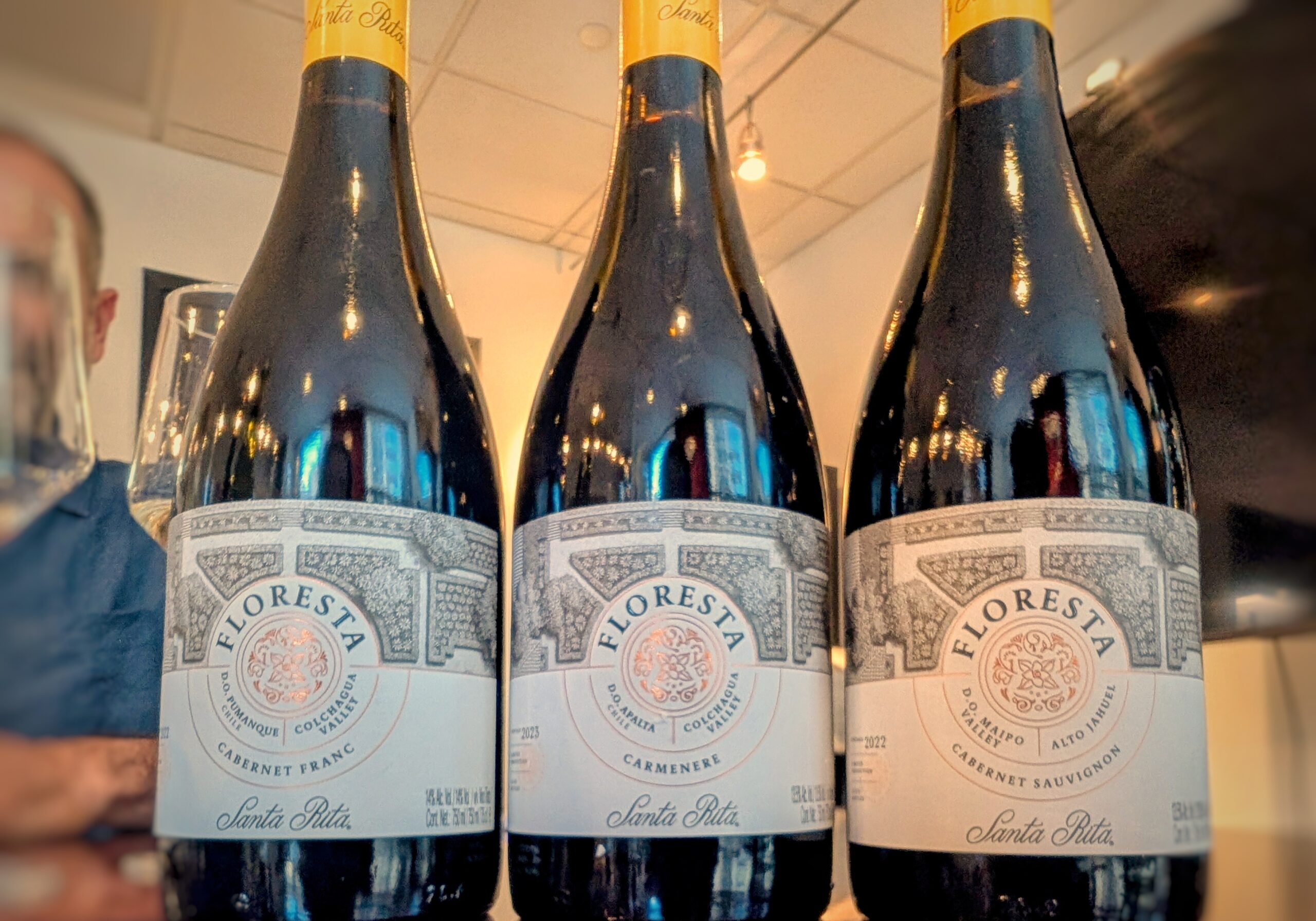
2016 SHABO, Grand Reserve, Blanc de Blancs Brut Sparkling Wine: 100% Chardonnay using the Champagne Method and aged eight years on the lees. Intense minerality with tantalizing notes of brioche and rich peach pie flavors on the palate with fresh acidity and a creamy texture formed by tiny, fine bubbles.

2023 SHABO, Telti-Kuruk Reserve
Photo Credit: Cathrine Todd
2023 SHABO, Telti-Kuruk Reserve White Wine: 100% Telti-Kuruk – a white native grape variety. A terroir-driven nose with wet river rocks, crushed limestone and wildflowers with lemon curd flavors and marked acidity that has a broad body balanced by lots of vitality.

2022 SHABO, Telti Kuruk Grande Reserve White Wine: 100% Telti-Kuruk that has been barrel fermented in French oak. Sea spray, lemon confit and a hint of spice with quince paste and mandarin oil on the palate with more texture to the wine than the Reserve, giving it a beautiful shape across the long finish.

2019 SHABO “Iukuridze Family Wine Heritage” Telti –Kuruk
Photo Credit: Cathrine Todd
2019 SHABO “Iukuridze Family Wine Heritage” Telti –Kuruk, Exclusive Release White Wine: 100% Telti-Kuruk. Giorgi Iukuridze noted that their top Telti-Kuruk will reach their peak of complexity in five to seven years and stay there for eight to ten years, yet in some cases, it can age a lot longer. And so, they have wines that they hold back for small batch releases once they have more age, such as this Telti-Kuruk “Iukuridze Family Wine Heritage” exclusive release. Multilayered aromas of honeycomb, seashell and hazelnuts with pear tart flavors and bright acidity with a very long finish of saline minerality.

2023 SHABO, Rosé Wine: 100% Pinot Noir. Freshly picked raspberries and strawberries with an uplifting aroma of lavender with a nice amount of weight yet still very minerally with mouthwatering acidity.

2022 SHABO, Qvevri Wine, Saperavi-Merlot
Photo Credit: Cathrine Todd
2022 SHABO, Qvevri Wine, Saperavi-Merlot, Limited Edition Red Blend: 40% Saperavi and 60% Merlot and spends six months in qvevri buried in the ground. Saperavi is a teinturier red wine grape, meaning it has red flesh as well as a red skin. Deep, brooding flavors are the first to reveal themselves with blackberry compote and black raspberry liqueur, which finds harmony with added layers of zingy tart cherry and orange peel that is grounded by smoldering cigar and graphite that is irresistibly juicy and flavorful while delivering so much complexity.

2023 SHABO, Cabernet-Merlot Grande Reserve
Photo Credit: Cathrine Todd
2023 SHABO, Cabernet-Merlot Grande Reserve Red Blend: 82% Cabernet Sauvignon and 18% Merlot. This wine is aged in 70% new French oak and 30% 2nd use barrel. Many times, when there is a new, exciting wine country in the U.S. marketplace, there is the feeling that they should only show their native grape varieties and stay away from the most popular international grape varieties as the market is saturated with them. However, once this wine is tasted, it becomes obvious why their Cabernet wines have won competitions and awards, as well as a place at the famous Bordeaux wine museum, La Cité du Vin. Enchanting black and red fruit starts to waft from the glass with notes of cassis and blackcurrants with tobacco leaf and licorice that has lively acids with an impressive density that has precision created by finely sculpted tannins with a long, expressive finish that is reminiscent of blooming jasmine during an evening stroll. 

Posted in Dame Wine | Tagged | Leave a comment

Tuscan Wine Created By Napa Valley And Tuscany Leaders Celebrates 30 Years

The clipping of grape bunches off the vines created a rhythm as if the harvesters performing these acts had synchronized a symphony of earthly beauty. A light rain started to fall from the sky adding to the musically relaxing sounds and as quickly as the rain appeared, it then vanished with a rolling fog that came across the vineyards, creating a dramatic effect as the golden sun beamed from the sky and banished the mist as it was time for the vines to absorb the sun. As the golden hue intensified, there were sounds of creatures within the dense forest surrounding the vineyards, sounds like grunts from a couple of boars, and then it shifts swiftly to the sounds of waves crashing against jagged rocks from the sea as the sunset painted the sky with glorious shades of orange, pink and red.

A stunning film transported the audience of wine professionals to the vineyards of the enchanting area of Montalcino within the region of Tuscany, Italy, as they sat in a room within the prestigious Christie’s Auction House in Manhattan, New York City. Three decades of Tenuta Luce’s Luce della Vite wines would be tasted under the guidance of the winemaker Alessandro Marini, showcasing the different vintage expressions of a wine that dared to combine two renowned grape, polar opposites to each other, that seemingly would never find a harmonious partnership: Sangiovese and Merlot.

Winemaker Alessandro Marini
Photo Credit: Gabi Porter

Yet under the leadership of two iconic wine families, Frescobaldi and Mondavi, each with an impressive history in Tuscany and Napa Valley, respectively, these two varieties seamlessly enhanced each other. Unfortunately, the great titan Robert Mondavi passed away in 2008, but the Frescobaldi family still honors his legacy because as partners, they were able to create a very special wine that has only become better over the past 30 years.

Sangiovese & Merlot

The Frescobaldi family is one of the oldest winemaking families in Italy, with 700 years and 30 generations in Tuscany and today they own several wine estates within the region, hence, very few know more about Tuscan wine or the Sangiovese grape variety, which finds its classic home in Tuscany, than Frescobaldi. However, they also have half a century of experience with the Merlot variety, as their CastelGiocondo estate has been making 100% Merlot wines since the 1970s. And even though most Italians would say that no grape can compare to Sangiovese, there is a strong case to make for Merlot – as one of the most sought-after wines in the world, many times breaking records at auction houses, is Château Pétrus, an often times 100% Merlot (sometimes a couple of percentages of Cabernet Franc are added in certain vintages) from the Right Bank of Bordeaux, France.

The one wine that could challenge Château Pétrus would be Masseto, a 100% Merlot planted on a stellar estate in Bolgheri, Tuscany, also owned by the Frescobaldi family.

Tenuta Luce estate
Photo Credit: Tenuta Luce

The Luce estate is located in the southwestern part of the hill town of Montalcino, which is the warmest area and known as the wildest, as it is mainly taken up by forests. The winemaker of Luce, Alessandro Marini, said that during the summer, the climate could be desert-like, with days getting as high as 95 Fahrenheit and it has one of the biggest diurnal swings in temperature for nighttime in the area as it will drop to 60 Fahrenheit – over 30 degrees difference. Alessandro remarked that this is an ideal situation for the vineyards as the grapes get a “push for ripeness” during the day, yet the cool night helps retain acidity and aromatics.

Their Sangiovese vines are planted on schist soil, which the grape loves as schist is good at retaining heat, which helps to ripen the grape while also providing moisture during dry periods. The Merlot is planted on clay, and the top vineyards of the world for Merlot are often clay dominant as it’s cooler since it is more compact as the water in the soil evaporates more slowly, keeping it at a lower temperature than looser soils. Merlot can tend to get over-ripe, so the cooler soil helps to moderate the ripening process, making sure to produce a Merlot that is more harmonious and elegant; also, the varied elevation of the property encourages an overall finesse to the wines as it ranges from 885-1,371 feet.

30 Years Of Luce

The vertical showcased a range of vintages to show Luce’s ability to shine in various circumstances. For example, 1994 represented the beginning of this remarkable experiment (1993 was the first vintage) so they were still finding their way in the early days. But even with a small jump to 1999, there is a significant increase in quality, and the wine is wonderful. They did not shy away from showcasing a weaker vintage for Montalcino, such as 2002, which was forecasted to not age so well yet was impressive with its layered complexity and illustrated that great producers will always make a high-quality wine in every vintage, it is just a matter of whether some vintages are more extraordinary than others. When it comes to extraordinary vintages, they generously presented such outstanding years as 2009, 2015, 2016 and 2019 that dazzled and the newly released vintage, 2022, is simply a knockout.

Not only was the space where this momentous tasting took place a breathtaking venue but just walking through the halls of the Christie’s Auction House in Manhattan was a powerful experience as exquisite works of art were displayed along the way to this epic event. It was fitting to have such paintings by preeminent artists, who were revolutionary in their own ways during their time, lighting the way in a sense to this wine tasting of preeminent wine families, who created their own revolution of excellence.

Lineup of Luce wines
Photo Credit: Gabi Porter

2022 Luce, Luce della Vite, Toscana IGT, Tuscany, Italy: Blend of Sangiovese and Merlot. Multi-layered rich fruit flavor of blueberry scone drizzled with raspberry coulis and dark chocolate covered cherries that is highlighted by spicy notes of cinnamon toast and an intense minerality with very fine tannins and bright acidity yet plenty of structure to indicate this wine will have a long life.

2019 Luce, Luce della Vite, Toscana IGT, Tuscany, Italy: Blend of Sangiovese and Merlot. Effusive red fruit intertwined with notes of rose oil immediately enchants with fresh crunchy fruit on the palate with complex notes of asphalt and tobacco leaf that has incredible precision on the finish with a long-expression of aromatics.

2016 Luce, Luce della Vite, Toscana IGT, Tuscany, Italy: Blend of Sangiovese and Merlot. A showstopper of a wine that is at once deliciously decadent while also being regally elegant with concentrated flavor of blackberry cobbler balanced by hints of Mediterranean scrub and grilled herbs that has succulent fruit on the palate that is given shape and drive by powerfully chiseled tannins and has a long, flavorful finish with an overall radiance that lifts the wine.

2015 Luce, Luce della Vite, Toscana IGT, Tuscany, Italy: Blend of Sangiovese and Merlot. Plush mulberry fruit delights from the first taste with a thrilling note of scorched earth that has silky tannins that caress the palate creating an exceptional textural experience.

2013 Luce, Luce della Vite, Toscana IGT, Tuscany, Italy: Blend of Sangiovese and Merlot. Aniseed, cinnamon stick and dried cranberries invite one to delve into the chewy tannins that releases savory flavors, such as roasted eggplant, to intermix with the sweet qualities of the wine.

2009 Luce, Luce della Vite, Toscana IGT, Tuscany, Italy: Blend of Sangiovese and Merlot. A gorgeous nose of violets and jasmine with dense fruit of raspberry liqueur and intoxicating notes of black truffle with an exciting hint of soy sauce wrapped up in supple tannins that leaves one in a decadent afterglow. 

2005 Luce, Luce della Vite, Toscana IGT, Tuscany, Italy: Blend of Sangiovese and Merlot. Starts out with savory aromas of herbs and wild mushrooms that morphs to brambly berries with a hint of forest floor and licorice on the finish that has lots of tannins with a lovely round quality that gives volume to this full-bodied wine.

2002 Luce, Luce della Vite, Toscana IGT, Tuscany, Italy: Blend of Sangiovese and Merlot. A wine with multidimensional aromas with graphite and sandalwood on the nose with a delicious touch of bacon fat that has a slight grip to the structure with fresh blackberries bringing a nice vitality to the multitude of complex notes.

1999 Luce, Luce della Vite, Toscana IGT, Tuscany, Italy: Blend of Sangiovese and Merlot. Vibrant red fruit and basil leaf on the nose that jumps out of the glass yet gets dark and brooding on the palate with mulberry compote and an underlying hint of balsamic herbs with a broad palate.

1994 Luce Toscana IGT, Tuscany, Italy: Blend of Sangiovese and Merlot. Dark garnet color that has a ruby rim with intriguing notes of smoldering cigar and singed sage leaf with plenty of fruit left on the palate with flavors of cherries jubilee and medium weight to the body.

Posted in Dame Wine | Tagged , | Leave a comment

Woman’s Wine Journey From Bolivia To California’s 100-Year-Old Vines

Over 150 years ago, the idea of the American Frontier, a.k.a. the Old West, was a dream for those who had limited opportunities in their own land; it was the chance to build a much better life through hard work without having one’s social standing get in the way. That dream mainly existed in California, and even today, it is a state that has encouraged entrepreneurial innovation across many sectors. It is also a relatively new winemaking area that showed the world that great wines weren’t limited to European borders.

One woman, Susy Vasquez, experienced her own version of a modern-day American Frontier journey as she traveled to California from Bolivia to gain more experience with sustainable agriculture with a side benefit of improving her English, which she knew would open up better job prospects once she went back to Bolivia. Her focus was originally geared towards crops to be consumed as food, and the notion of making wine never occurred to her. Yet a friend introduced her to an American man, David, who would be the impetus to place her life on another track.

Life Has Other Plans

Susy Vasquez
Photo Credit: LangeTwins

She wasn’t interested in a romantic relationship then as she had always intended to go back home, so she only hung out with David as a friend. He also worked in agriculture but focused on growing grapes for wine, which was interesting to Susy, and brought to her attention that there was an intern opportunity with E. & J. Gallo Winery, one of the most successful wine companies in the world. The position was geared towards organic viticulture, which was very exciting to Susy, and she could work for a top company on the cutting edge of sustainability.

Susy’s boss at Gallo, who used to be a professor at U.C. Davis, was always on the lookout for talent and came to her to offer a position that would involve being a liaison between the vineyard team and the winemaking team. “I don’t know anything about fermentation science,” answered Susy, who was quite taken aback by the request. And her boss replied, “Well, we are going to send you to U.C. Davis.” So Susy ended up taking winemaking classes at Davis, and then, she really got a fantastic education working in a lab for Gallo that took the grapes from the vineyards and put them through all of the winemaking stages, evening bottling the wines. Gallo has miniature equipment, even a small bottling line, within the lab; that way, they could do their testing at every stage with small batches. Since Gallo grows grapes all over California with various grape varieties and styles of wines, it gave Susy a chance to understand the nuances of precision winemaking for multiple styles.

LangeTwins In Lodi

Brad and Randall Lange
Photo Credit: LangeTwins

Through time, Susy never ended up going back to Bolivia permanently as she went on to oversee entire wine programs at other wineries in the highly competitive California wine industry. Finally, she found her new home in Lodi, California, at the family winery LangeTwins.

Lodi has a special history – the first vineyard was planted there in 1850, and today, it has a high concentration of old Zinfandel vines, with the oldest dating back to the 1920s. The farmers in Lodi have always been ahead of the curve when it comes to sustainability, and they started America’s original sustainable winegrowing program in the early 1990s. And because it is such a diverse winegrowing region, there are around 125 grape varieties in production; it is an ideal place for Susy, who loves to work with various varieties as well as making sustainability a major mission in her life, especially at such a multi-generational winery as LangeTwins.

Lange twins with grandson
Photo Credit: LangeTwins

LangeTwins is run by twin brothers and their adult children; their great-grandparents came to Lodi in the 1870s to farm non-irrigated watermelons. As a family, they purchased their first vineyard in 1916, and through each generation, have evolved to make more premium wines with a site-specific approach. Today, they are committed to keeping this a thriving generational business and they have committed to ambitious environmental projects such as removing 60 acres of vineyards as they would like to increase the biodiversity, enrich the soil and improve the watershed through regenerative farming – just one of the many admirable programs they have implemented.

Susy has been making wine for over 19 years, which seems shocking considering her vibrancy and overall glow when she talks about her job as a winemaker at LangeTwins.

Because it is not old hat, and if anything, it has kept her young while accumulating lots of knowledge and experience, making her an incredible leader. She remembers how hard it was when she was younger and had her second child, as she was passed up for promotions and felt guilty knowing that it could cause issues for her job. She loves her job and feels so lucky to be in the position she is in today, but it was challenging, and she doesn’t want any young woman working for her to go through what she had to go through. She reassures everyone who works for her that they are part of a team and that means that if someone has a baby or any major life event or crisis, others will step up and cover them, and the favor will be returned.

Laid Out In The Past

It was heartwarming to hear Susy reminisce about all those years ago when she first became friends with that American man, David, who introduced her to wine and the opportunity at Gallo. Even though she thought they were just friends hanging out whenever it was convenient and easy, she didn’t realize that he lived over two hours away and would come to see her almost every weekend to hang out. Then, when she took a trip back home to visit her parents before she started at Gallo, he told her that he would visit her, which she quickly dismissed as so many people she knew in California said they would come to Bolivia but never ended up coming. But one day, she got an email from David saying he was coming, asking if he had a good itinerary and attached a copy of his plane tickets to show her that it was true. He said he wanted to see her at home, in her environment, but even after all that, she still thought she would return home after Gallo.

Susy hadn’t talked about those memories in years because she is too focused on the present, as she has two kids, the oldest 16 years old, and yes, she ended up marrying David and he has been on this journey with her since that time. Sometimes, one’s future starts to get laid out unbeknownst to that person, but it is all crystal clear when revisiting the past. Who she would marry or where she would live were not the only things that weren’t clear during that time, as she couldn’t even see her potential as an important leader who would make the road more possible for others.

LangeTwins lineup of wines
Photo Credit: Cathrine Todd
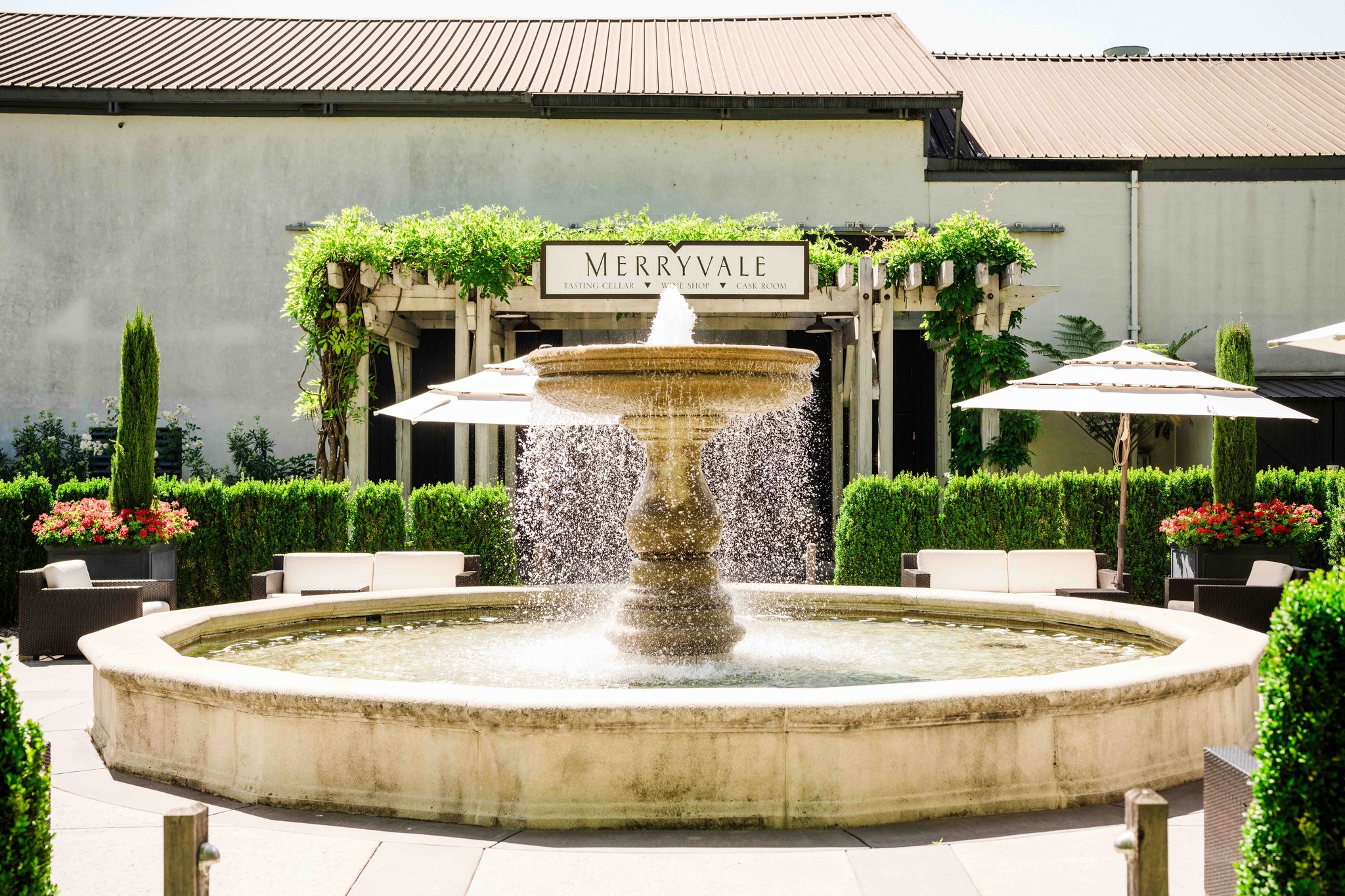
2023 LangeTwins “Sand Point” Sauvignon Blanc, Lodi, California: 100% Sauvignon Blanc. This wine really punches above its weight retailing at only $12 with a refreshing zesty quality enhanced by tropical notes such as lemon sorbet and green mango flavors with mouthwatering fierce acidity balanced by a nice amount of weight on the palate.
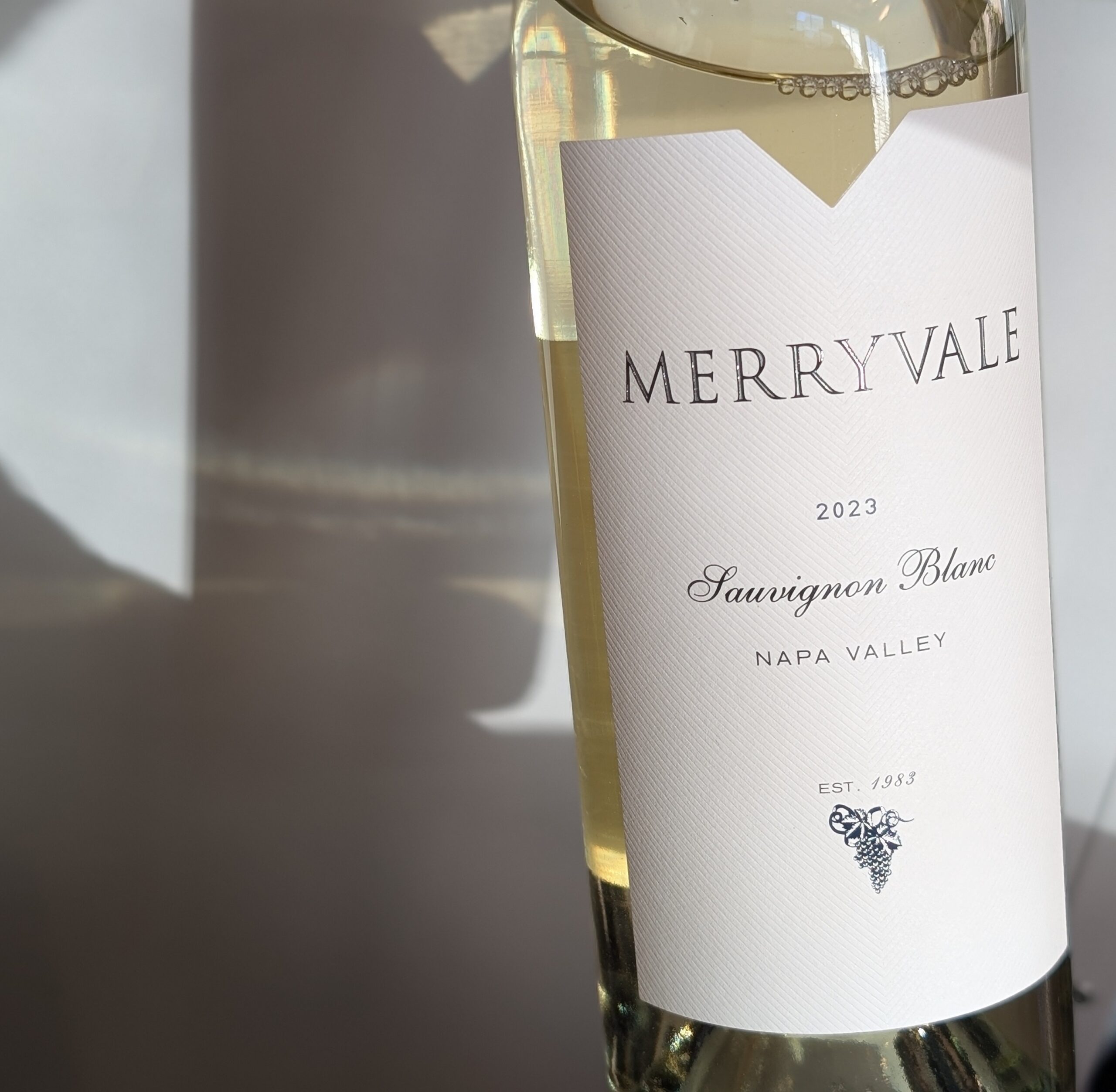
2024 LangeTwins, Grüner Veltliner, North River Vineyard, Mokelumne River AVA, Lodi, California: 100% Grüner Veltliner (white grape originally from Austria) from the single vineyard North River, which is located in the sub-region of Mokelumne River – one of Lodi’s cooler climates. Susy noted that for each vintage, they will decide what parcels to bottle as a single vineyard; for example, this Grüner Veltliner for some years will make a better blending partner for their white blends so that no single vineyard will be made, but 2024 was ideal for this Grüner Veltliner plot. Aromas of intense minerality with notes of pear drop and hints of white pepper with a softer acidity than the Sauvignon Blanc on the palate, yet it is still vibrant with a broad body with lemon curd flavors.

2022 LangeTwins “Ivory & Burt” Old Vine Zinfandel, Lodi, California: 100% Old Vine Zinfandel. Another steal retailing at $16 as it has a nice amount of complexity and brightness that makes this wine irresistible with ripe strawberries flecked with cracked black pepper intermixed with the richness of blackberry preserves flavors that is lifted by bright cranberries with an underlying note of rocky gravel.

2020 LangeTwins “Midnight Reserve” Bordeaux Bend. Lodi, California: 55% Petit Verdot, 44% Cabernet Sauvignon and 1% Cabernet Franc. This is one of LangeTwins’ top wines, and it changes its blend every year, yet Bordeaux varieties are always represented. 2020 was a spectacular year for Petit Verdot, which is why there is such a large percentage. Multilayered aromas of cocoa nibs, cassis and tapenade that has a slightly firm structure give shape and focus to the wine balanced by plush fruit and a juiciness that has a long finish leaving espresso notes in one’s head.

Posted in Dame Wine | Tagged , | Leave a comment