100-Point Scored Napa Valley Wine Producer’s Favorite Napa Vineyard

“It is like a metronome, as it is a single vineyard that is always perfectly balanced and harmonious.”

Those words came from the highly passionate winemaker, Peter Heitz, of Turnbull Wine Cellars, who has most of their vineyards in Oakville, Napa Valley– where some of the most famous vineyards, such as To Kalon, reside. Under Peter’s guidance, Turnbull has been awarded a handful of 100-point scores for their wines: Fortuna Vineyard Cabernet Sauvignon, the Black Label Cabernet Sauvignon – Peter’s barrel selection, and finally, a scarce three-barrel production of their Pierra Cabernet Sauvignon made from Block 9 in their Leopoldina Vineyard, the steepest part of this site, yet the more available bottling of their Leopoldina Vineyard has not won a 100-point score, not yet anyways.
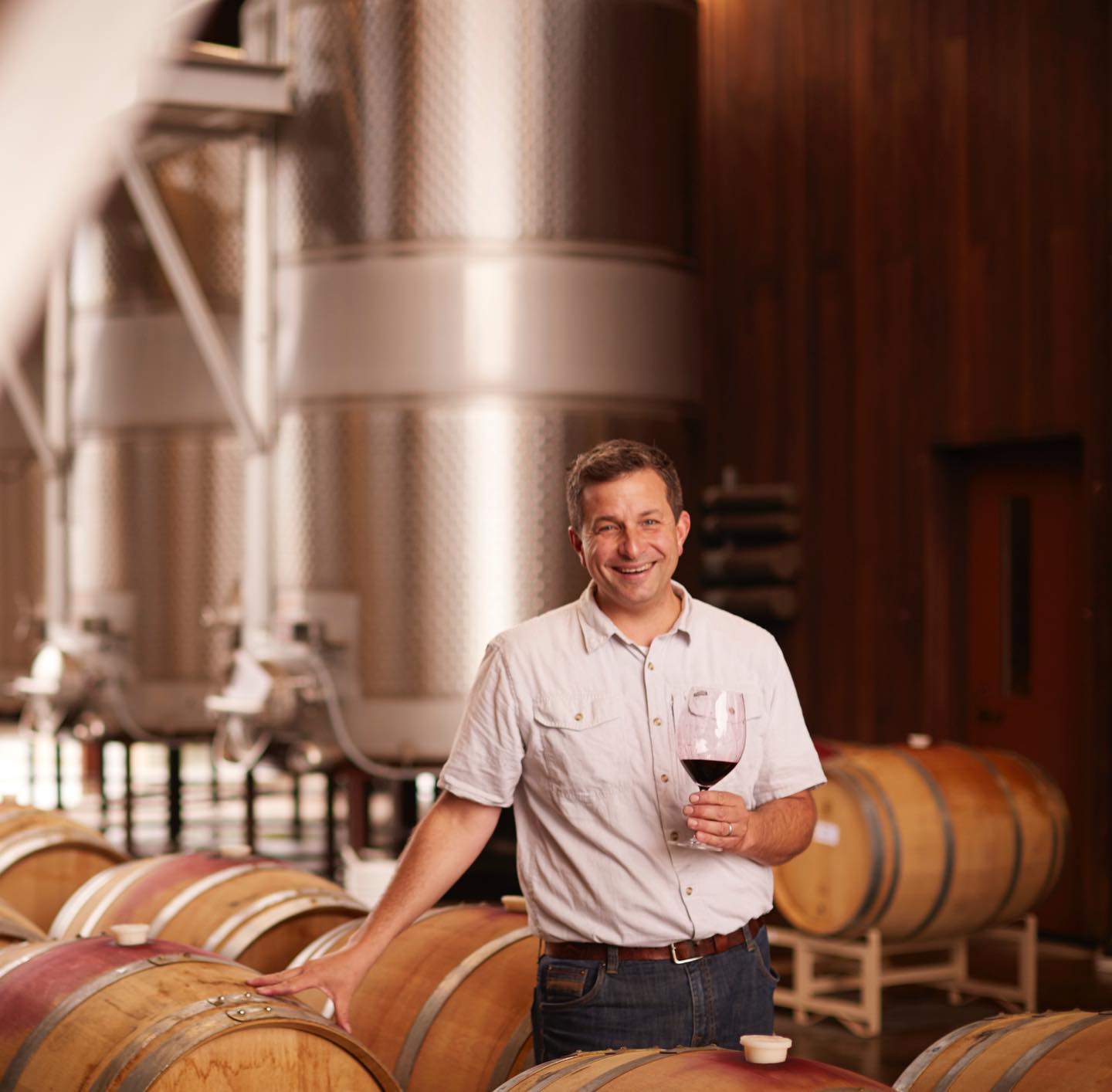
Winemaker Peter Heitz
Photo Credit: Turnbull Wine Cellars

The Leopoldina Vineyard is Peter’s metronome, as it is the one that always focuses him on what the ideal balance should be for any particular vintage, which has its own identity from previous vintages. He notes that it always finds harmony whether it is a wet year, as the soils on the steep land have excellent drainage; cold year, no worries – there is always enough heat that is assured by the warmth radiating off the red volcanic rocks; and not even a hot year can hinder the incredible potential of this site since it is located at the bottom of the hill, and so, it doesn’t get directly attacked by the sun.

It is a single vineyard wine that could easily go up in price in the future; as for the current 2021 vineyard, famous wine critic Jeb Dunnuck stated that “it competes with wines 2-3 times its price.” Hopefully, it will stay where it is for a bit longer, so those who have yet to have the pleasure can grab a bottle to try this extraordinary single vineyard bottling for themselves, as it may be more available than their Pierra Cabernet Sauvignon. Still, there are less than 940 cases of the 2021 Leopoldina Vineyard Cabernet Sauvignon.

Leopoldina Vineyard
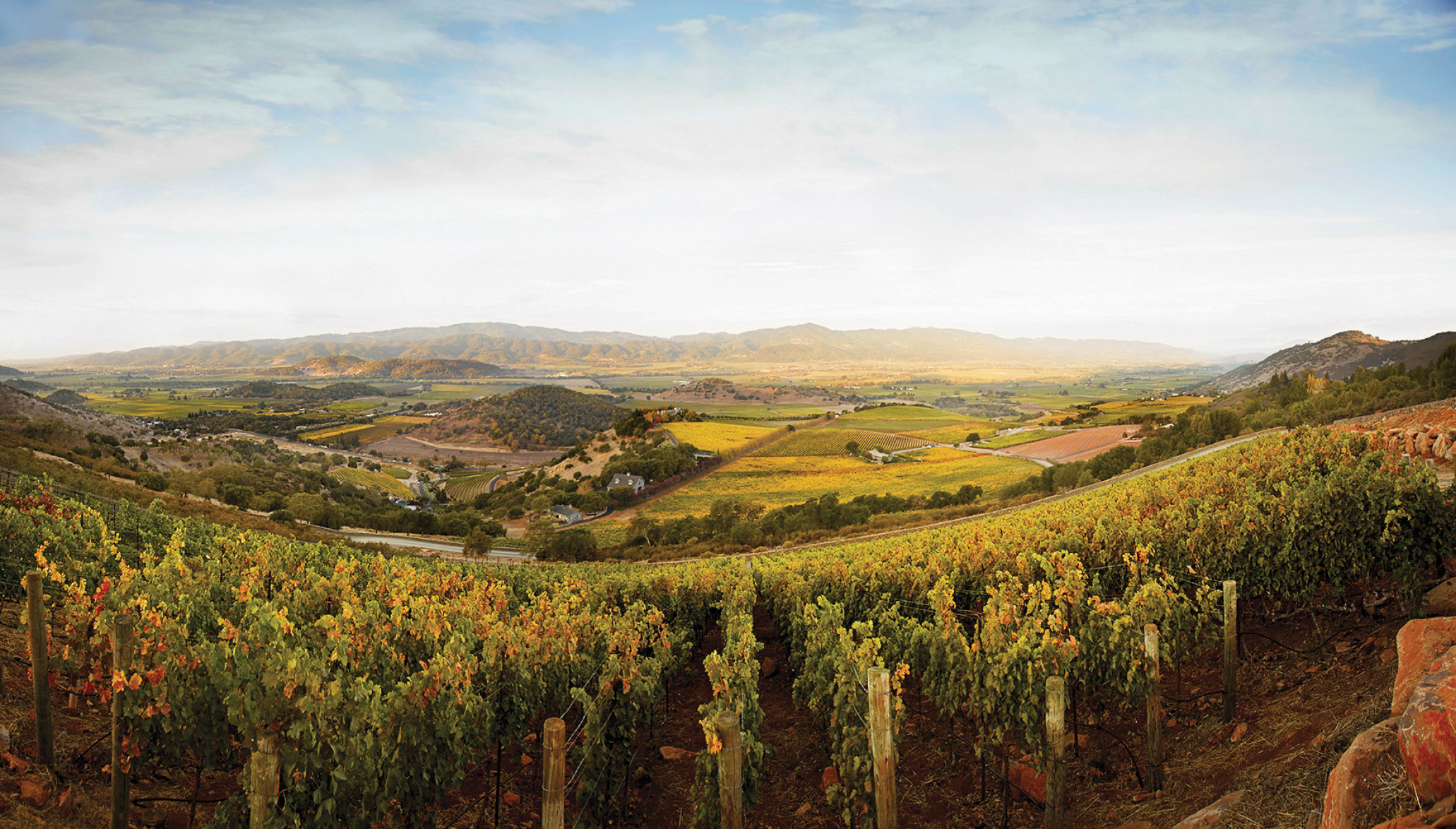
Leopoldina Vineyard landscape
Photo Credit: Turnbull Wine Cellars

“Spicy, delicious, rich but also lots of finesse and lift and you have all these different savory components,” Peter exclaims about the Leopoldina Vineyard as he gushes that, as a winemaker, and a multi-generational winemaker and grape grower at that, he could have never imagined that such a vineyard existed, let alone that he would be able to work with it. If he were granted a magical wish to have any vineyard in the world, he would pick Leopoldina and considering he is in an area of the world that has some of the most sought-after cult wines, it says a lot about his intense feelings for this special plot of land.
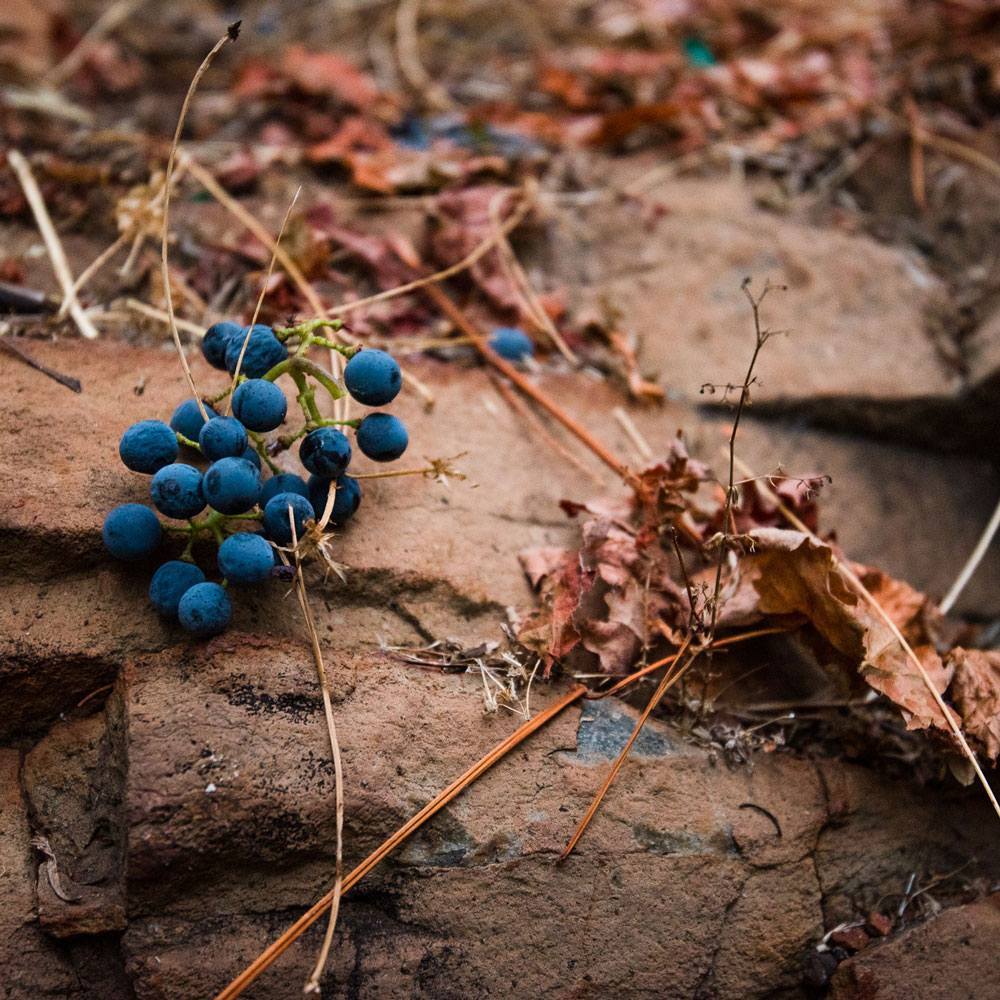
Red volcanic rocks in Leopoldina Vineyard
Photo Credit: ADAM SHINDLEDECKER

Their Fortuna Vineyard, which has won a 100-point score in the past, is consistently good like Leopoldina, but in certain years, there is just a lot more work within the Fortuna site to make sure it lives up to its potential, whereas Leopoldina finds a way to adapt under the most extreme circumstances gracefully. The third single vineyard bottling they make comes from a site in the Calistoga sub-region of Napa instead of Oakville, and it goes by the name of Amoenus.

The name Amoenus comes from a term found in Latin poetry that references the Garden of Eden, as it is a place that can seemingly feel like a Mother Nature paradise that is isolated from the world. Once, when his kids were little, Peter took his family camping on the grounds of the Amoenus property, and they were surrounded by creeks, wildflowers and various animals, as coyotes, wildcats and mountain lions are known to roam the property. His kids thought they were deep within the woods, completely away from civilization.

Turn Of The 20th Century Roots
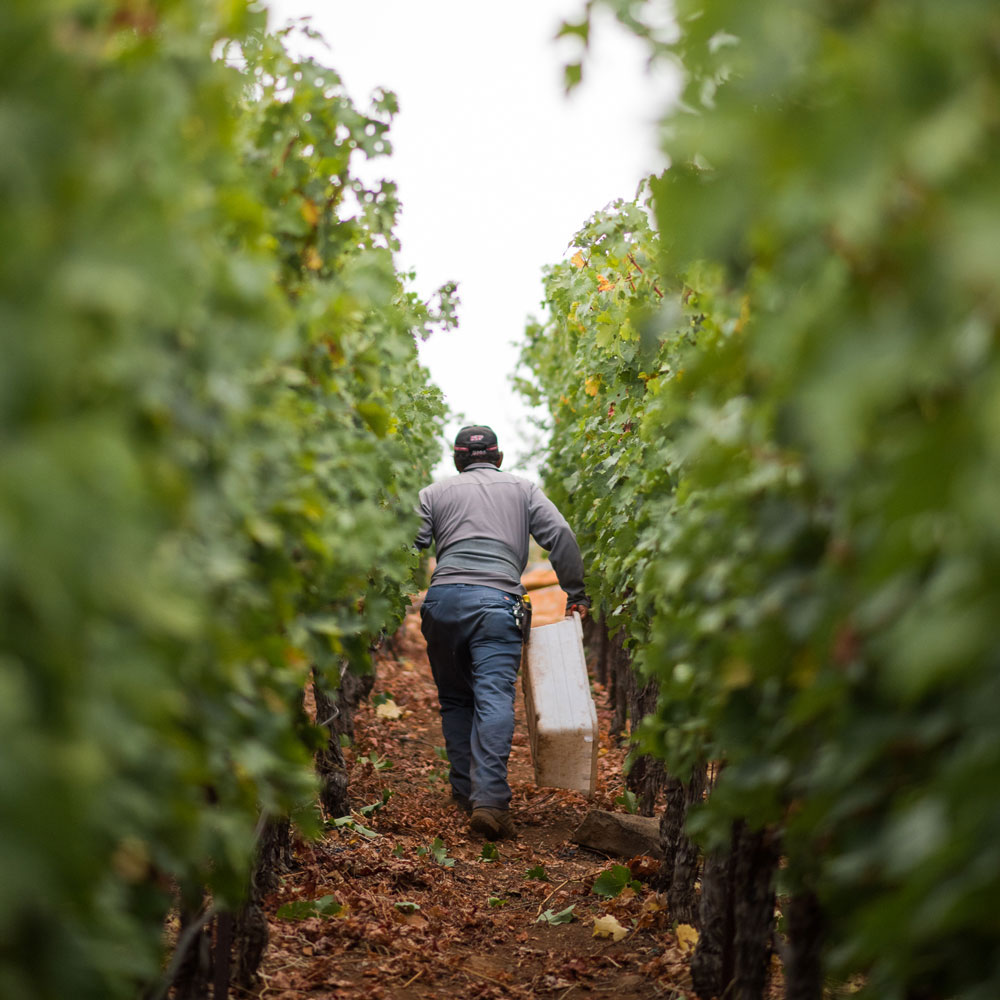
Steep slope of the Leopoldina Vineyard
Photo Credit: ADAM SHINDLEDECKER

In 1904, Peter’s family bought land in Calistoga and planted vines and for five generations, his family has been farming and making wine from this vineyard so he is extremely experienced in working with Calistoga fruit. Peter thinks that most people incorrectly sum up Calistoga, as they just note it is hot, but that is not the whole story. As he said, during the summer, the nights can be 45 Fahrenheit and the days are 95 Fahrenheit; that is a more significant diurnal swing in temperatures compared to Napa Valley, so those high day temperatures are moderated by the very cool nights, creating wines that have “succulent cherry fruit and lots of freshness.” Peter noted that their Amoenus Vineyard hasn’t been as consistently great as their Fortuna and Leopoldina vineyards but it stands out in the 2021 vintage lineup as it has reached an outstanding quality that excites him because he feels this vineyard is finally finding its wings, like a butterfly emerging from its cocoon.

The exciting part of being a winemaker is the variation that comes with each new vintage, never knowing exactly what a year will bring or how the harvest timing will go down. Yet that can wear on a person, taking its toll to have to fight for everything little thing, hence, to have a North Star vineyard like Leopoldina that always shows the way to balance and harmony that can be depended on every year is a true gift; showing the way when one feels lost during the most challenging years is so precious, so inspirational and so in desperate need right now when many are feeling that they are living in times where they have no North Star to follow.

Link to original Forbes article: https://www.forbes.com/sites/cathrinetodd/2024/11/29/100-point-scored-napa-valley-wine-producers-favorite-napa-vineyard/
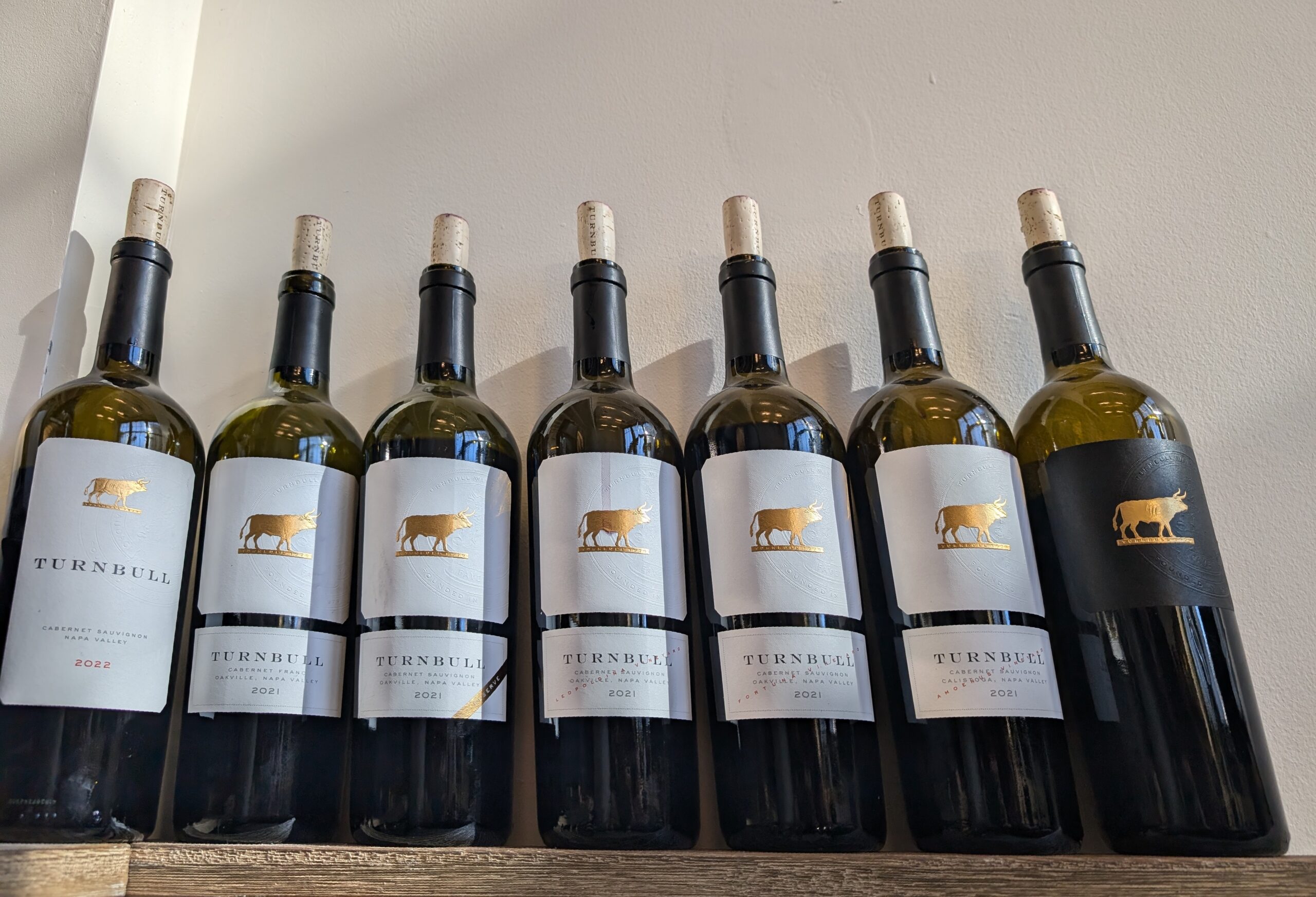
Turnbull lineup
Photo Credit: Cathrine Todd

2022 Turnbull, Cabernet Sauvignon, Napa Valley, California: 41% Fortuna Vineyard, 35% Leopoldina Vineyard, 15% Amoenus Vineyard and 9% Turnbull Home Vineyard; 85% Cabernet Sauvignon, 6% Merlot, 4% Cabernet Franc, 3% Petit Verdot and 2% Malbec. For a Napa Valley Cab that sources from a couple different sub-regions, this wine really delivers concentration and juicy deliciousness with lots of fleshy fruit from the first sip that has flavors of cassis and a plush body with very smooth tannins finishing with notes of wildflowers and a hint of spice. 12,000 cases produced.

2021 Turnbull, Cabernet Franc Oakville, Napa Valley, California: 62% Leopoldina Vineyard, and 38% Fortuna Vineyard; 100% Cabernet Franc. An incredible bouquet on this Cabernet Franc with violets, tree bark and graphite that has a linear drive with pristine raspberry fruit intertwined with orange blossoms with delicate tannins that come across like fine lace. 384 cases produced.

2021 Turnbull, Cabernet Sauvignon, Oakville Reserve, Napa Valley, California: 61% Leopoldina Vineyard, and 39% Fortuna Vineyard; 92% Cabernet Sauvignon, 5% Cabernet Franc, 2% Malbec and 1% Petit Verdot. A seductive wine with notes of cocoa powder and espresso with red currant preserves that is wrapped in a silky texture with an underlying complex note of smoldering earth. 2,029 cases produced.

2021 Turnbull, Cabernet Sauvignon, Leopoldina Vineyard, Oakville, Napa Valley, California: 100% Leopoldina Vineyard; 100% Cabernet Sauvignon. A wine that soars in the sky with uplifting aromas and flavors of rose oil, star anise, jasmine tea and a rocky minerality that has exquisitely sculpted tannins, marked acidity and a very long and aromatically powerful finish. 938 cases produced.

2021 Turnbull, Cabernet Sauvignon, Fortuna Vineyard, Oakville, Napa Valley, California: 100% Fortuna Vineyard; 100% Cabernet Sauvignon. This temptress outdoes the Oakville Reserve with seductive powers, as the black raspberry cobbler and tiramisu flavors are irresistible, especially combined with bright notes of orange peel that lift the rich body along the flavorful finish. 824 cases produced.

2021 Turnbull, Cabernet Sauvignon, Amoenus Vineyard, Calistoga, Napa Valley, California: 100% Amoenus Vineyard; 100% Cabernet Sauvignon. A brooding wine with broad shoulders and a depth of flavor with an air of mystery, as behind the multilayered dark fruit are hints of notes that evolve from second to second: volcanic ash, wild mushrooms, forest floor or fresh leather. It is a wine that refuses to be defined in one box, and the minute you feel like you have nailed it down, it turns on a dime to show another dimension. 1,430 cases produced.

2021 Turnbull, Cabernet Sauvignon, Black Label, Oakville, Napa Valley, California: 66% Fortuna Vineyard and 34% Leopoldina Vineyard; 100% Cabernet Sauvignon. A force to be reckoned with as this is a wine that is powerful yet all its curves are soft on the voluptuous body with flavors of blackberry compote showered with ribbons of fresh sage with an underpinning of black licorice and a structural power so fierce, while also being finely woven, which impressively indicates it will make great old bones. 1,741 cases produced.
Posted in Dame Wine | Tagged , , | Leave a comment

One Of The First Single Vineyard Champagne Wines That Is An Under-The-Radar Superstar

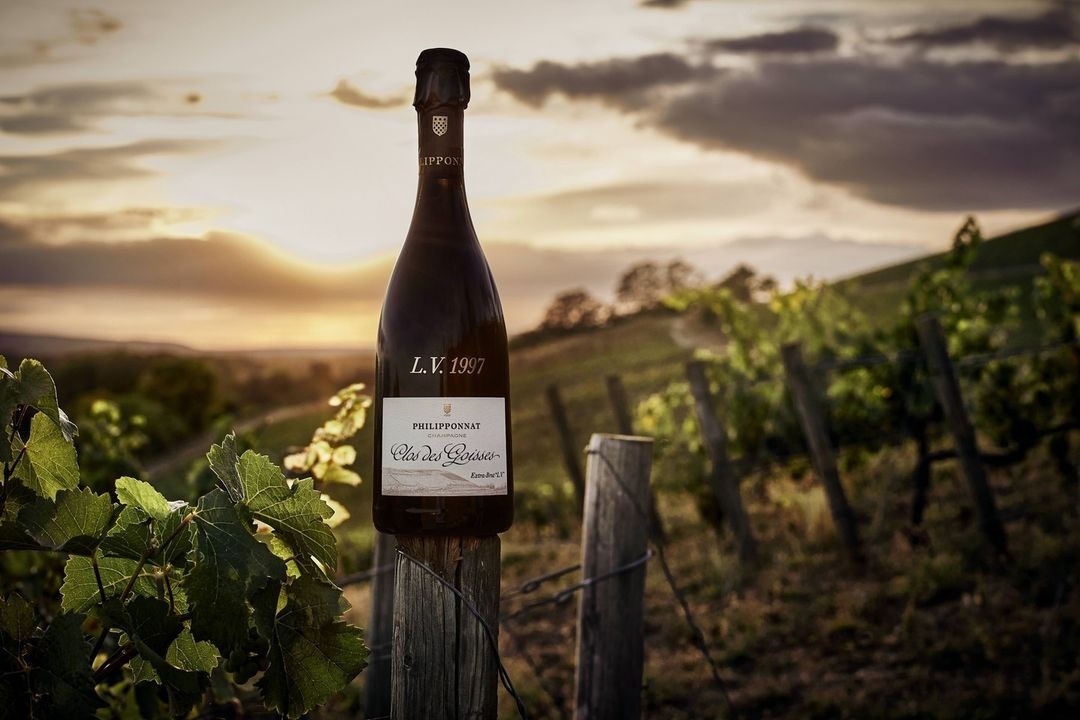
Champagne Philipponnat Clos des Goisses
Photo Credit: Gregory_LMG

Typically, when searching for a bottle of Champagne wine, a “house style” is sought that is ideal for the drinker, and that bottle will then become a go-to Champagne. The idea of a Champagne “house style” has become the cornerstone for the Champagne wine region in Northern France, a 90-minute drive from Paris – a city symbolic of the spellbinding powers of Champagne.

Yet, that “house style” is dependent on a few key factors: using three different varieties – Chardonnay, Pinot Noir and sometimes in small quantities Pinot Meunier; although in recent times, four other varieties have been approved, blending various vintage years and differing plots, and lastly, wisely choosing a particular strain of yeast that will allow the still wines in bottles to go through a secondary fermentation to create the bubbles – giving off byproducts called lees that will enhance aromas, flavors and texture as the wine ages on these lees.

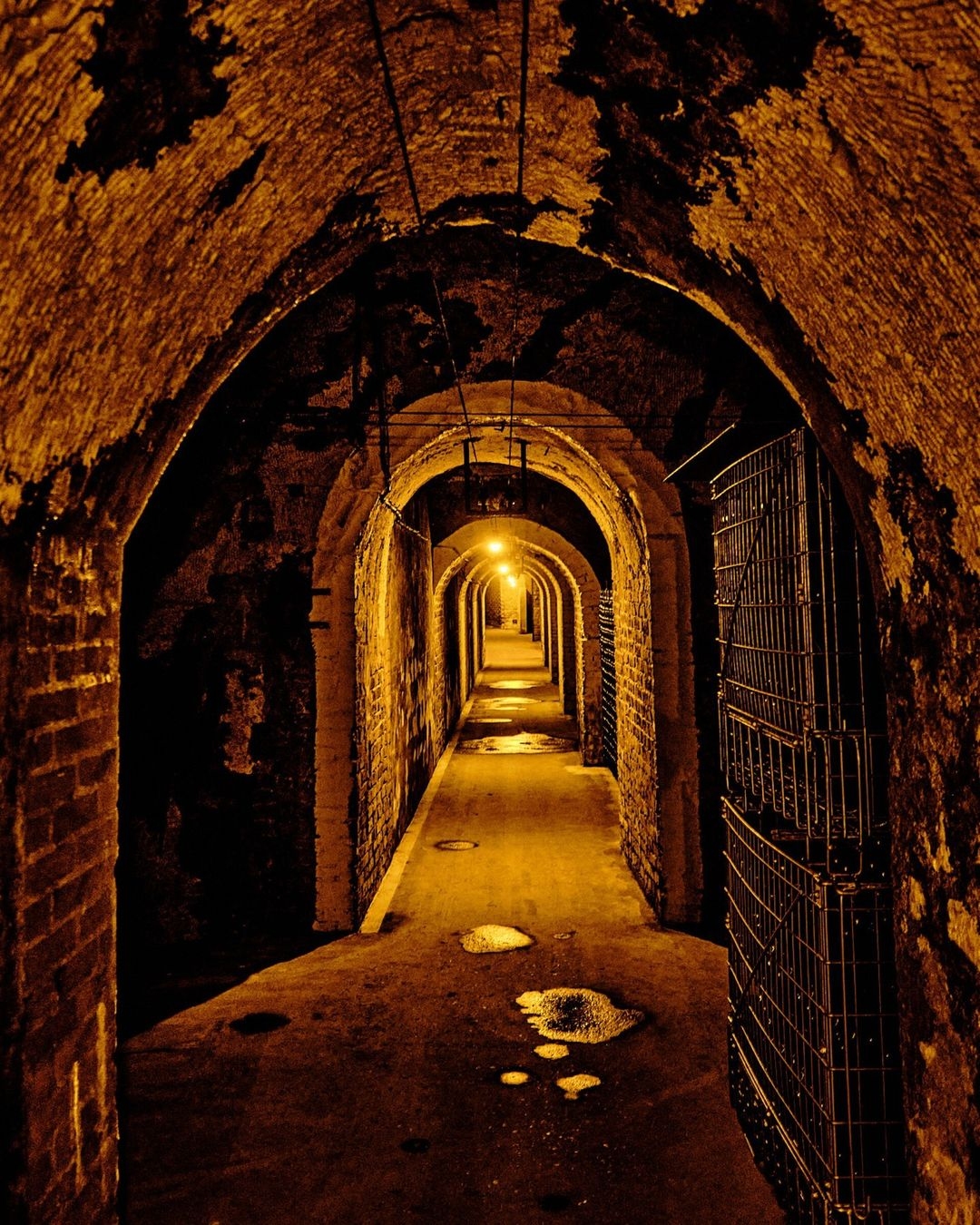
Champagne Philipponnat cellar
Photo Credit: Jean-Claude Amiel

And so, one can depend on that “house style” from a particular Champagne producer that is often times sold as their Non-Vintage Brut bottling so that it can be very similar in style year in and year out. Due to many of the excellent skills of the Champagne houses over the years, it has become known as a region that showcases the art of blending that has no other equal in the non-fortified wine world. But as time has gone on, there has been a strong desire among Champagne aficionados to delve into the terroir (sense of place) of this prestigious wine region, and it has become a part of any serious Champagne enthusiast’s journey to seek single vineyard bottlings with the rise of interest in grower Champagnes.

One wine producer is considered the most widely recognized to be the first to release a single vineyard Champagne: Philipponnat.

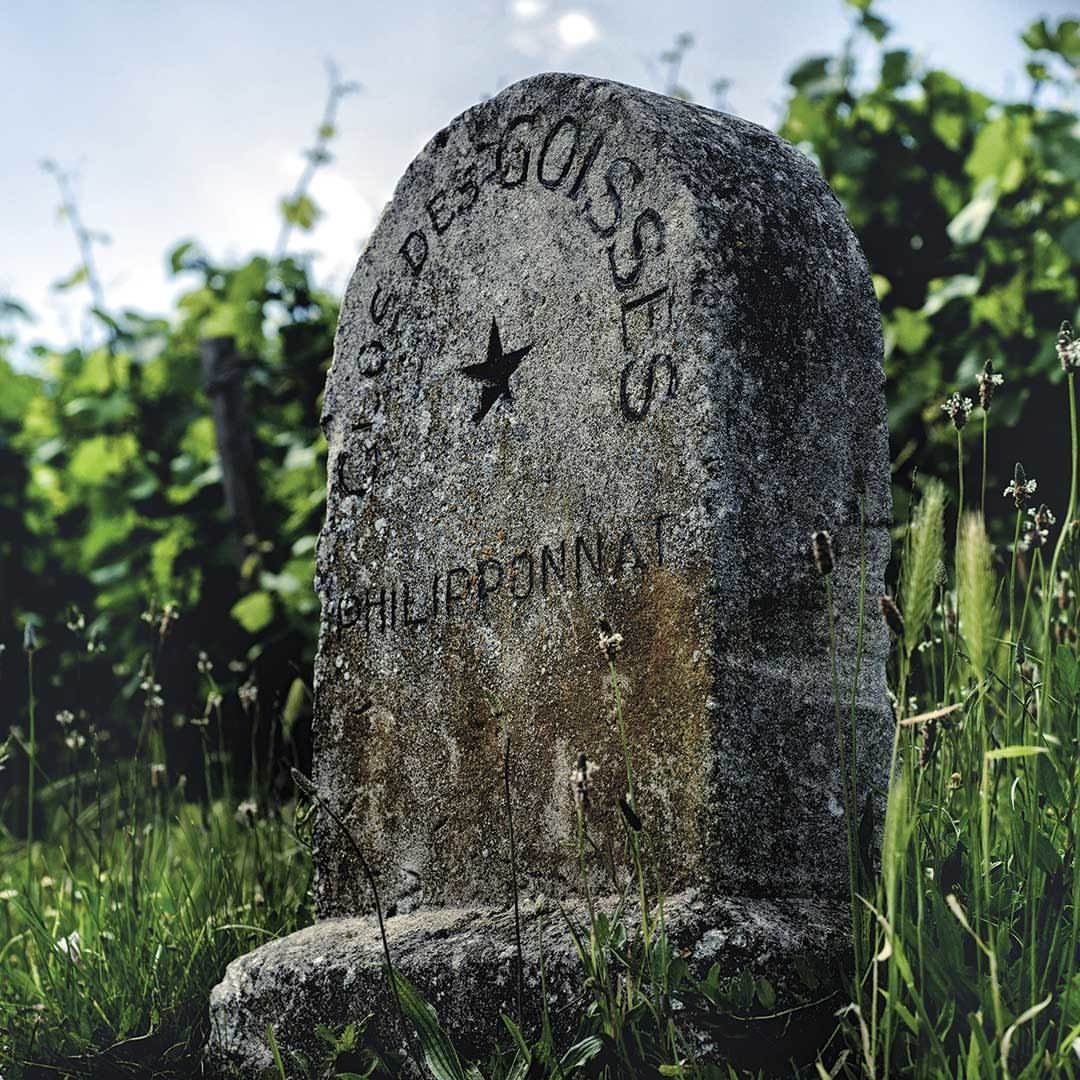
Clos des Goisses

Old stone marker for Clos des Goisses
Photo Credit: Gregory_IMG

The small Champagne house of Philipponnat released what many would consider the first official single vineyard Champagne in modern times, in 1935, coming from the Clos des Goisses vineyard in the Mareuil-sur-Aÿ area of Champagne. There is an earlier recording of the first site-specific single cru made by Salon, sourced from the commune of Le Mesnil-sur-Oger, a prominent location for sourcing top grapes today, but it is not technically a single vineyard. And there might have been someone else making bottlings of a single vineyard on a minuscule scale that was only enjoyed locally before the release of Clos des Goisses, and hence, why one cannot say that it is the first without adding some caveats.

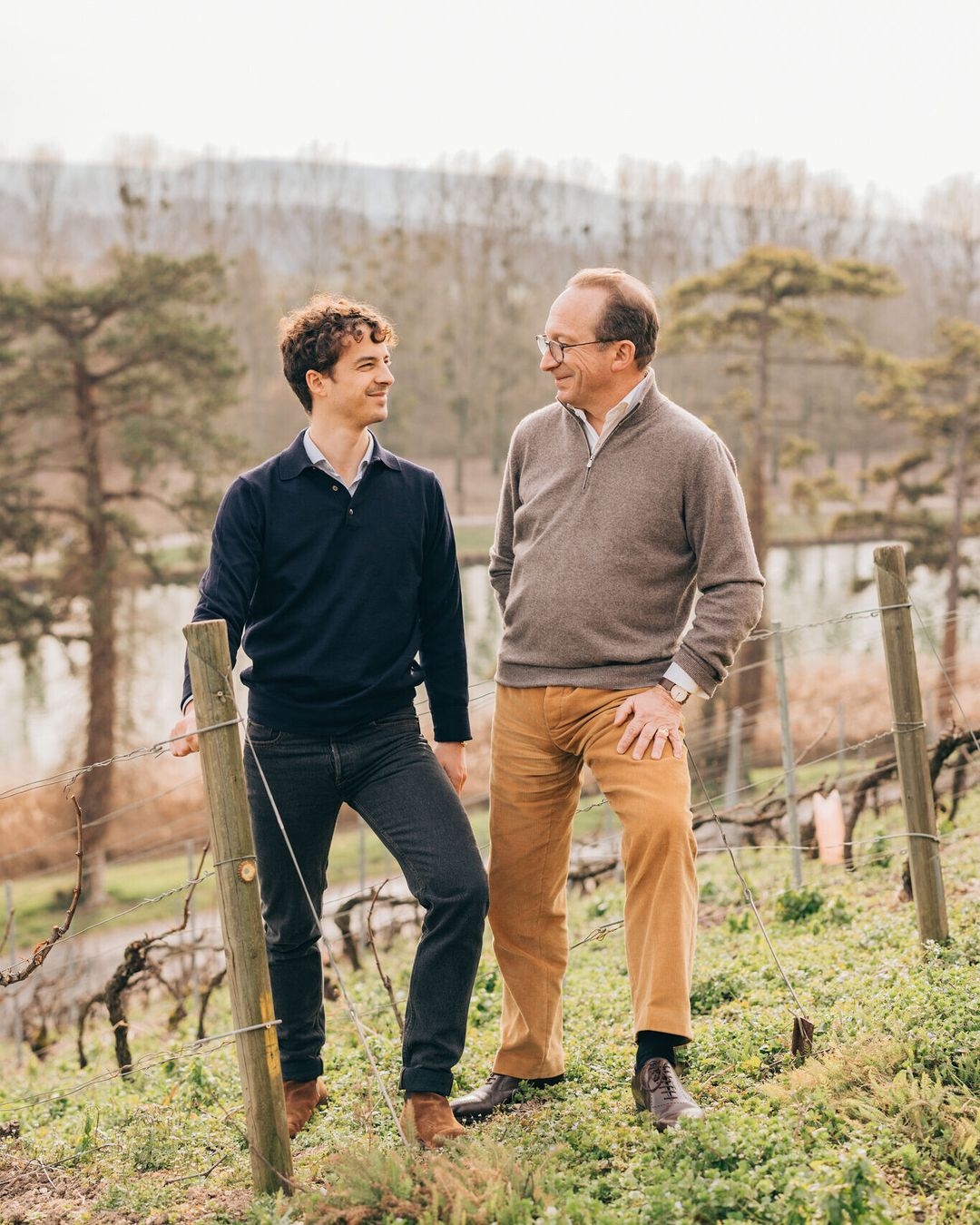
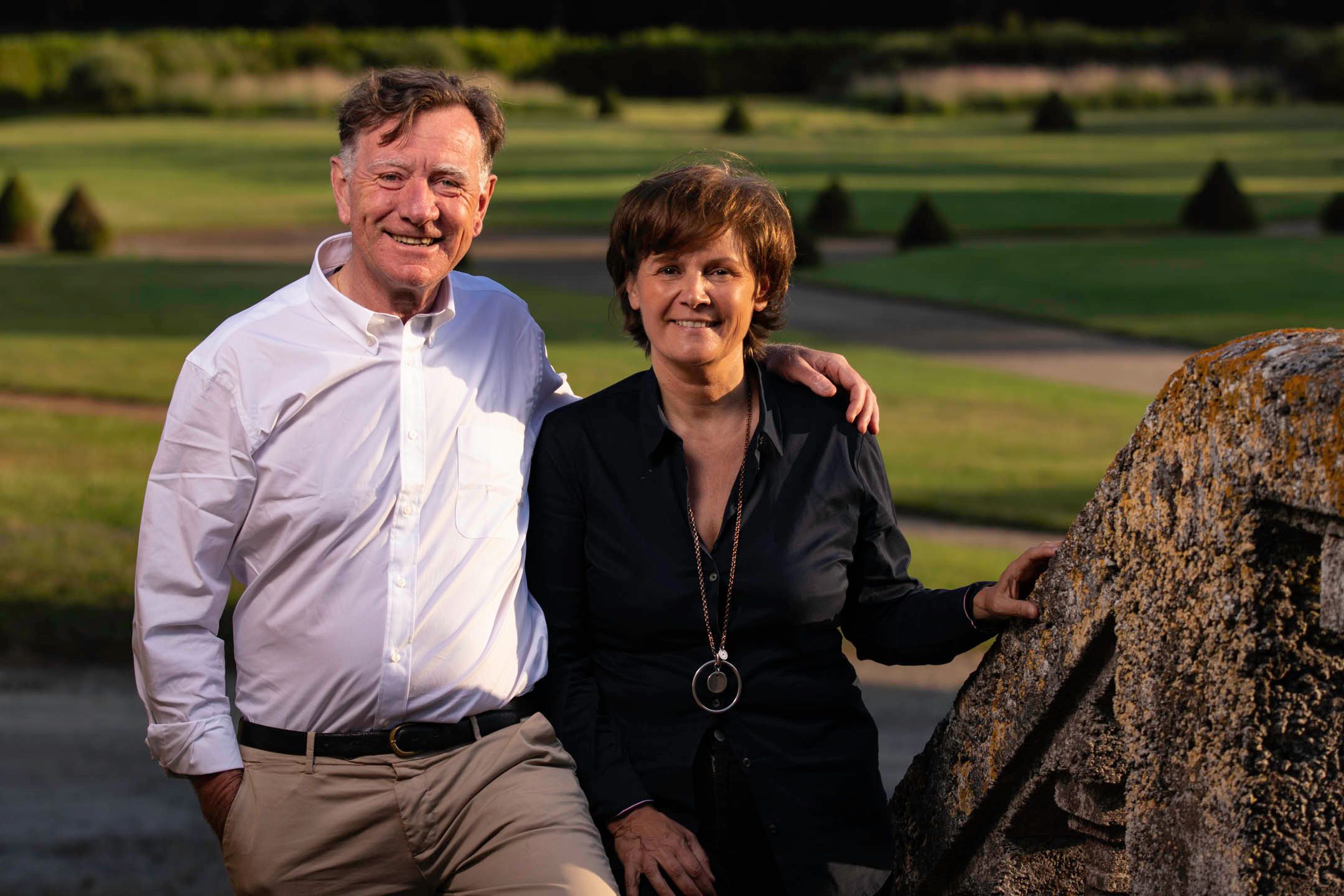
François and Charles Philipponnat Photo Credit:
Champagne Philipponnat

The Philipponnat family has been growing grapes in the heart of Champagne for over 500 years, and today, Charles Philipponnat is the 15th generation running this half-of-a-millennium Champagne house with his son François. In 1935, Charles’ grand uncle bought the Clos des Goisses vineyard, and despite it being unheard of to bottle a single vineyard Champagne wine, his uncle found that there was a unique combination coming from this site that he had never even known existed, even with centuries of family experience. It created a wine with a spectacular marriage of rich fruit with a strong backbone of minerality, all wrapped up in an elegant structure with laser precision. Because the grapes, mostly Pinot Noir with a small amount of Chardonnay, are able to achieve a good amount of ripeness, only a tiny amount of dosage – the amount of sugar added to wine that tops off a Champagne bottle right before it receives its final cork closure – is needed, which is lower when comparing to other Champagne houses. Hence, there is much more transparency of the site coming through in the glass.

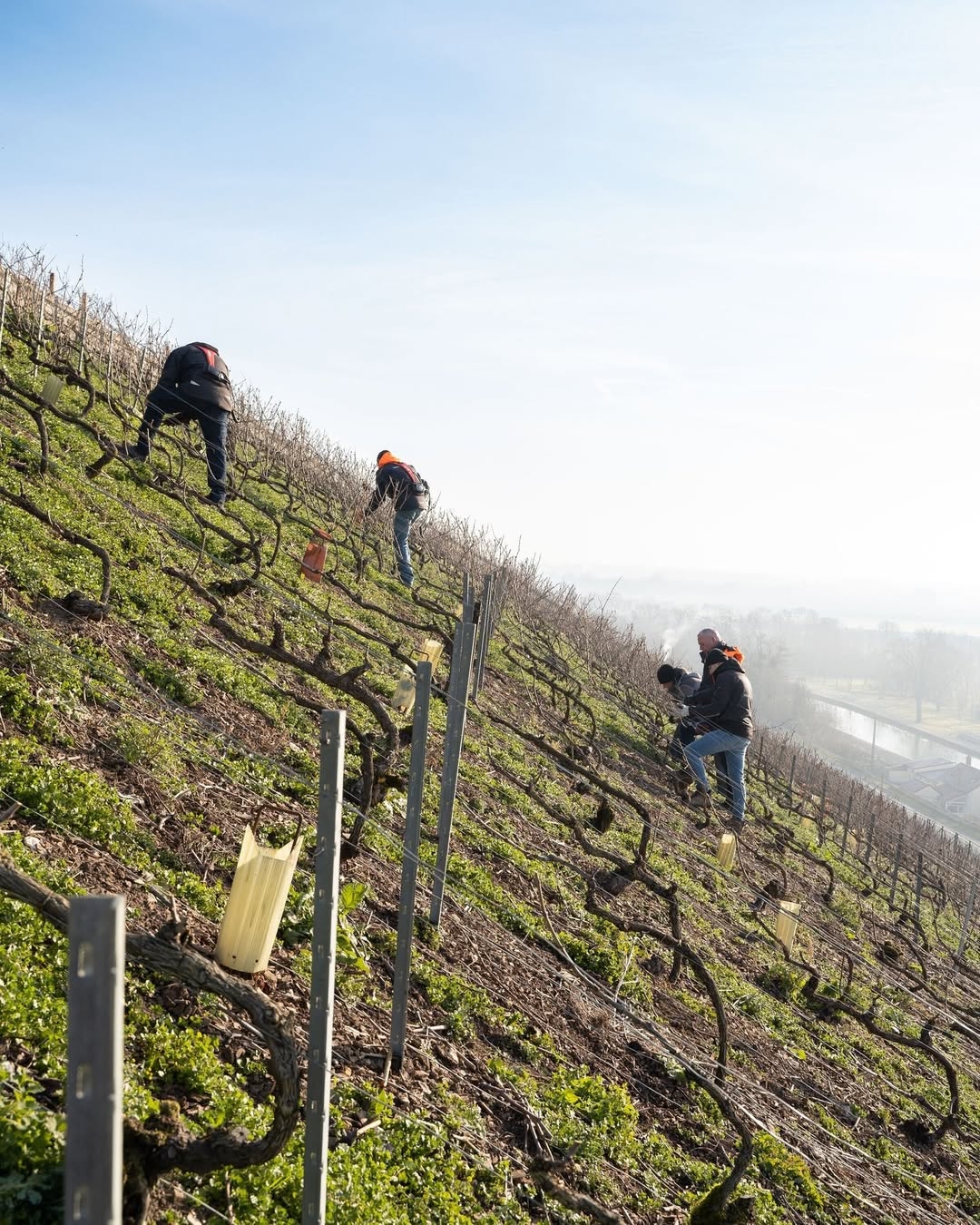
Steep hillside of the Clos des Goisses Photo Credit:
Champagne Philipponnat

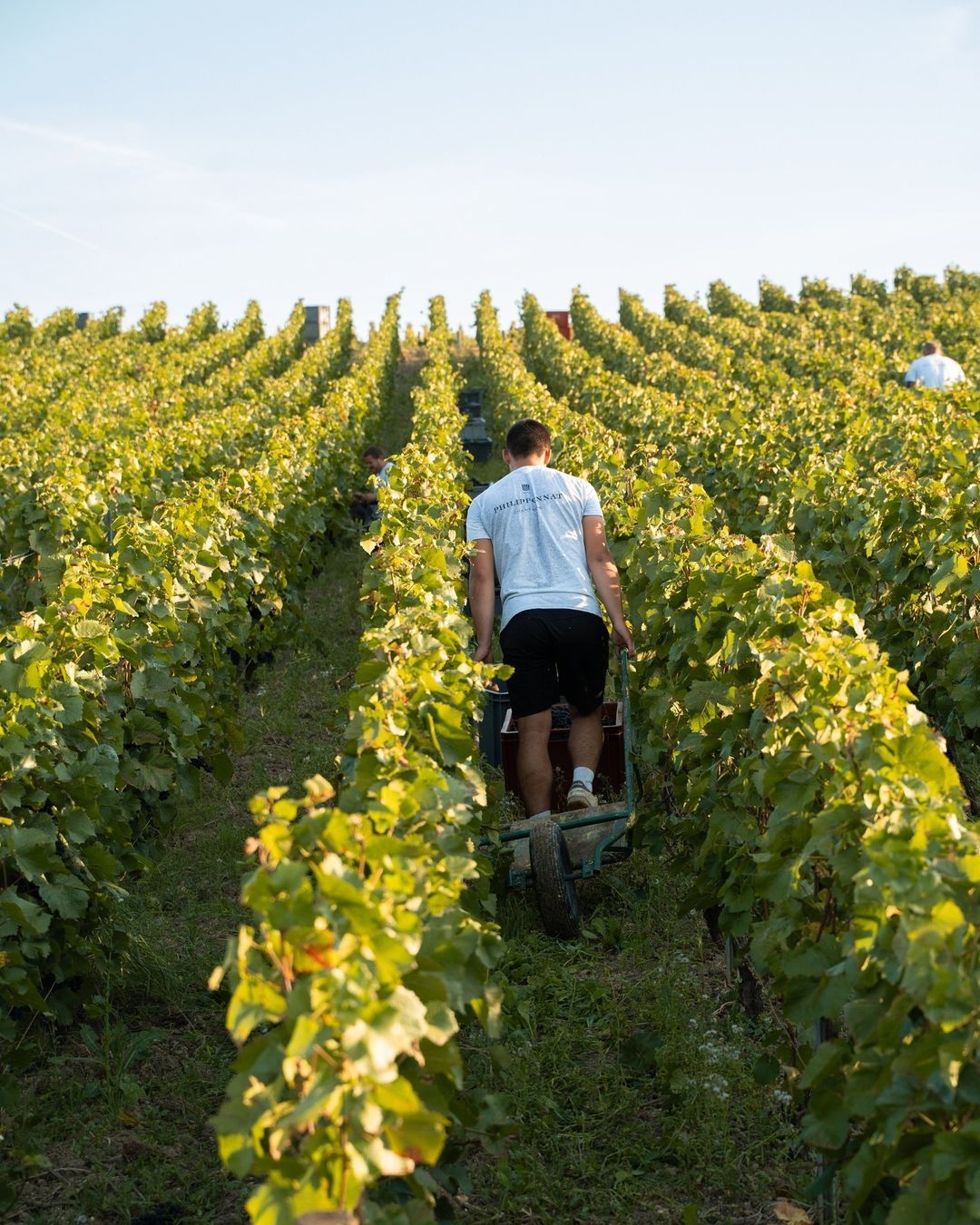
Among hardcore Champagne collectors, the magnificent nature of this vineyard is well-known, with its steep land that has an ideal position to absorb the nurturing rays of the sun. Both Charles and his son François admit that the unconventional nature of having a Champagne that could be rich yet intensely fresh and minerally is a bit of a mystery. Still, they said the only thing that could explain this dynamic combination was the extraordinarily chalky soils, as every vintage released of Clos des Goisses, which is only made in the best years for the site, has this remarkable combination.

Working the Clos des Goisses vineyard Photo Credit:
Champagne Philipponnat

Ironically, although Clos des Goisses is cherished by those who are laser-focused on single vineyard Champagnes wines, for those who have a broader focus on what they like in the world of fine wines, Krug’s Clos du Mesnil, first made in 1979 and placed onto the market in 1986, is the one that tops the list. Clos du Mesnil has so much wide-reaching prestige that it can easily go for six times the price of Clos des Goisses. Undoubtedly, the excellent Clos du Mesnil by Krug deserves such adoration, but Clos des Goisses is an off-the-radar superstar for most people that deserves a lot more attention.

Innovation Through Transparency

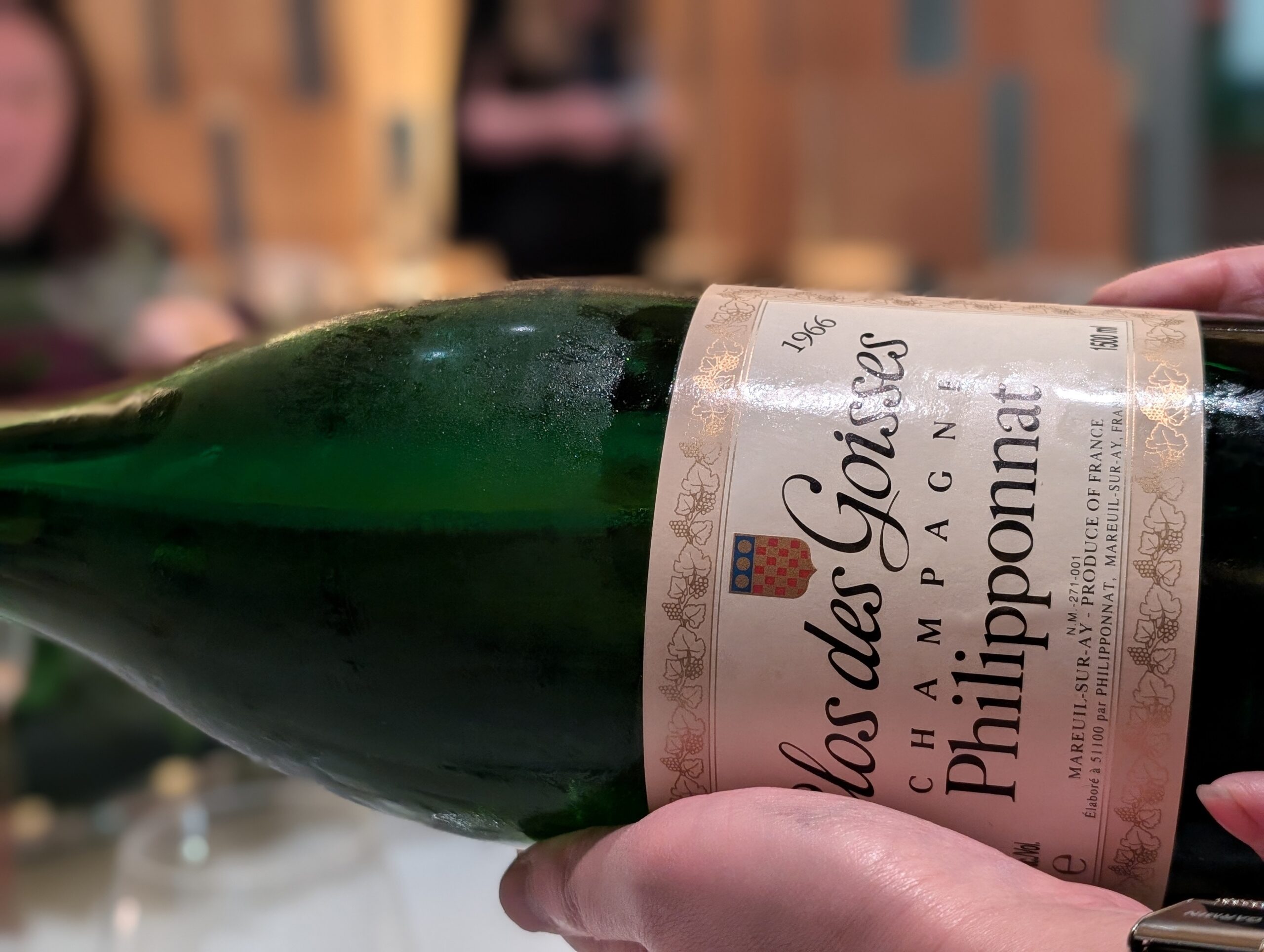
1966 Champagne Philipponnat, Clos des Goisses, Extra Brut LV Photo Credit: Cathrine Todd

Philipponnat is known as an innovative Champagne house, and it is no wonder when one even simply thinks of that crucial decision that Charles’ grand uncle made in making a single vineyard almost a century ago when such an act went against the very foundation of what Champagne wine was built on during that time. But their persistence in using a low dosage even in their Non-Vintage as well as their other cuvées, and placing disgorgement dates on their bottles in the 1990s before it became more widely prevalent in the 2000s, and using reserve wines (older vintages) in their Non-Vintage from 1946, furthers the point that they are an innovative Champagne house.

As Charles and François were showcasing a vertical of Clos des Goisses in New York City recently that showed the current vintage of 2015 against older vintages that went as far back as 1966, it was evident how well these Champagnes age. Also, 1966 was the ideal vintage to finish the tasting as it was symbolic of a time of revolution and innovation that still leaves its mark on societies around the world today. All those decades ago, Charles’ grand uncle was a grower who made the unconventional choice to go against the grain, not because he was trying to cause waves in the region, but simply because the wine he tasted from that site was beyond his wildest dreams. He could have never imagined that 89 years later, there would be a special gathering to taste a vertical that featured that unconventional choice that kicked off a magnificent revolution in the Champagne world.

Link to original Forbes article: https://www.forbes.com/sites/cathrinetodd/2024/11/23/one-of-the-first-single-vineyard-champagne-wines-that-is-an-under-the-radar-superstar/

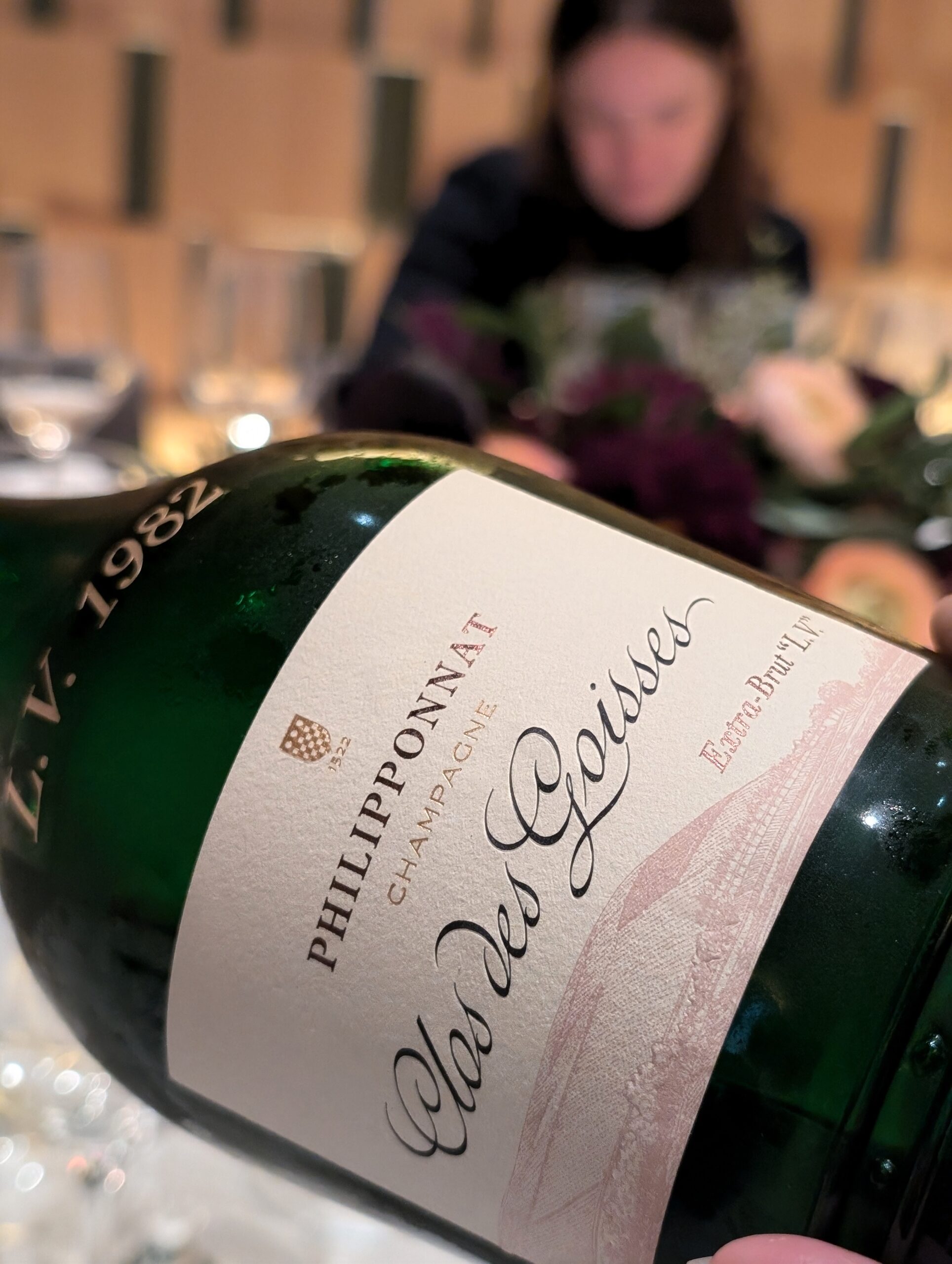
1982 Champagne Philipponnat Clos des Goisses LV Extra Brut
Photo Credit: Cathrine Todd

Vertical of Clos des Goisses:

“LV” stands for Long Vieillissement (long aging)

2015 Champagne Philipponnat, Clos des Goisses, Extra Brut, Champagne, France: 78% Pinot Noir and 22% Chardonnay. Disgorged in March 2024 with a 4.5 g/l residual sugar (rs) dosage. In a lineup with significantly older Clos des Goisses one would think it would be hard for the youngest of the group to measure up to the more complex elders, yet this currently available 2015 is a knockout with fierce minerality and honeysuckle aromas that has the ideal amount of ripeness with mirabelle tart and apricot cobbler flavors with an underlying salty quality that comes across as lemon confit balanced beautifully with marked acidity and the long, flavorful finish is broad and bold in its delivery leaving a fantastic combination of a depth of flavor and mouthwatering freshness. 

1998 Champagne Philipponnat, Clos des Goisses, Extra Brut LV, Champagne, France: 70% Pinot Noir and 30% Chardonnay. Disgorged in March 2023 with a 4.5 g/l rs dosage. The 1998 surprises and thrills like an unconventional roller coaster ride with fascinating fragrances of candied ginger, lit incense stick and a hint of butterscotch that evolves into more zesty flavors of lemon drop and lime sorbet that has an overall lightness of being on the palate that finishes with a smoky minerality. 

1982 Champagne Philipponnat, Clos des Goisses, Extra Brut LV, Champagne, France: 67% Pinot Noir and 33% Chardonnay. Disgorged in March 2022 with a 4.5 g/l rs dosage. The purity of the flavors on this 1982 are so clear and precise that it is simply stunning as golden apples and nectarine fruits are conjured by the aromas and flavors and one can imagine every nuance of these fruits as this Champagne delineates every facet of their characters. 

1966 Champagne Philipponnat, Clos des Goisses, Extra Brut LV, Champagne, France: 67% Pinot Noir and 33% Chardonnay (estimate). Disgorged in June 2008 with a 4.5 g/l rs dosage. Extremely impressive doesn’t do this 1966 justice as its vitality and freshness with vibrant expression is mind-blowing with racy acidity and lemon curd flavors and hints of baking spices that is intensely concentrated yet becomes quite linear in its drive near the finish.

Other Cuvées:

NV Champagne Philipponnat, Royale Réserve Brut, Champagne, France: 67% Pinot Noir, 31% Chardonnay and 2% Pinot Meunier from primarily Grand and 1er Crus. Disgorged in July 2023 with an eight g/l rs dosage. This Non-Vintage is certainly not a typical NV as it is multilayered in its complexity with wildflowers, wet river stones and lemon blossom with green mango flavors, very good concentration on the palate and bright acidity with a finish that is laser-focused.
2016 Champagne Philipponnat, Grand Blanc Extra Brut, Champagne, France: 100% Chardonnay from 100% Grand and 1er Crus. Disgorged in June 2023 with a 4.5 g/l rs dosage. This 2016 Grand Blanc evokes the image of a perfect white tulip that is at once delicate yet firmly sculpted that dances and prances on the palate with a nimble, pliable energy yet there is a permanent structure in the background that supports like a corset while juicy peach and lemon zest glides across the palate.

2018 Champagne Philipponnat, Blanc de Noirs Extra Brut, Champagne, France: 100% Pinot Noir from 100% Grand and 1er Crus. Disgorged in July 2023 with a 4.5 g/l rs dosage. Luscious aromas of brioche, apple pie and spiced cake make this 2018 irresistible from the first sip. It has an underpinning of cranberry orange muffins that give a brightness that also adds more depth of complexity.

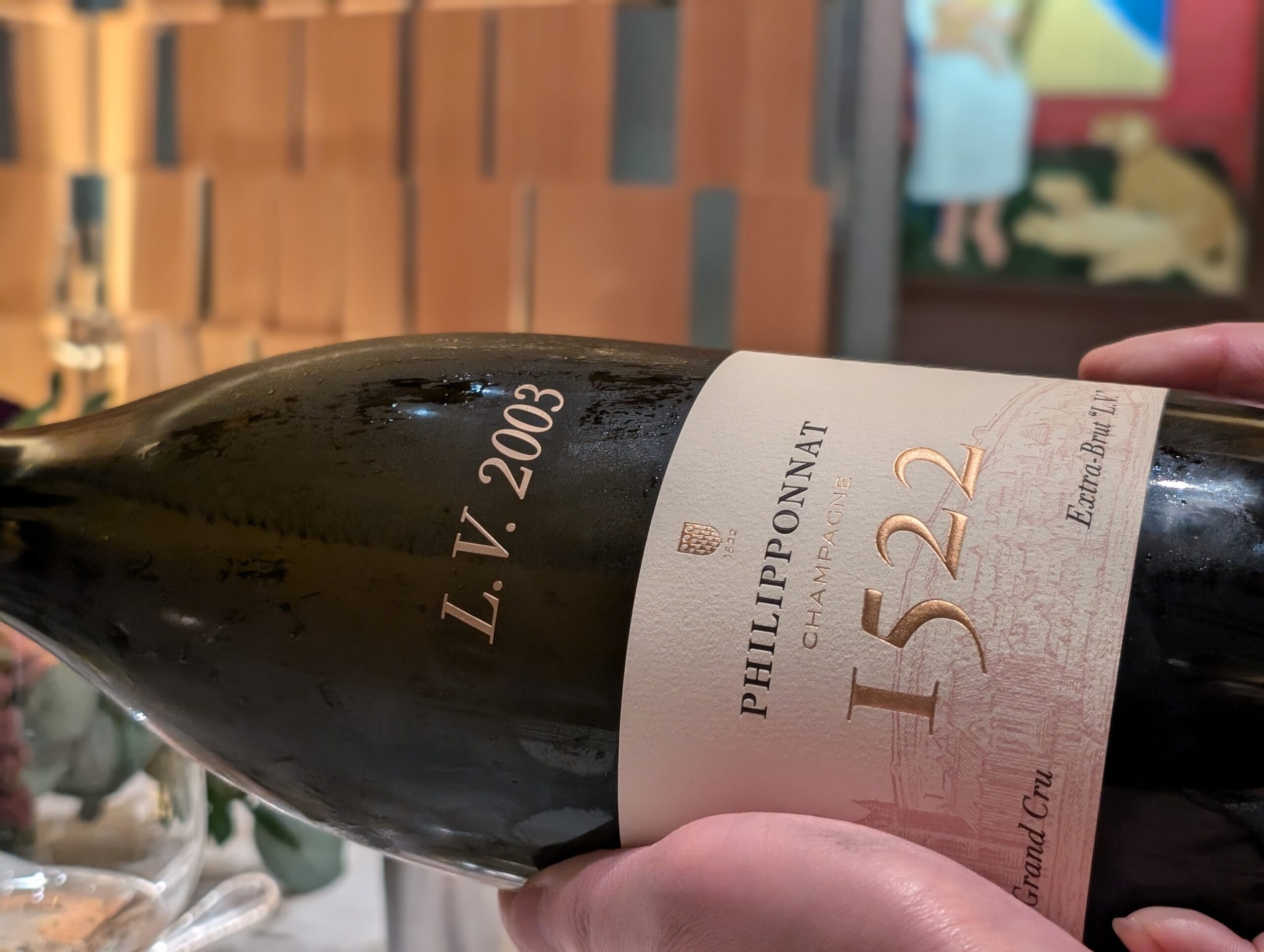
2003 Champagne Philipponnat, Cuvée 1522 Extra Brut LV Photo Credit: Cathrine Todd

2003 Champagne Philipponnat, Cuvée 1522 Extra Brut LV, Champagne, France: 70% Pinot Noir and 30% Chardonnay from 100% Grand and 1er Crus. Disgorged in March 2023 with a 4.5 g/l rs dosage. Multifaceted complexity with a bouquet of cocoa nibs and grilled peaches with balsamic chocolate drizzle laced with a mineral intensity carried across the palate by ultra-fine bubbles creating a creamy mousse.

2012 Champagne Philipponnat, ‘Les Cintres’  Extra Brut, Champagne, France: 100% Pinot Noir from two parcels within the Clos des Goisses vineyard, disgorged in October 2022 with a 4.5 g/l rs dosage. This 2012 “Les Cintres” comes from two parcels within the Clos des Goisses vineyard, with one having the oldest vines with the lowest yields and the other parcel bringing more freshness with a fantastic synergistic result of profound concentration combined with lively energy that makes this a brilliant example of what makes the Clos des Goisses such as special property. Captivating bouquet of cherry crisp, ocean spray and rose petals with a luminous transparency that ignites a powerful, visceral feeling in the drinker of bliss and a very long finish that leaves one with a deep ache for more.

Posted in Dame Wine | Tagged , | Leave a comment

The Wine Family That Raised Quality For A Whole Wine Region

The weathered, tanned hands carefully placed the vine into the ground as the beams of  sunlight added a glow to all the low-lying Mediterranean vegetation that enhanced the aromas of rosemary, thyme and sage in the air. As sweat started to come down the man’s flushed face, he could hear his neighbors mocking him for breaking his back because of a crazy idea he had in his head one day. Everyone planted their vines on the valley floor as they were making wine for quantity so the locals could fill up their jugs, as wine would help to increase the calories of the diets of the local farmers as there wasn’t enough food to properly feed everyone who did such strenuous work.

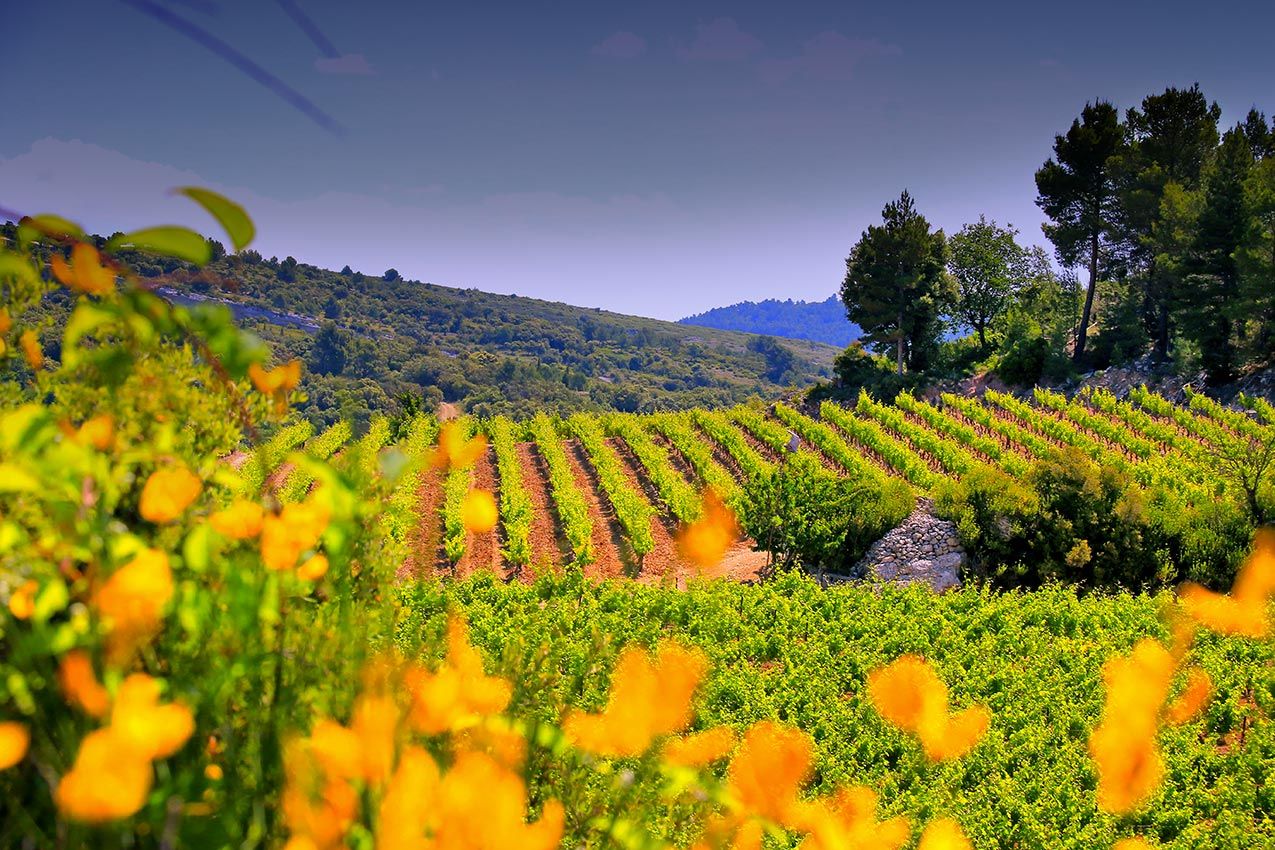
But this man had a vision that, one day, his region would be known for quality wine around the world, so he climbed up the side of the foothill of a mountain every day, to around 1,000 feet above sea level, to establish his vineyards on the hillsides, after centuries of his family planting vines in the valley. He believed the hillsides would be better as the swings in temperature, allowing warm days for ripening and cool nights for retaining acidity and aromatics as well as significantly lowering yields, would start his family on their journey of raising the quality of wines for the region as a whole, helping to establish them as the Mediterranean gem from the South of France that they are known as today.

Maison Lorgeril

Nicolas and Miren de Lorgeril
Photo Credit: Maison Lorgeril

That was 50 years ago, and today, that man’s grandson, Nicolas de Lorgeril, with his wife Miren, run the family’s wine business, Maison Lorgeril – independently family-run for 400 years, which today includes six family estates that cover eight appellations in the Languedoc wine region in Southern France. Also, since then, there have been a handful of tiny producers in a specific area of the Languedoc with a niche following that charge more than $100 per bottle for their top wines, the most expensive of which hit the $200 mark. Yet the Lorgeril family represents the Languedoc as a whole with estates that have different micro-climates, soils and exposures that range from broad regional wines that are bright and delicious for around $15, to more appellation-specific wines that are complex and multilayered for around $30 and plot specific wines with a distinctive sense of terroir from $50-60. Since the Lorgeril family covers a broad swath of the Languedoc wine region and produces wines at all levels, they have been instrumental in raising the quality of the region as a whole and reaching a more diverse customer base.

Château de Pennautier
Photo Credit: Maison Lorgeril

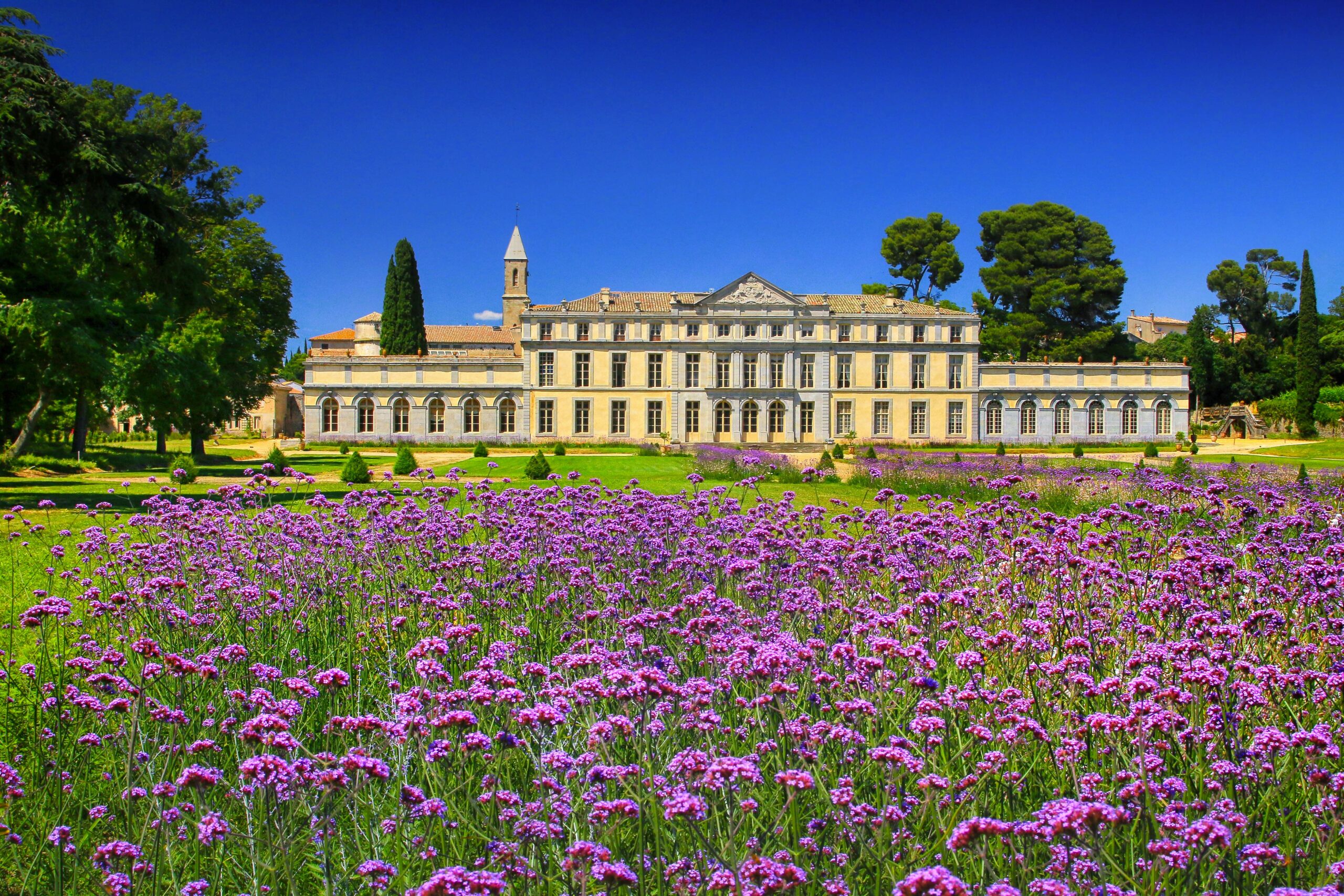
The estate that has been in the Lorgeril family the longest is Château de Pennautier, which is located in Cabardès, a place that is a cross-section of the two central climates that dominate the Languedoc. A cooler, drier wind from the West converges with a warmer, wetter wind from the Mediterranean Sea that borders the Eastern part of the Languedoc. This part of the region is the only designated high-quality appellation in France that allows the blending of Bordeaux varieties with Mediterranean varieties; both are significantly represented in the blend, as there needs to be at least 40% of both. It is one of the ideal places in France to create such a blend, and their Château de Pennautier red blend combines Syrah and Grenache with Merlot and Cabernet Sauvignon, creating a uniquely delicious French premium wine.

Diversity of Estates

But if the rare gem of the Château de Pennautier estate wasn’t enough, they have several others that expand across the region. Their estate Domaine de la Borie Blanche makes wine from the designated appellations of Minervois and La Livinière, and another estate, Château de Ciffre, makes wine from the Faugères and Saint Chinian appellations, just to name a couple.

Vineyards at Domaine de la Borie Blanche
Photo Credit: Maison Lorgeril

Domaine de la Borie Blanche makes wines from vineyards planted at altitudes as high as 1,300 feet in a south-facing amphitheater with a strong influence from the Mediterranean. The drastic extreme temperatures from day to night allow the grapes to ripen slowly; hence, finer, more elegant tannins develop in the grapes and showcase themselves beautifully in their Syrah and Grenache wines. On the other hand, the Château de Ciffre vineyards are tucked away in a Regional Nature Park at the foot of Mont Caroux at around 800 feet above sea level, and the temperature is moderate due to the protection of the natural reserve. Also, the soils are mainly limestone and schist, which imbue their Syrah, Grenache and Mourvèdre with an intense minerality.

The Château de Ciffre vineyards have been certified organic since 2019, although they use organic practices throughout their estates. The Lorgeril family has noticed that even in hot, dry weather, the soil is still moist because it is healthy and alive due to their organic practices, so the soil can keep ideal conditions for the vines even during extreme weather conditions. The organic practices, combined with their highly elevated vineyards, which were mocked at one time, have placed their estates in ideal situations to handle the warmer weather and drier conditions they have started to experience.

Lifting The Viewpoint

Half a century ago, Nicolas de Lorgeril’s grandfather decided to put his faith in his regional home by putting lots of his resources into planting vineyards as high as he thought possible, up to 1,300 feet, believing that, one day, it would be an admired wine region respected around the world. He certainly had a lot to lose and knew he was gambling on his children’s and grandchildren’s future, but what was the alternative?
One day, he climbed up the limestone slopes of the Montagne Noire, where he was checking on some of his vineyards on the foothills, and after six hours, he reached the top of the mountain. He took in the whole landscape of the Languedoc with a bird’s eye view, made breathless by its stunning beauty that was enhanced as the sun started to set, painting the sky with a burnt orange that made his heart race. Slowly, he began to take deep breaths, easing into that awestruck moment, his pulse rate dropping to a calm state, and then he noticed some of the other locals working in their vineyards. It dawned on him at that moment that his neighbors could never see the potential of their homeland as they mostly kept their eyes on the ground, never able to feel the power of the place. No matter what happened, he knew that the gamble would be worth it, as his grandchildren and his neighbor’s grandchildren would at least not be afraid to lift their eyes to the sky with all its possibilities.

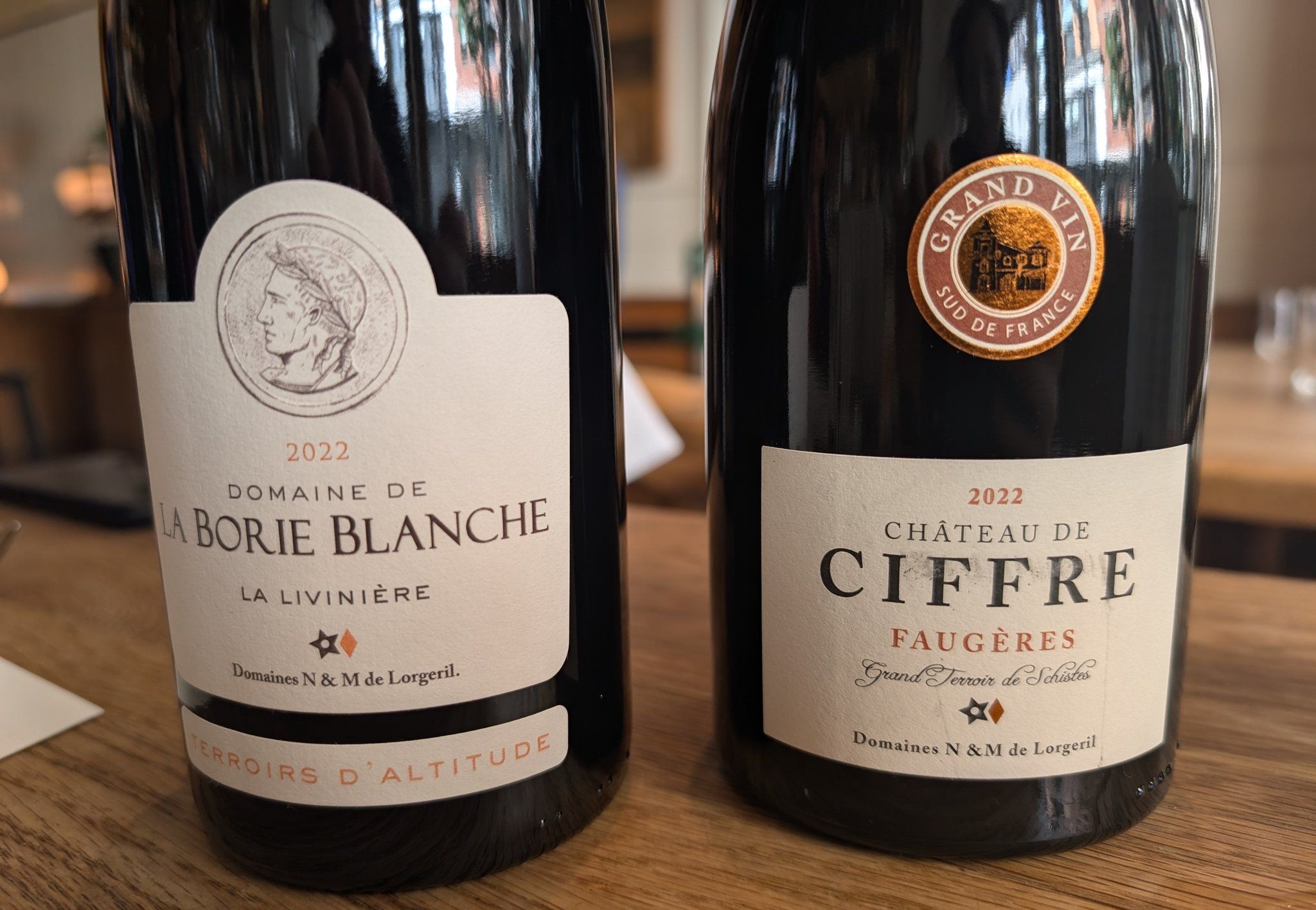
Domaine de la Borie Blanche & Château de Ciffre Photo Credit Cathrine Todd

***Link to original Forbes article: https://www.forbes.com/sites/cathrinetodd/2024/11/14/the-wine-family-that-raised-quality-for-a-whole-wine-region/

The ‘Terroirs d’Altitude’ label on the Maison Lorgeril’s wines highlights their cooler climate sites, which go against the big and robust wines on which the Languedoc had built its reputation.

2023 Mademoiselle de Pennautier ‘Terroirs d’Altitude’ White Blend, Pays d’Oc, Languedoc, France: 70% Chardonnay, 20% Sauvignon Blanc and 10% Viognier from their Pennautier estate within the Cabardès sub-region but since this wine blends varieties not allowed in the Cabardès AOC, it is given the more general regional designation of Pays d’Oc. A pretty nose with citrus blossom, honeysuckle and a stony minerality with juicy peach flavors balanced by fresh acidity and a supple palate.

2019 Château de Pennautier ‘Terroirs d’Altitude’ Red Blend, Cabardès, Languedoc, France: 40% Merlot, 30% Syrah, 20% Cabernet Sauvignon and 10% Grenache. Aromas that have a wild quality such as brambly fruit, garrigue and lavender that transports one to this wondrous world that sits between the Bordeaux-influenced South West and the Mediterranean with a touch of plush blackcurrant fruit intermixed with a hint of dried earth that has a lifting structure of bright acidity and nicely knitted tannins. 

2022 Domaine de la Borie Blanche ‘Terroirs d’Altitude’ Red Blend, Minervois La Livinière, Languedoc, France: 50% Grenache and 50% Syrah. An effusive bouquet of flowers on this enchanting nose with a touch of black pepper with pristine flavors of red cherries and raspberries with very fine tannins and overall finesse. 

2022 Château de Ciffre ‘Terroirs d’Altitude’ Red Blend, Faugères, Languedoc, France: 70% Grenache and 30% Syrah. Deeply concentrated wine with multilayered fruit that finds an ideal harmony between the rich cassis flavors lifted by zingy cranberries that has an elegant rosebud note and a fierce minerality throughout that carries across the long and elegant finish.

Posted in Dame Wine | Tagged , | Leave a comment

First 100-Point Italian White Wine Is Made In Stunning Mountainous Area

Many of the families could see the long, golden strands flying up into the wind as the young woman to whom those tresses belonged came running down the nature-adorned slopes as the backdrop of gigantic mountains dusted with pure snow started to get farther and farther behind her within minutes. All the families in the ancient village of Tramin knew everyone else’s children as well as their own, and this particular 20-year-old young lady had always been overly aggressive, even reckless at times, never appreciating the precious paradise surrounding her, instead, seeing it as a prison where someone fades away in obscurity. As she watched U.S. movies and followed American social media posts filled with glamour and excitement, made by other young people who were taking the world by storm, she became more restless, until one day, she would leave for the American dream and was determined to live there for good.

She could have never known that the village’s winery coop would make history by making the first Italian white wine to score 100 points, as the area was far from being a world-renowned wine region and was only appreciated by a devoted core following.

Cantina Tramin

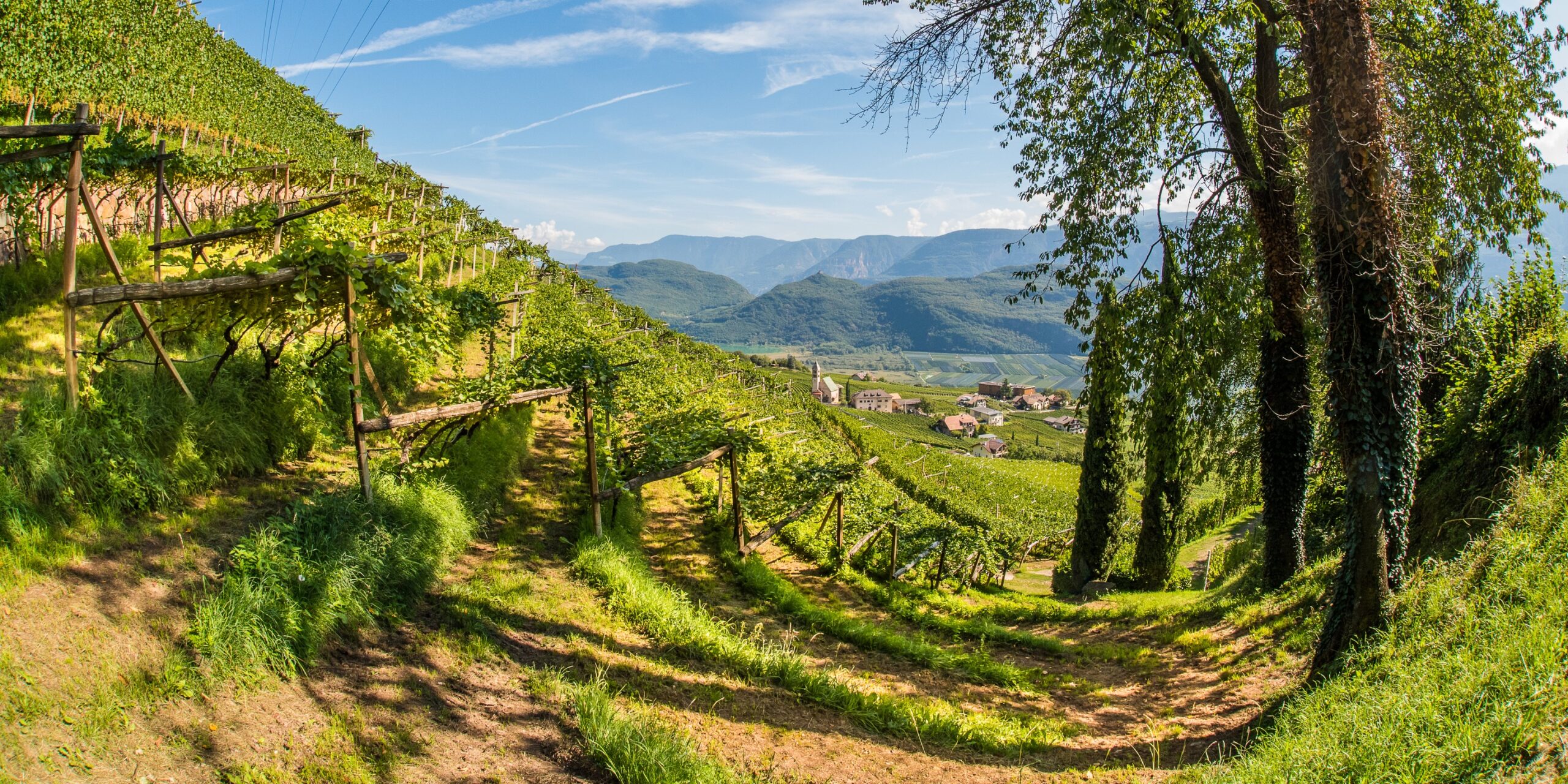
Cantina Tramin vineyards with mountains
Photo Credit: Cantina Tramin

The idea of a cooperative (coop) winery is something less familiar in the U.S., but it is a common practice in Europe. Families that own small plots of vineyards come together in a village so they can pool their money to build a modern winery and have more resources overall to keep everything at a high quality, ideally. For most coops, the ideal is not implemented as money can get mismanaged, vineyard owners can decide to make their own wines using the top grapes from their lots, leaving the inferior grapes for the coop and there can be in-fighting with many families coming and going creating a very unstable coop.

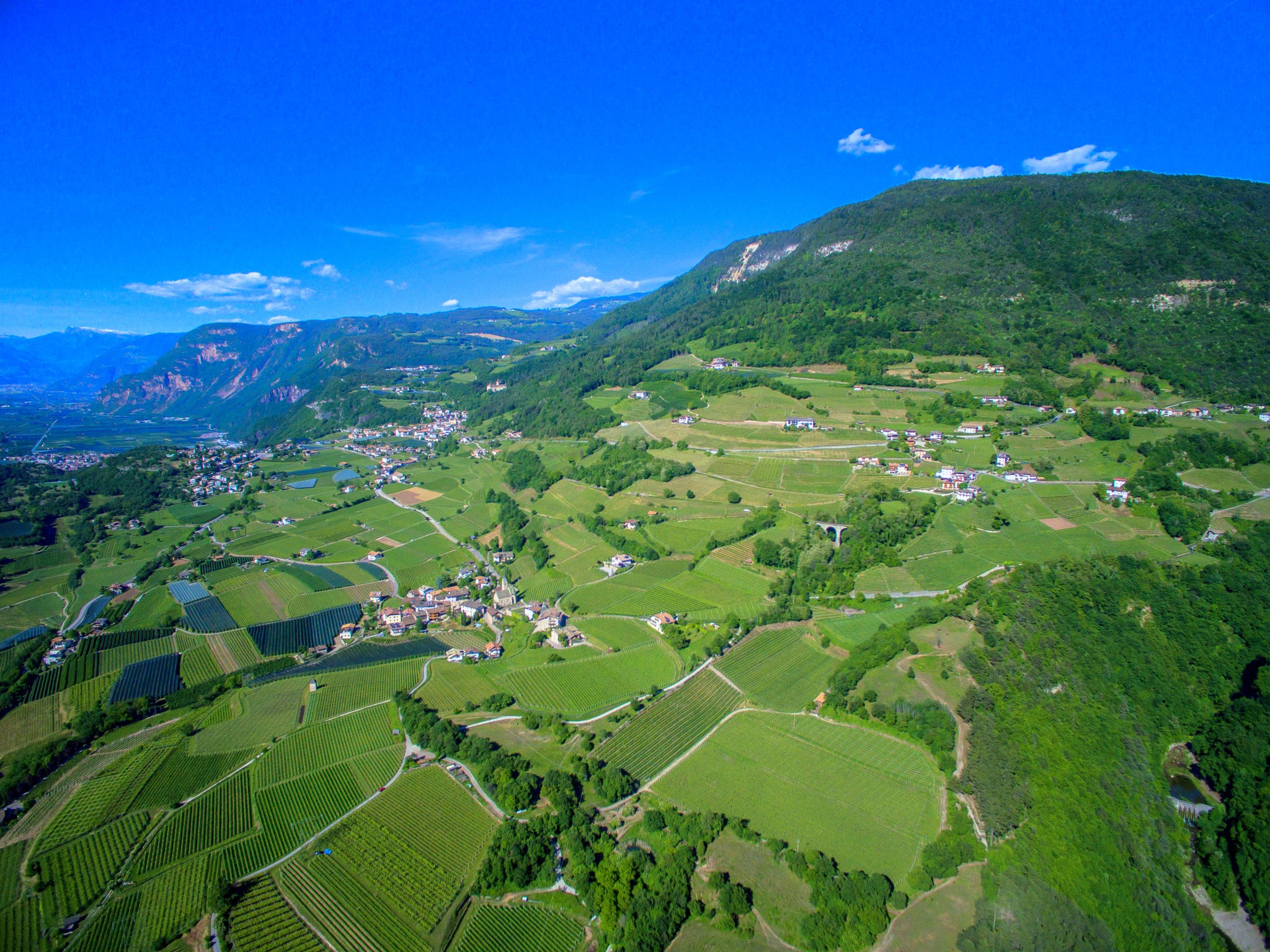
Landscape of the village of Tramin
Photo Credit: Cantina Tramin

Yet Cantina Tramin in the northern Italian wine region of Alto Adige, within the mountainside village of Tramin, has always had an excellent reputation and has been known for decades as one of the best, if not the best. Despite its stellar reputation, it would seem that the first 100-point Italian white wine would come from one of the world’s famous fine wine families in one of the top wine regions for exports, and it would not be a coop, no matter how good. Hence, the 100-point score was quite a surprise to many but no surprise to the longtime fans of this impressive coop.

Journey To The Top

Hillside vineyards with lake in the background Photo Credit: Cantina Tramin

The 160 family growers who make up the coop are co-owners of the Cantina Tramin, and as a whole group, they own over 660 acres of vineyards. Some family growers only have an acre, while others own a handful of acres. Yet, the chief winemaker, Willi Stürz, who has been there for over 30 years, goes to each vineyard with an agronomist to work with the growers to achieve the best results in any given vintage plot by plot. Willi started a radical revolution with the Cantina Tramin coop 25 years ago when he decided to place all their energies and resources into high-quality wine when many other coops were only focused on cheap wine made in high quantities. It was a radical idea as no one could ever imagine that wine drinkers worldwide would take a coop’s wines, especially one tucked away in an isolated Italian mountainous area focusing on white wines, that seriously.

Sunbeam of light through the vines
Photo Credit: Cantina Tramin

However, through time, they planted white grape varieties more suited to the climate, such as Gewürztraminer, and it was their Gewürztraminer ‘Epokale’ that was awarded a 100-point score by Wine Advocate a few years ago. The ‘Epokale’ is one of the many long-term projects of Cantina Tramin that has had simply stunning results from its first vintage, 2009, receiving 100 points that was released in 2018, and it illustrates its mission beautifully, showing the aging potential of Gewürztraminer; currently, the 2016 vintage is on the market. The ‘Epokale’ bottles are cellared within the inside of a mountain, almost 1,500 feet below sea level, in an atmosphere of 90% humidity and 52 degrees Fahrenheit consistently throughout the year. 

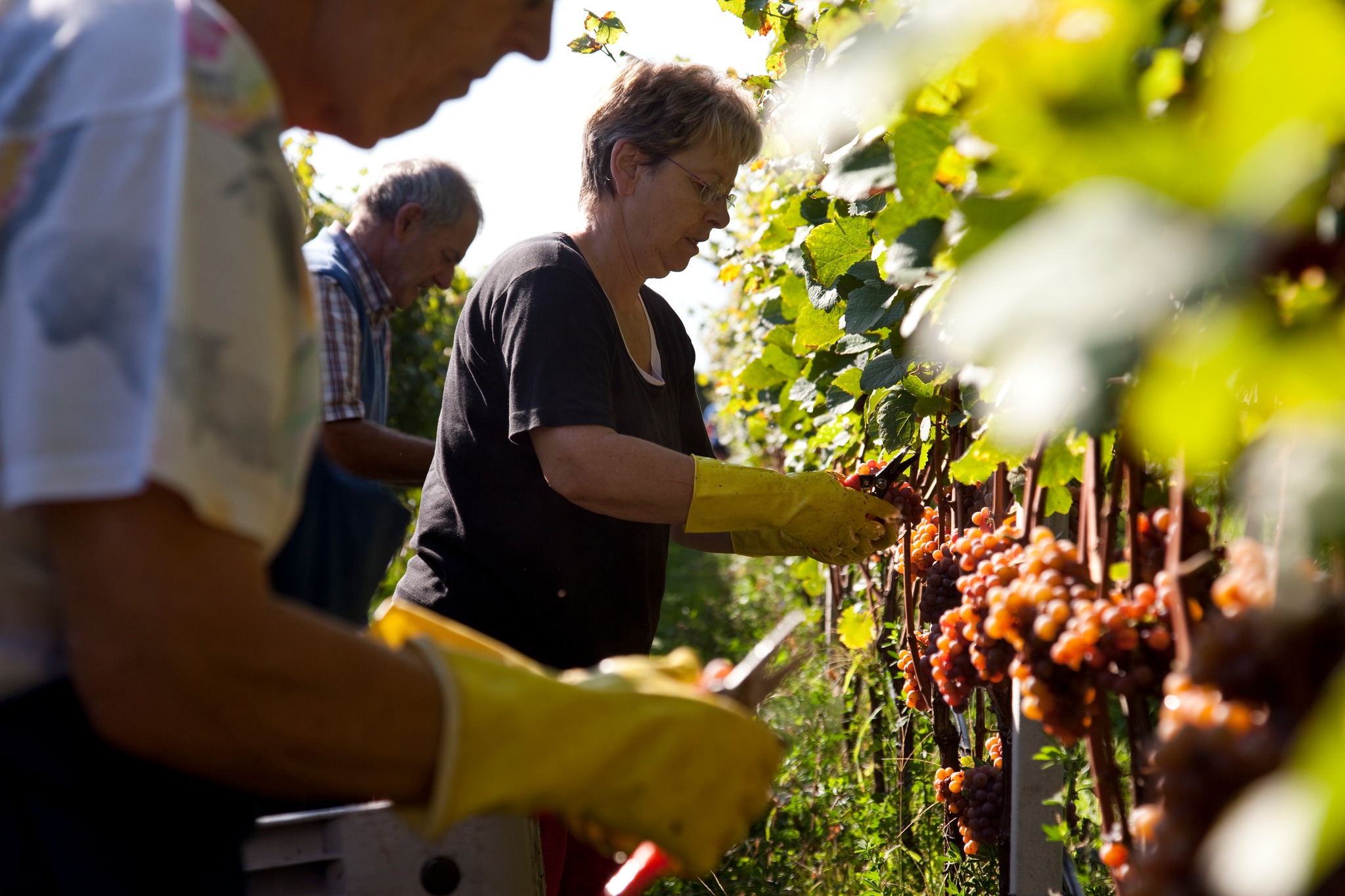
Family owners hand harvesting
Photo Credit: © Yoshiko Kusano/EQ Images

Willi says the primary key to their significant rise in quality, as some consider them one of the best white wine producers in the world, is a tremendous amount of manual labor by the co-owners themselves in their vineyards to make sure only to produce low-yields, extremely healthy grapes and an ideal balance for each bunch. Also, all of the grapes are hand harvested with the most intense care, which is not too difficult when a winery has 160 families, strong mountain people through and through, that are highly invested in doing the backbreaking work since they are owners building on the future for their children and grandchildren.

Always A Mountain Person

Five years after the young local woman left for a more glamorous life in the U.S., she was coming back home for good, ultimately defeated. After jumping around to a few different American cities, she could never find a real community or a sense of belonging. Instead, she found cutthroat environments, a high cost of living and going through half a dozen heartbreaks that she had to endure alone. For so long, she felt she couldn’t take the humiliation of letting everyone back home know that they were right the whole time, but she had gotten to the place where she was broken.

As she returned home to Tramin, she told her parents to tell people she was too busy to see anyone for a while, but they finally convinced her it was better to get it over with sooner rather than later. She hung her head in shame as she went to her first village gathering, and then suddenly, she froze; everyone was facing her, holding their arms open to her. Tears started to run down her face, and one of the women, who always scolded her as a girl for being too arrogant, approached her and asked her why she was crying. “I thought you would never open your arms to me again since I turned my back on the village,” she barely muttered as she was trying to fight a sobbing feeling welling up in her chest. The woman smiled and said, “No need for us to open our arms again since they were never closed.”

***Link to original Forbes article: https://www.forbes.com/sites/cathrinetodd/2024/11/11/first-100-point-italian-white-wine-is-made-in-stunning-mountainous-area/

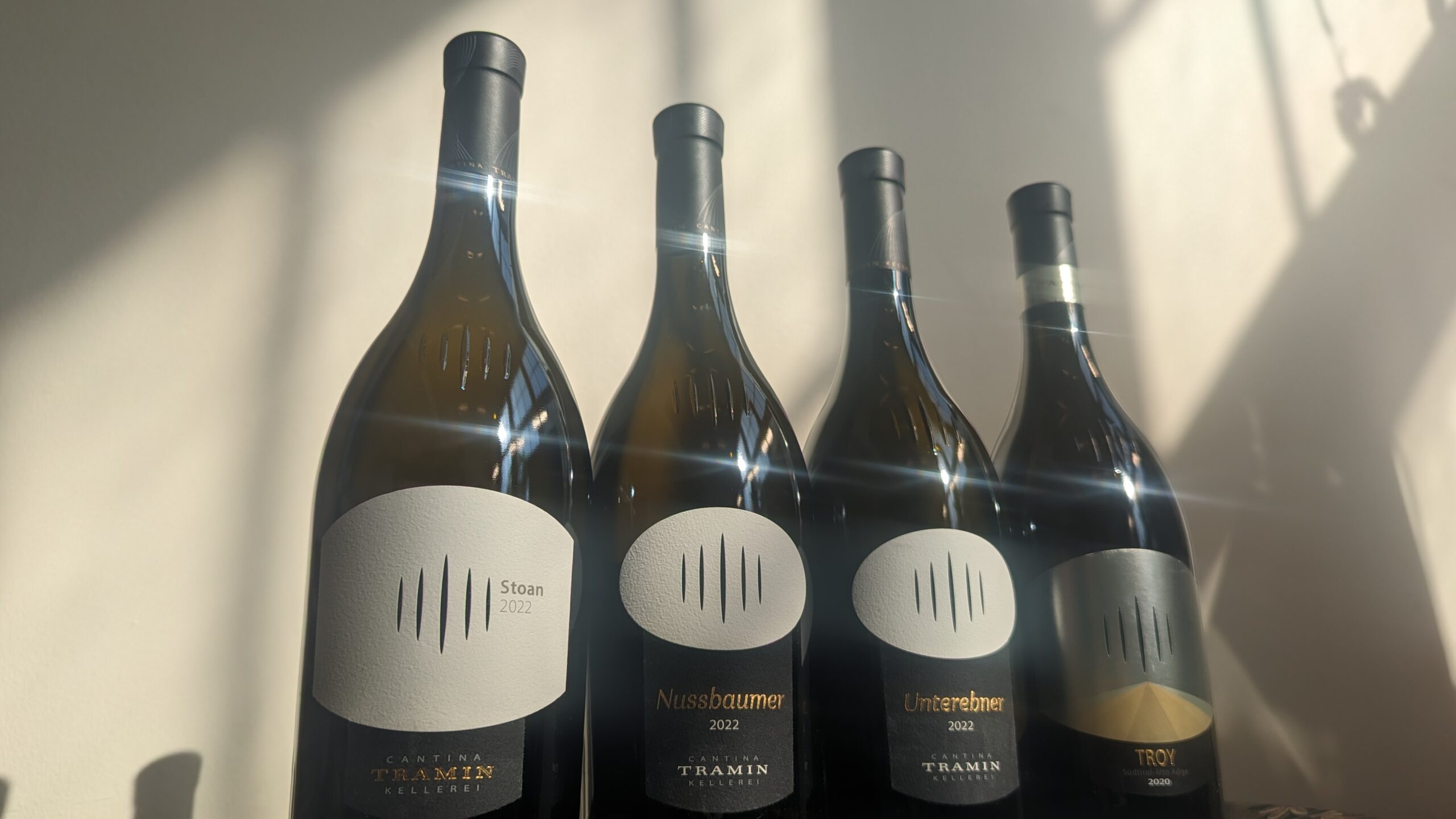
Cantina Tramin’s Selection Range
Photo Credit: Cathrine Todd
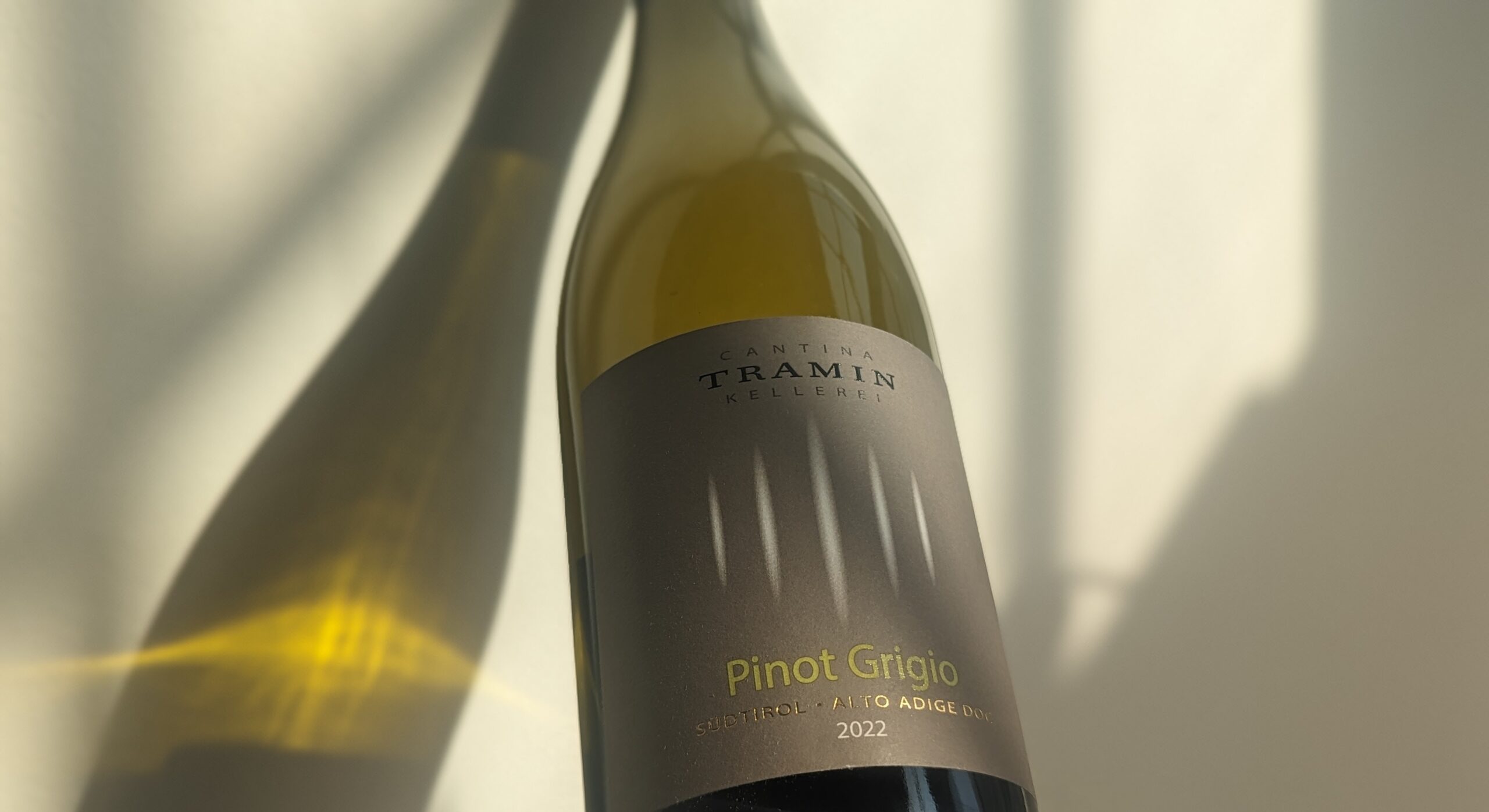
2023 Cantina Tramin, Pinot Grigio Classico Photo Credit: Cathrine Todd

2023 Cantina Tramin, Pinot Grigio Classico, Alto Adige, Italy: 100% Pinot Grigio. This is Cantina Tramin’s best seller as it is an incredibly refreshing Pinot Grigio, sourced from vineyards between 650 to 1,300 feet in altitude with a nice amount of concentration but only retails for around $15. Saline minerality and lemon zest on the nose with juicy nectarine fruit on the palate with marked acidity.

All the wines below are part of Cantina Tramin’s Selection Range, showcasing their best vineyards:

2022 Cantina Tramin ‘Unterebner’ Pinot Grigio, Alto Adige, Italy: 100% Pinot Grigio from a vineyard dominated by calcareous soil at almost 2,000 feet in elevation. An extremely impressive Pinot Grigio with very few that reached this high standard of complexity and balance with aromas of Brazil nut and dried apricots with a mineral edge with a creamy texture that is luxurious and balanced by bright acidity with a long, flavorful finish.

2022 Cantina Tramin ‘Stoan’ Alto Adige, Italy: Stoan is a white wine blend of 65% Chardonnay, 20% Sauvignon Blanc, 10% Pinot Bianco and 5% Gewürztraminer sourced from vineyards that are located around 2,000 feet and range in soils such as gravelly to rocky and limestone to loamy. Intriguing aromas of fresh tarragon and white pepper with white flowers in the background with crisp acidity and a long, expressive finish with lingering notes of nutmeg. The idea behind this wine was that the world wasn’t ready for a minerally high-acid Chardonnay when they first made it. Hence, they blended it with other white varieties; even though today they make minerally, high-acid Chardonnay wines that the world embraces, this wine had become so popular that they had to keep it.

2020 Cantina Tramin ‘Troy’ Chardonnay, Alto Adige, Italy: 100% Chardonnay. And speaking of minerally, high-acid Chardonnay wines, this is one on a fine wine level, sourced from their top three Chardonnay vineyards with calcareous gravelly dominant soils at around 1,800 feet. Fierce minerality that lets one know this is a Chardonnay of an extremely high caliber that also has an incredible richness of baked apple pie and lemon meringue flavors with a wonderful expression of terroir with the minerality always present, heightened by mouthwatering acidity that goes on and on – a jaw-dropping length of flavor. This could stand up to some of the top cool-climate Chardonnay wines of the world.

2022 Cantina Tramin, Gewürztraminer ‘Nussbaumer’, Alto Adige, Italy: 100% Gewürztraminer. An iconic wine for Cantina Tramin that is Italy’s most awarded Gewürztraminer, and the village of Tramin has ideal climatic conditions for Gewürztraminer: Warm temperatures during the day due to a warming wind and the release of heat from the rocky soil and cooler mountains breezes at night enhanced by high elevations. Also, Tramin gets around 300 days of sunshine per year and limestone, calcareous soils are said to add to the mineral quality of the wines. Stunning golden color with intoxicating multilayered tropical fruit flavors of lychee syrup, mango coulis and grilled pineapple with none of the off-putting bitterness that many other Gewürztraminer wines display, bright acidity lifting all the delicious richness of this decadently elegant wine that illustrates it incredible harmonious quality throughout the persistent finish that leaves dreamy notes of saffron strands, honeysuckle buds and orange blossom in one’s head.

Posted in Dame Wine | Tagged , | Leave a comment

100-Point Champagne Wine Finds A Perfect Balance Blending Three Outstanding Vintages

It wasn’t a typical day in the pristine alpine village where the most powerful people kept vacation homes and the luxurious lifestyles that inhabited this angelic setting were beyond the comprehension of most royalty. Yet on that particular day, electricity filled the air as French military men quickly hiked up the side of the mountain to get to the Eagle’s Nest, known as Kehlsteinhaus in German. It was a grueling task, especially considering these men barely slept, were on the brink of starvation and had already been through many dangerous situations, a few ending in tragedy that would be etched on their souls forever, and it seemed that the Eagle’s Nest would never appear in front of their eyes; some fell on the ground and told their brothers to leave them behind, but no, they helped those up the steep climb, as they would all enjoy the treasures together.

This remarkable mission took place at the end of World War II and Bernard de Nonancourt was one of the soldiers who belonged to the 2nd Armored Division of General Leclerc; he and his men made their way to Hitler’s hidden retreat in Bavaria where he had turned a modest chalet into a lavish compound called the Eagle’s Nest with an enormous bunker system that was connected by several miles of tunnels. The seemingly tranquil village housed vacation homes for high-ranking Nazis; ironically, the picturesque beauty of the town did not represent the horrors that the inhabitants inflicted on others.

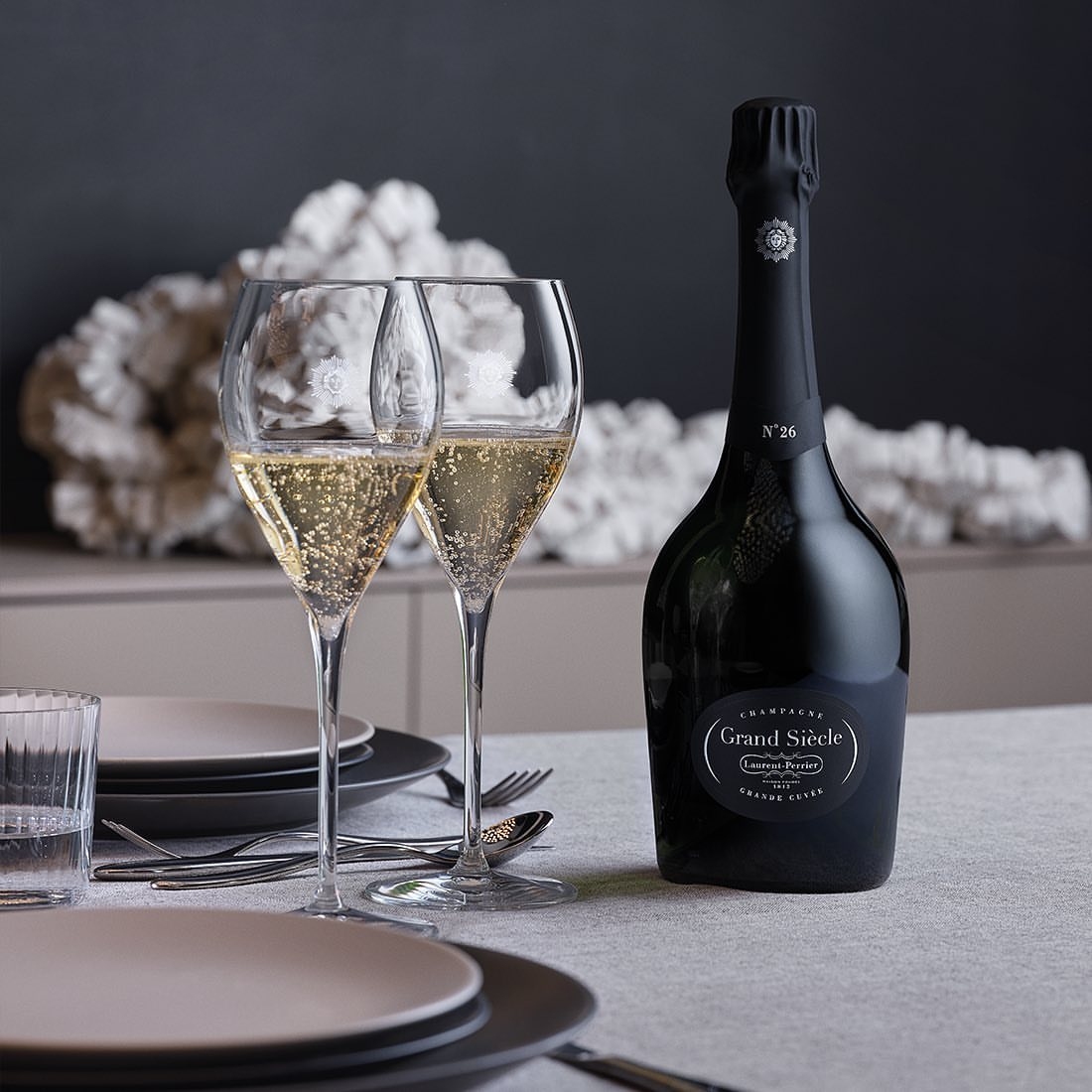
Champagne Laurent-Perrier
Photo Credit: Champagne Laurent-Perrier

The men had found around half a million bottles of the best Burgundy, Bordeaux and Champagne wine, including bottlings of the exquisite Champagne Salon 1928, and it became symbolic of Bernard’s mission in life.

Although Bernard passed away in 2010, his legendary joyful exuberance lives on in the recently released Champagne Laurent-Perrier Grand Siècle Nº26, garnering a 100-point score as well as being awarded ‘Wine of the Year.’

Grand Siècle

Bernard’s mother was just as remarkable as she bought the Domaine of Laurent-Perrier in Champagne, even though she was a widow with four children. She hoped her eldest son would run Laurent-Perrier, but he never returned from the war. So Bernard, returning from his war journey with an auspicious sign – finding the 1928 Champagne Salon bottles, took over Laurent-Perrier. He would eventually develop a cuvée that would live up to the world’s greatest Champagnes: Grand Siècle, which translates into “Great Century.”

When Grand Siècle first came on the scene in 1959, only a couple of Champagnes were considered at an ultra-premium level, competing with the finest wines in the world, as there seemed to be no market demand for such Champagnes. But Bernard was an early believer that Champagne was more than just an aperitif, as when Champagne is made with the intention of greatness, finding the ideal balance that would elevate it to the same status of worship as an outstanding Burgundy wine, it could compete with the most prestigious fine wines. So, he created a Champagne, blending Pinot Noir and Chardonnay from the top Grand Cru vineyards, based on the marriage of three vintages, which were declared vintage years by the house on their release. One vintage would give the depth and complexity, the other would bring the freshness and vitality and the third would seamlessly bring the previous two vintages together as one cohesive, celestial experience.

Last year, the recently released Laurent-Perrier Grand Siècle Itération N.26 was given a 100-point score by world-renowned wine critic James Suckling, and he also named it his ‘Wine of the Year’ out of a selection of 39,000 bottles. The Grand Siècle Itération 26 blends the 2012, 2008 and 2007 vintages sourced from eight outstanding Grand Cru vineyards from iconic plots such as Le Mesnil-sur-Oger and Ambonnay. It is the Champagne that lives up to the ambition of a young man who was courageous enough to go to the Eagle’s Nest, allowing him to drink a 1928 Champagne Salon, inspiring him to make the commitment to one day make a Champagne of the same caliber. There have only been 26 releases of Grand Siècle, and hence, why this is edition 26, so one should jump at the chance to buy one if they are able, and certainly leap at the opportunity for the Grand Siècle Itération N.26, as it reaches new heights when it comes to complexity and elegance.

Historic Values & Forward Future

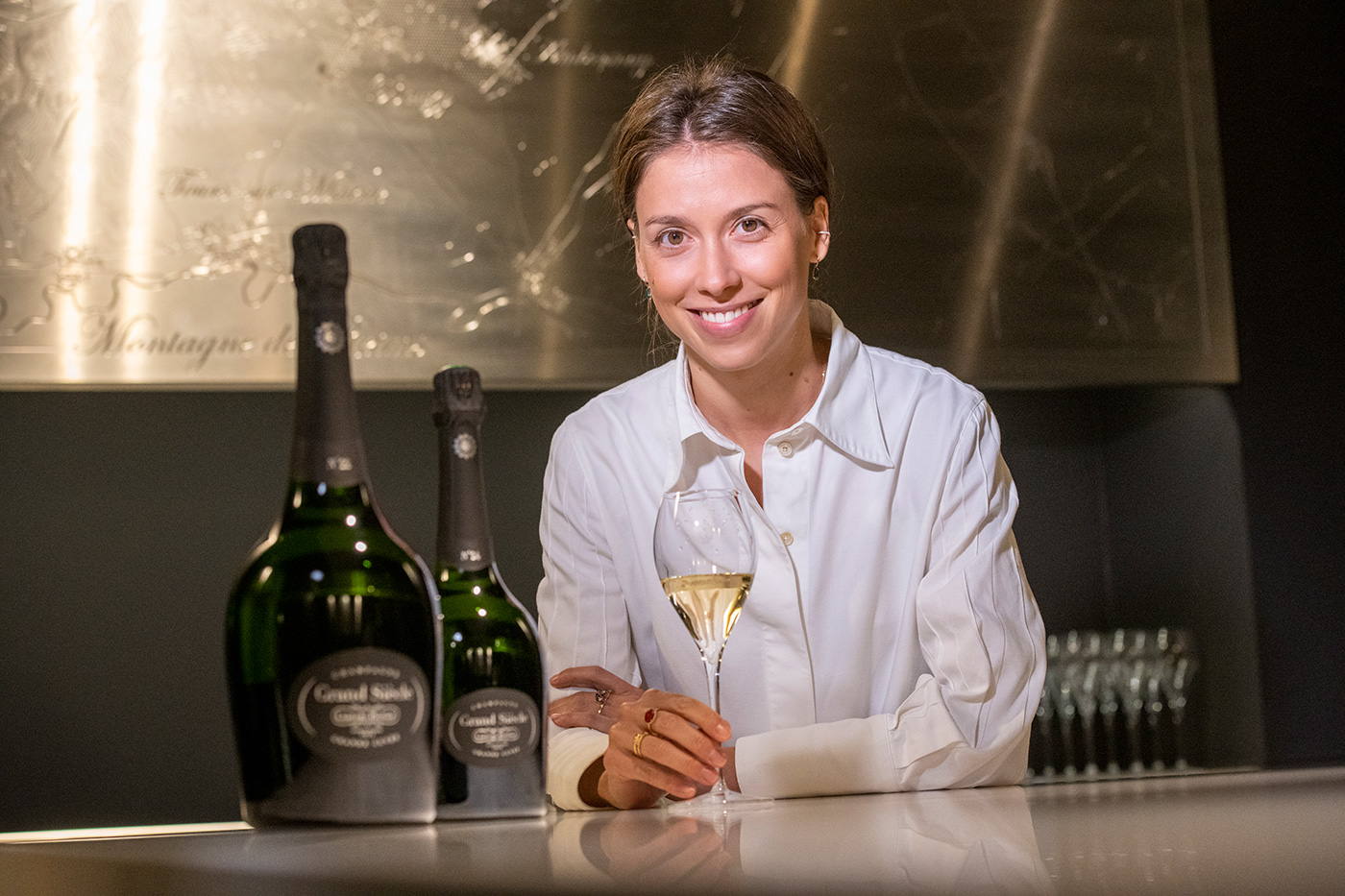
Lucie Pereyre de Nonancourt
Photo Credit: LEIF CARLSSON

The name Grand Siècle (Great Century) is connected to a golden age in France that goes back to the time of Louis XIV, known as the “Sun King.” He was responsible for commissioning exquisite architecture and enchanting landscape spaces that would be the ideal combination of harmony, balance, and perfection – the same goals Bernard pursued with the creation of Laurent-Perrier Grand Siècle.

Today, Bernard’s granddaughter, Lucie Pereyre de Nonancourt, represents Grand Siècle worldwide, and she is educating herself in all aspects of Laurent-Perrier including training with the Cellar Master. She is a powerful force, fiercely standing behind her grandfather’s mission to convince the world that fine Champagne can be just as complex as a stellar Burgundy wine.

Bernard was a charismatic, highly enthusiastic man who spoke his mission into existence; first, with the development of an outstanding Champagne that could go head to head with any fine wine, and second, convincing top wine critics to at least give Grand Siècle that opportunity to compete with the great wines of the world. Both of those missions have become a reality, and his granddaughter is on to the next mission: enlightening consumers of Champagne’s ability for precise and distinctive terroir that, under the guidance of a skilled Cellar Master, can be enhanced by the blending of top vineyards from complementary vintages – becoming greater than the sum of its parts, even when the parts include some of the most prestigious vineyards in Champagne.

***Link to original Forbes article: https://www.forbes.com/sites/cathrinetodd/2024/10/30/100-point-champagne-wine-finds-a-perfect-balance-blending-three-outstanding-vintages/

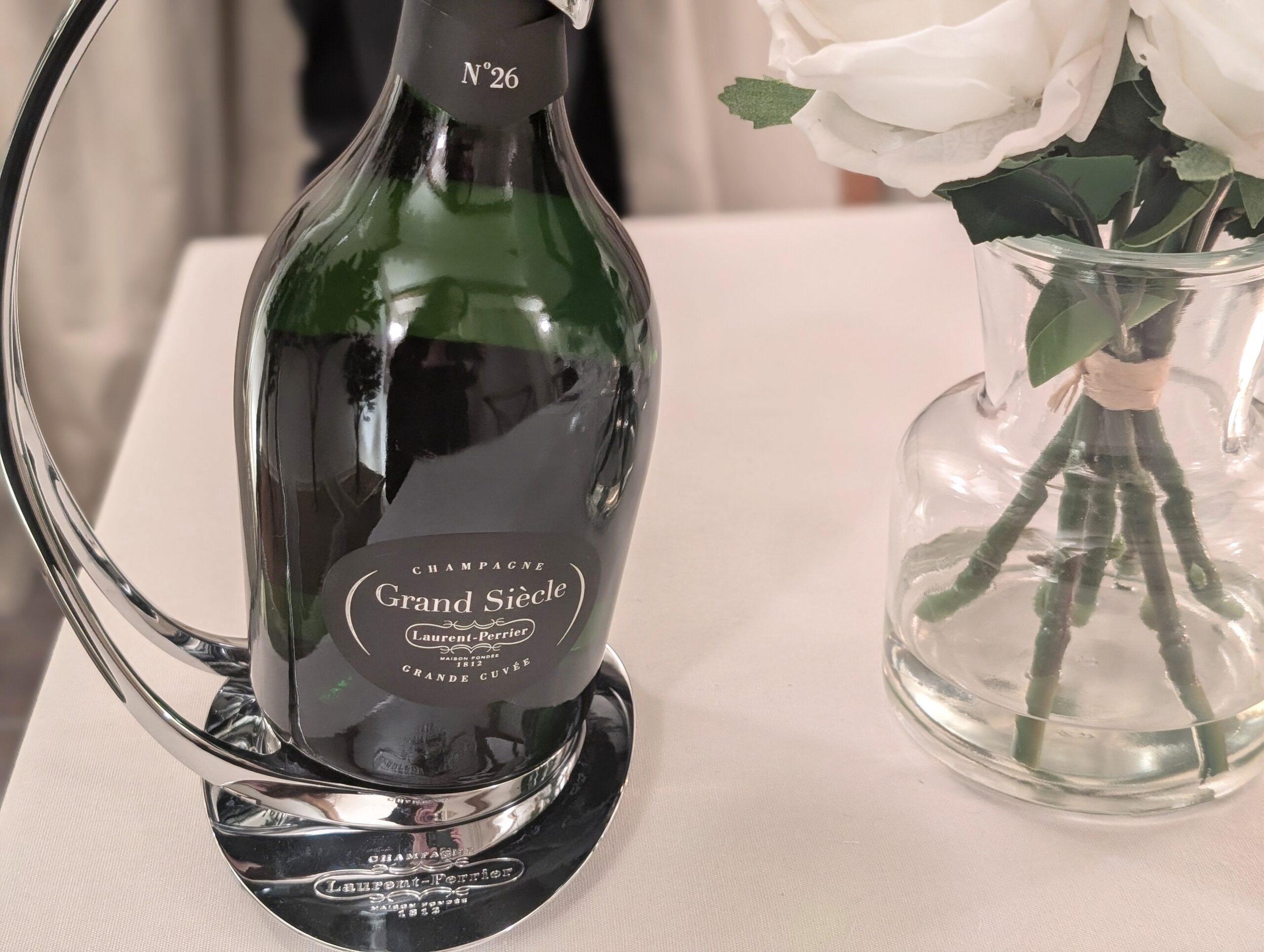
Laurent-Perrier Grand Siècle Itération Nº26 Photo Credit: Cathrine Todd

Vintage Champagne:

2012 Laurent-Perrier Vintage Brut Millésimé, Champagne, France: 50% Chardonnay and 50% Pinot Noir. Lemon blossoms, intense minerality and subtle spice on the nose with an overall finesse that is energetic at its core with a long, linear finish.

Grand Siècle Champagnes:

Laurent-Perrier Grand Siècle Itération Nº26, Champagne, France: Blend of 58% Chardonnay and 42% Pinot Noir sourced from eight Grand Cru vineyards; 65% is from the 2012 vintage, 25% from 2008 and 10% from 2007. Awarded 100-point score by world-renowned wine critic James Suckling, and he also named it his ‘Wine of the Year.’ Incredible depth of concentration that is first noted with delectable aromas of honeycomb, marzipan and apricot cobbler with lots of freshness on the palate with lemon curd flavors laced in a saline minerality and a jaw-dropping, extremely prolonged finish with silky textures created by tiny, delicate bubbles caressing the palate.

Laurent-Perrier Grand Siècle Itération Nº23, Champagne, France: Blend of 58% Chardonnay and 42% Pinot Noir sourced from 11 Grand Cru vineyards; 65% is from the 2006 vintage, 20% from 2004 and 15% from 2002. Thrilling, smoky minerality intermixed with mandarin zest and freshly baked bread that has a creamy texture enhanced by ripe nectarine flavors lifted by crisp acidity with a long-lasting note of toasted slivered almonds dancing in one’s head.

Laurent-Perrier Grand Siècle, Les Réserves, Itération Nº20, Champagne, France: Blend of 54% Chardonnay and 46% Pinot Noir sourced from 11 Grand Cru vineyards; 60% from the 1999 vintage, 20% from 1997 and 20% from 1996. This is the Les Réserves bottling of the Grand Siècle N.20, which has spent 20 years aging on its lees. Multifaceted nose with enticing notes of puff pastry cream dusted with cocoa powder, lemon tart and toasted coconut that is electrified by sea spray notes and marked acidity and has an extraordinarily long finish that is exhilarating.

Posted in Dame Wine | Tagged , , | Leave a comment

Special Italian Wine Celebrates Comeback After Great Customer Demand

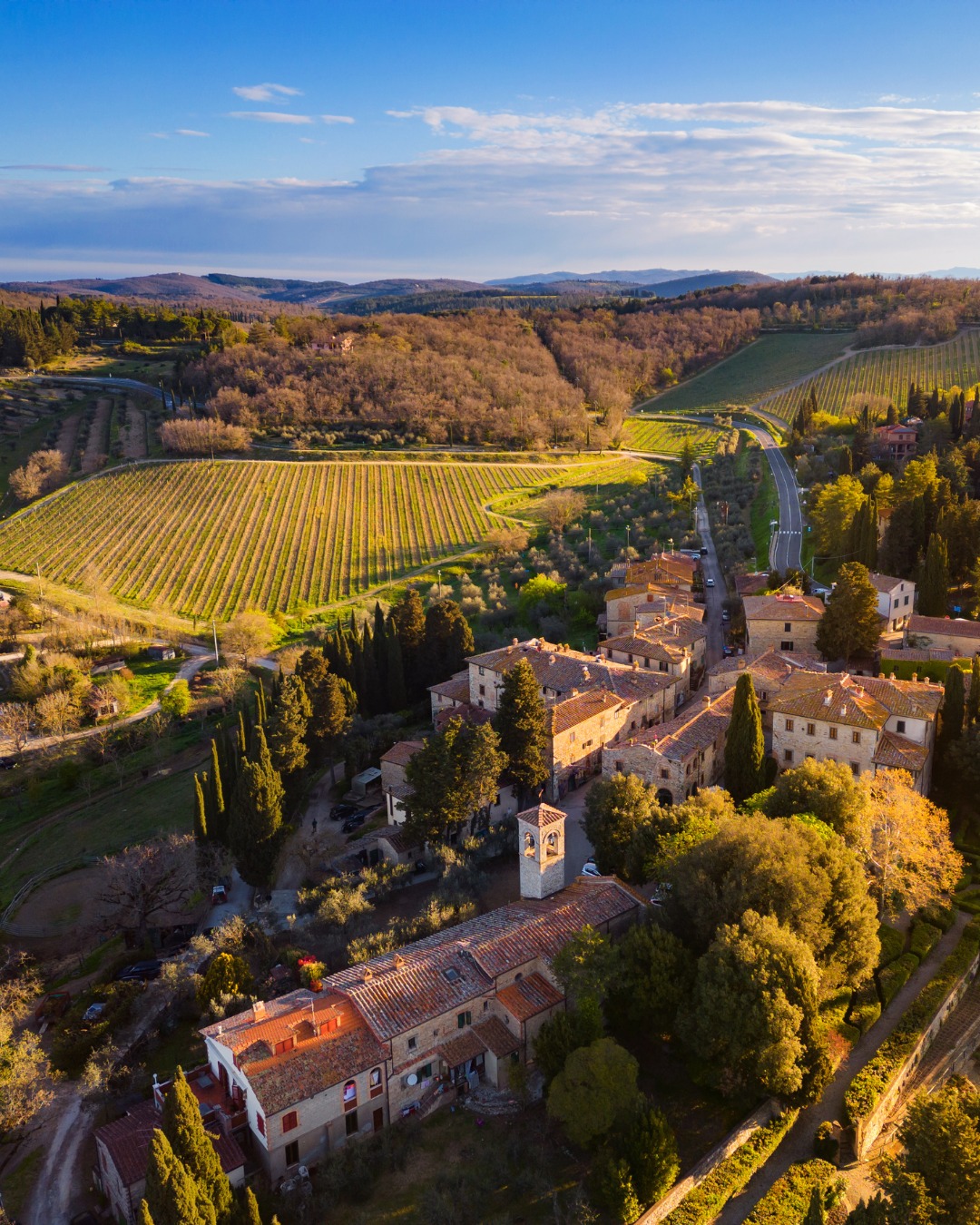
Fonterutoli estate
Photo Credit: Marchesi Mazzei

It is hard to imagine that Tuscany was once a desperate area stricken by poverty, desolation and despair, as today it is what dreams are made of. The rolling green hills glow in the Tuscan sun, surrounded by forests filled with olive trees and truffles; small enclaves of towns are made up of buildings that exemplify a warm elegance imitated worldwide. Yet after the back-to-back destruction of WWI and WWII and the upheaval of the financial foundations that the Tuscan countryside depended on, it was a tough time for decades. Many families took their losses and abandoned their lands to seize opportunities for financial success in major Italian cities when the future for those in the country looked bleak.

Yet a few key families in this wine region stayed and helped establish it as one of the greatest in the world, such as the Mazzei family, specifically to the famous wine area known as Chianti Classico. But the Mazzei family, throughout many centuries, has been at the foundation of Chianti’s success, going as far back as 1398 when Ser Lapo Mazzei, a Florentine notary, poet and winemaker, in a letter wrote about “Chianti” as a fine wine, one of the best he had tasted and his granddaughter would go on to marry a man who owned an estate in Chianti Classico named after his family’s surname, Fonterutoli; hence the Castello di Fonterutoli estate has been in the Mazzei family since 1435.

Despite knowing the intrinsic outstanding quality potential of Chianti wines, there were many ups and downs due to governmental and financial instability that the Mazzei family had to weather through almost 600 years with a potential threat to wiping out the Tuscan artisanal way of life during the economic devastation of the post World War II era. The 25th-generation Giovanni Mazzei, who runs the Marchesi Mazzei estates with his father and uncle today, talked about those dark times when most locals saw a lost cause when it came to investing in Tuscany. But others saw an excellent opportunity to get out of a sharecropper mindset of focusing on the quantity of various crops to finally focus on achieving the stellar quality of Tuscan wines and, in the case of the Mazzei family, to bring the glory of Chianti Classico to the world.

Hence, a “revolution” was born, according to Giovanni, and part of that revolution was the idea of planting international grapes made famous in France, such as the Cabernet Sauvignon grape variety.

Concerto di Fonterutoli

Fonterutoli vineyards
Photo Credit: Marchesi Mazzei

The Mazzei’s mission to find the extraordinary potential of Chianti Classico did not happen overnight, as that kind of poverty in a region and lack of recognition takes a few generations to overcome. But the Mazzei family is all about building for the future, several decades are nothing compared to their legacy which goes beyond half a millennium. It took a while to get many other producers on board to produce high-quality Chianti, the smaller area of Chianti Classico representing the ultra-premium top tier of the region, while overcoming the detrimental reputation of cheap Chianti initially exported into the U.S. market. Not only did they become a vital part of establishing the illustrious reputation of the mainly Sangiovese-based wine of Chianti Classico but they also were part of the “Super Tuscan” movement by planting Cabernet Sauvignon in the 1970s. In 1981, they released a wine called Concerto di Fonterutolis, a blend of 80% Sangiovese and 20% Cabernet Sauvignon.

After tasting the first vintage, Giovanni’s grandmother noted that the Cabernet Sauvignon and Sangiovese “play together like a concerto,” and at that moment, they were given the name of this auspicious wine.

The work that Mazzei has placed into truly expressing the outstanding sense of place in their Chianti wines has been quite extraordinary, with having the first gravity-fed cellar in the area, employing intense clonal research into using the ideal Sangiovese clones for each parcel and working with 114 plots across seven sub-zones of Chianti Classico illustrating the elegance of the wine as most plots sit at elevations between 720-1,870 feet – cooler temperatures retaining acidity and aromatics. Albeit, some might say, they did too good of a job as there was such a demand in the premium wine market for their Chianti wines based on Sangiovese that they stopped making the Concerto di Fonterutoli.

Just west of Chianti Classico is the wine area of Bolgheri and it became the place known as the center for “Super Tuscans” as there wasn’t a famous historical wine such as Chianti that would take away from the focus of these experimental wines that blended the glorious, traditional Sangiovese grape with Bordeaux grape varieties such as Merlot and Cabernet. So, for a time, it made sense that the Mazzei family focused on the grape variety that the family has been heralding for 600 years – Sangiovese. They stopped making the Concerto di Fonterutoli after the 1994 vintage.

Honoring A Matriarch

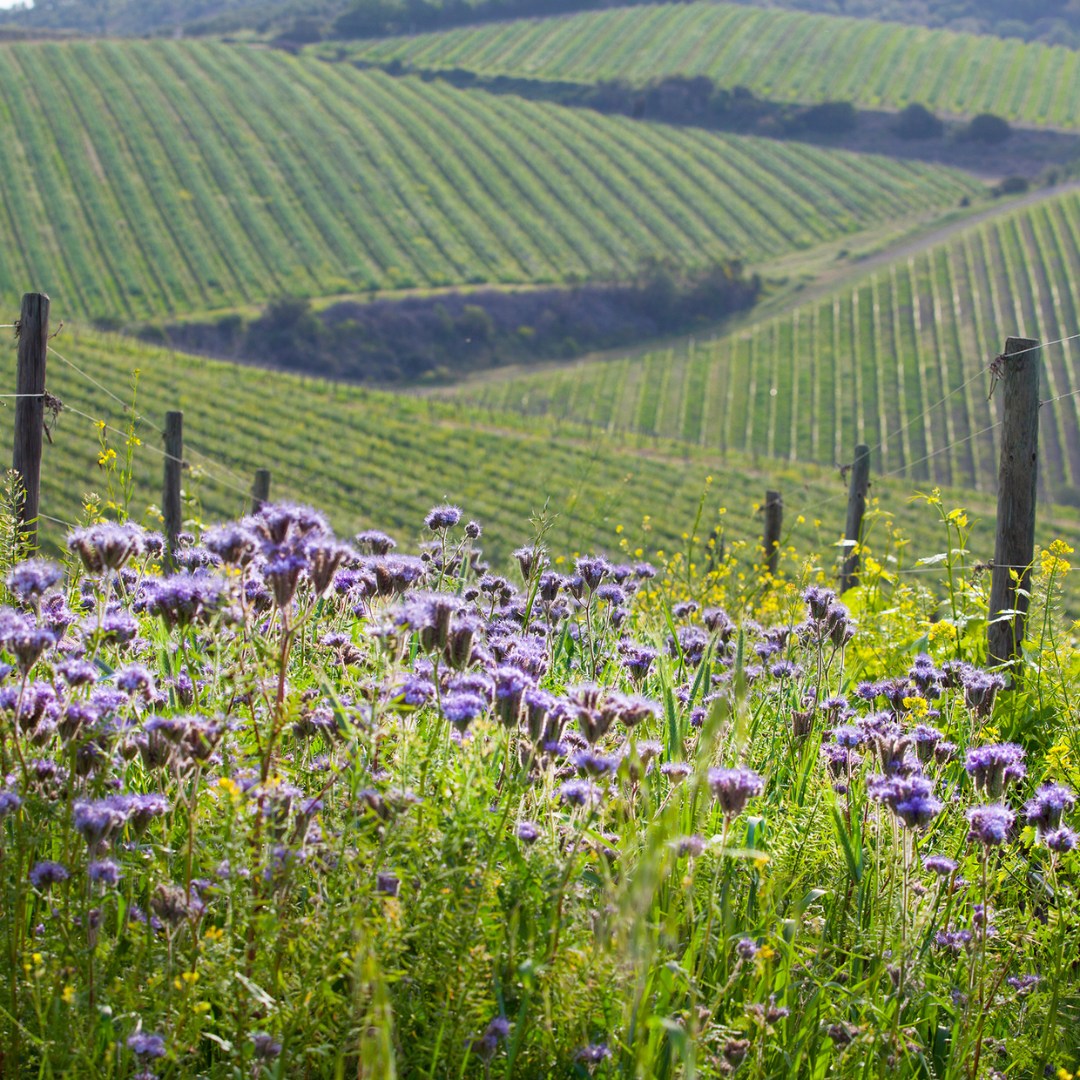
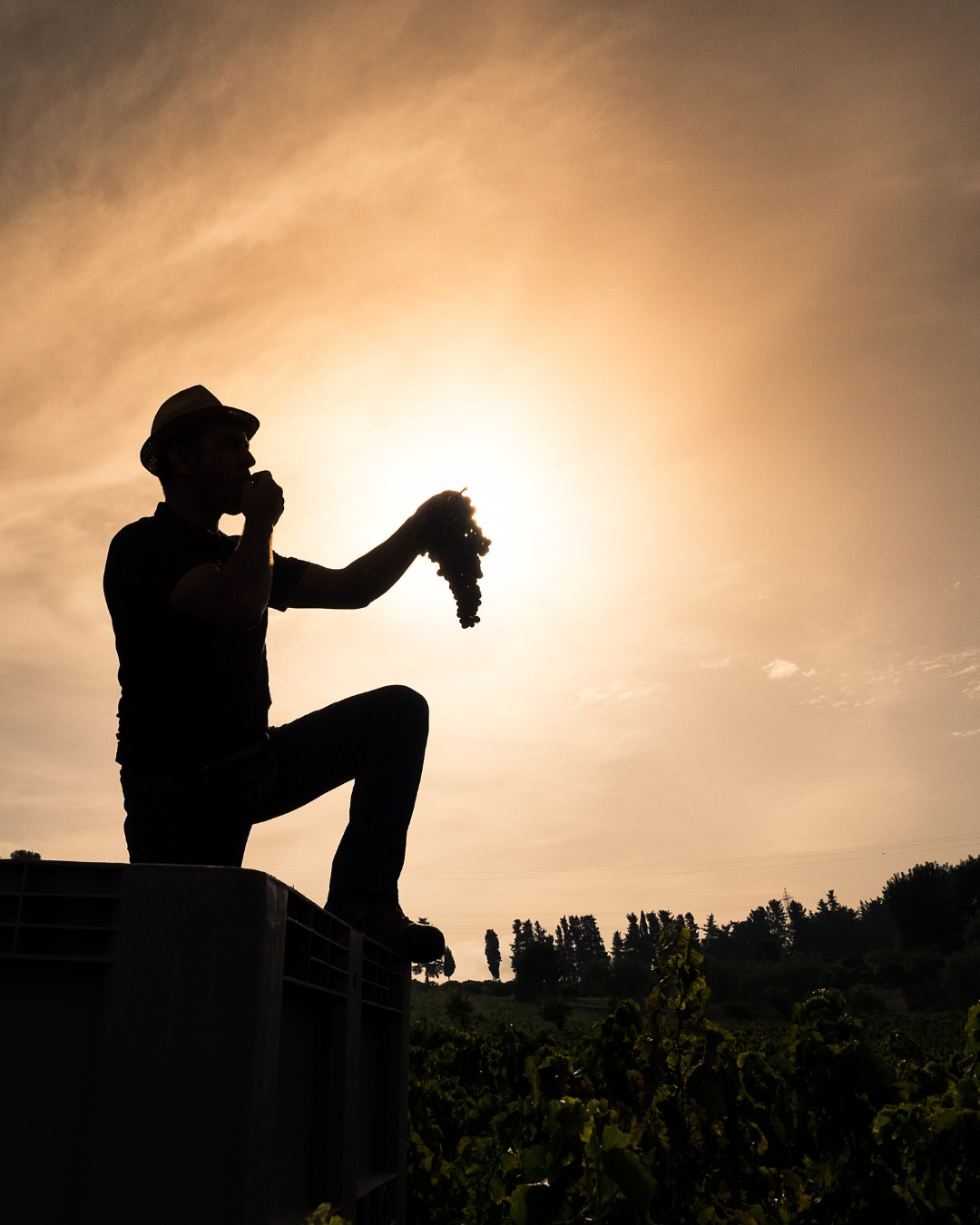
Person holding up a grape bunch Photo Credit: Marchesi Mazzei

The 2011 vintage marked the 30th anniversary of the first vintage of Concerto di Fonterutoli, so after 17 years, the Mazzei family released a tiny production, around 1,000 bottles of the 2011 Concerto di Fonterutoli, allowing the Sangiovese and Cabernet Sauvignon to play together in a beautiful concerto one more time in honor of the great matriarch of the family. To their surprise, there was a huge customer demand as the wine was a rare and distinctive expression of these varieties compared to what was being made in Bolgheri, and they brought back the wine permanently starting with the 2013 vintage; today, they celebrate releasing the 40th anniversary of the 2021.

Concerto di Fonterutoli represents a fantastic experiment between tradition and innovation with the blend of these two grapes and a breathtaking expression of two special parcels. The Sangiovese grapes come from some of their best parcels in the lower part of the Fonterutoli estate with rocky, chalky soil and the Cabernet comes from a tiny plot surrounded by an oak forest that has calcareous rocks, with both sitting around 1,150 feet of elevation; showcasing the individual purity and finesse of each variety that share a special bond of both having a affinity for terroir expression.

All those centuries ago, when that remarkable Florentine Renaissance man, Ser Lapo Mazzei, noted the greatness of the “Chianti” wine back in the late 1300s, he could have never imagined all the upheavals that would happen to his precious world, considered to be the center of culture during that time. And he certainly couldn’t imagine that future generations of his family would survive the darkest of times and be a part of elevating the region to worldwide acclaim.

Or maybe, just maybe, he did know, as he was, after all, a Renaissance man who foretold the glory of Chianti 600 years before it was recognized.

Link to original Forbes article: https://www.forbes.com/sites/cathrinetodd/2024/10/20/special-italian-wine-celebrates-comeback-after-great-customer-demand/

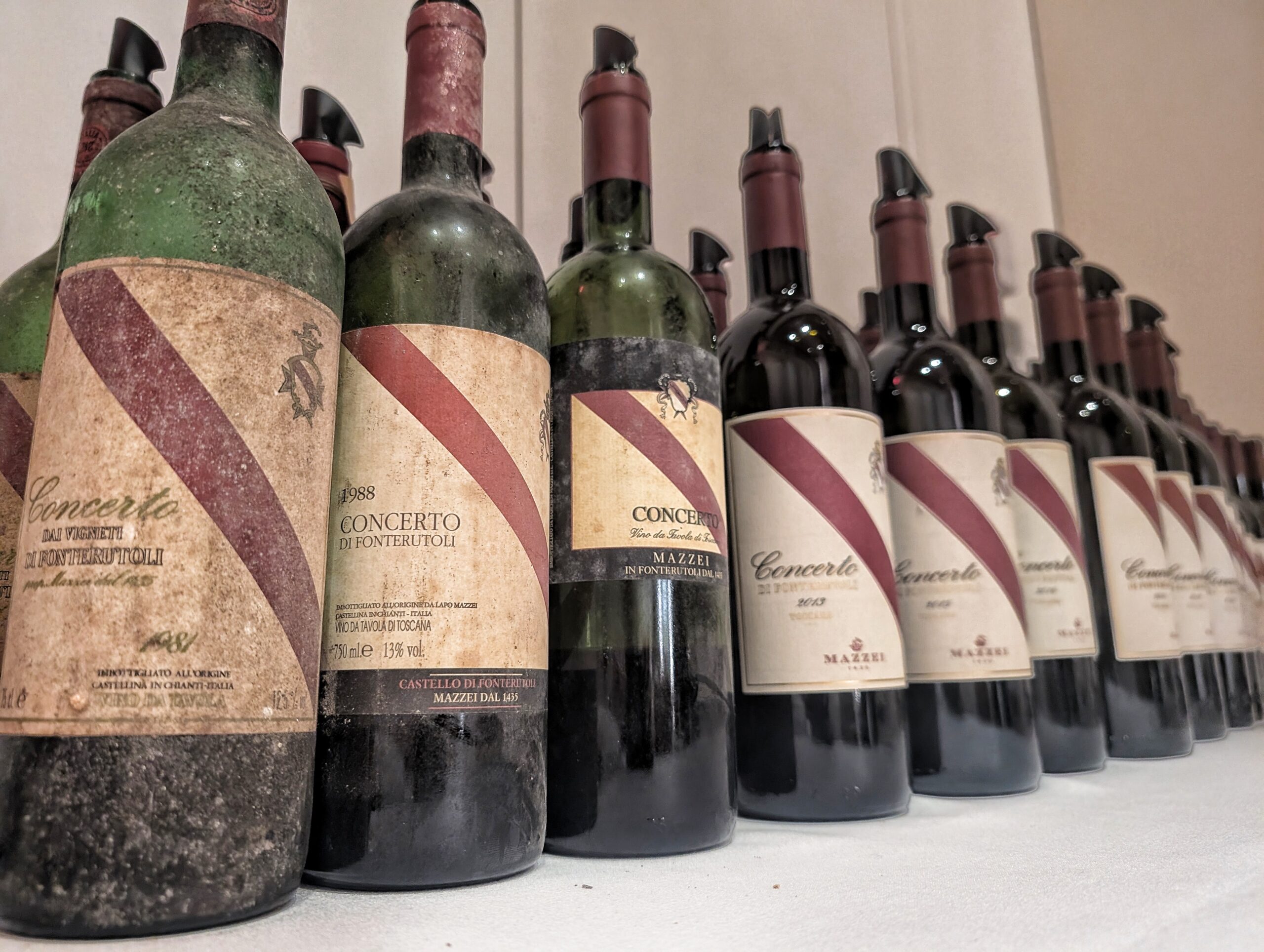
Mazzei Concerto di Fonterutoli
Photo Credit: Cathrine Todd

Vertical of Mazzei Concerto di Fonterutoli from 1981 to 2021:

1981 Mazzei Concerto di Fonterutoli, Tuscany, Italy: 80% Sangiovese and 20% Cabernet Sauvignon. Garnet color with a complex nose of tarragon and stewed black cherries with a hint of dried oregano and lots of acidity with an ultra-fine texture with electric tart cranberries on the palate with a long aromatic finish with a lingering note of star anise.

1988 Mazzei Concerto di Fonterutoli, Tuscany, Italy: 80% Sangiovese and 20% Cabernet Sauvignon. Deeper ruby color than the 1981 with a garnet rim with a rich nose with aromas of cocoa dust, a whiff of espresso and crushed rocks with a plush body and silky texture with blackberry fruit intermixed with baking spices.

1994 Mazzei Concerto di Fonterutoli, Tuscany, Italy: 80% Sangiovese and 20% Cabernet Sauvignon. An overall finesse to this beauty with a texture like fine lace with a multifaceted bouquet of rose petals and tar with juicy cassis flavors along the very long finish.

2013 Mazzei Concerto di Fonterutoli, Tuscany, Italy: 80% Sangiovese and 20% Cabernet Sauvignon. Stunning, pure ruby color that foreshadowed the incredible purity of fruit on the palate with fresh blueberries and warm raspberries with an underlying minerality that brings this wine to another level of elegance.

2015 Mazzei Concerto di Fonterutoli, Tuscany, Italy: 80% Sangiovese and 20% Cabernet Sauvignon. The round texture with supple tannins, like ribbons of silk caressing the palate, is impressive, with fresh tobacco notes that balance the generous fruit.

2016 Mazzei Concerto di Fonterutoli, Tuscany, Italy: 80% Sangiovese and 20% Cabernet Sauvignon. An intriguing nose with smoldering earth and graphite that has crunchy blackberry and red currant fruit on the palate with the enticing aroma of a lit cigar ruminating in one’s head for several seconds after the finish.

2018 Mazzei Concerto di Fonterutoli, Tuscany, Italy: 80% Sangiovese and 20% Cabernet Sauvignon. Roasted coffee beans with dark chocolate make a delicious start enhanced by flavors of cherry tart on the finish with lingering notes of dried herbs and a smoky minerality.

2019 Mazzei Concerto di Fonterutoli, Tuscany, Italy: 80% Sangiovese and 20% Cabernet Sauvignon. A nose that jolts one into the terroir of the vineyards with notes of tree bark, truffles and forest floor with a lovely richness on the mid-palate with delightful flavors of dark cherry scone and boysenberry cobbler with an exquisite texture that has an extraordinarily long finish that goes on and on and on.

2020 Mazzei Concerto di Fonterutoli, Tuscany, Italy: 80% Sangiovese and 20% Cabernet Sauvignon. A pretty nose of wildflowers and a breathtaking purity of raspberry fruit with an overall harmonious quality with hints of wet river stones with a bright acidity and darker brambly fruit on the palate that finishes with real precision.

2021 Mazzei Concerto di Fonterutoli, Tuscany, Italy: 80% Sangiovese and 20% Cabernet Sauvignon. Enchanting rose oil and cinnamon stick aromas lead into a velvety texture with red cherry compote intermixed with a very elegant chalky minerality note with an expressive prolonged finish with an impressive delineation of the aromas and flavors.

Posted in Dame Wine | Tagged , , | Leave a comment

New Wine From Rare Plot Within A Top European White Wine Region

For avid collectors of iconic and luxury white wines made from the Riesling grape variety, it will come as no surprise that these are some of the longest-lived wines, easily lasting 50 years in some cases under ideal cellaring conditions. Still, thankfully, for most, they are also wines that can give a profound, ethereal experience much earlier in life.

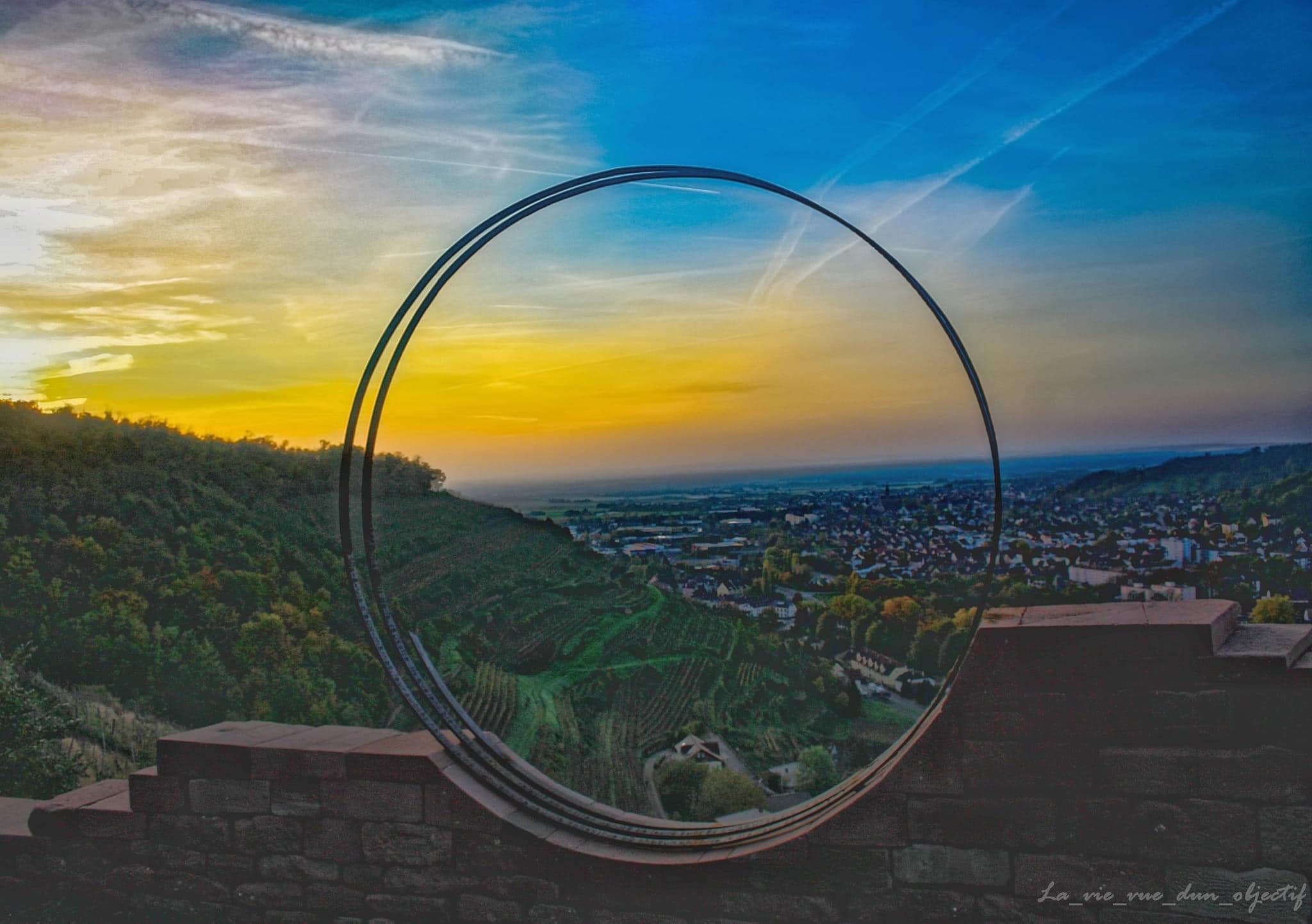
Ring sculpture at entrance of Grand Cru Kitterlé Photo Credit: Domaines Schlumberger

Three classic countries are known for iconic Riesling wines: Germany, Austria and France. The first two make complete sense, although the third could confuse people, as many well-known varieties trace their home to France, and Riesling might seem out of place. The northeast French region of Alsace (which borders Germany) has gone back and forth between German rule and French rule many times, still showing its German influence in this French area with the architecture-style of the homes, the food, German last names and their ability to make some of the best Riesling as well as producing three other “noble” white varieties.

And an outstanding wine producer, Domaines Schlumberger, one of the oldest wine houses in Alsace with the largest amount of Grand Cru vineyards, has released a special wine from a rare plot that is on its way to becoming the next iconic wine of Alsace: ‘Le Clos Saint Léger’ Grand Cru Riesling.

‘Le Clos Saint Léger’ Grand Cru Riesling

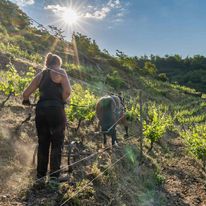
Horse plowing up the slope
Photo Credit:
Domaines Schlumberger

Hardcore Alsace wine collectors will note that a Grand Cru vineyard called ‘Le Clos Saint Léger’ does not exist in Alsace and they would be right. The name does not refer to a Grand Cru vineyard but a tiny named parcel that is also a monopole within the Grand Cru vineyard Kitterlé, Schluberger’s best site for Riesling. A monopole is a parcel that is owned entirely by one producer, in this case, Domaine Schlumberger, and this particular Grand Cru monopole reaches a height of over 1,000 feet high in elevation with terraced slopes at 50 degrees, hence why it is known as the “Calf Breaker,” as all of the vineyard management has to be done by hand and it is backbreaking work. The combination of the previously mentioned aspects of this parcel and the fact that volcanic rocks dominate the soils all contribute to producing meager yields that make highly complex, concentrated wines.

So, where does the name Le Clos Saint Léger come from? The name was inspired by the local Saint Léger Church, which had a monk in the 12th century write about the area as a “blessed valley, like a celestial jewel,” representing this wine’s exceptional qualities.

Schlumberger’s Legacy

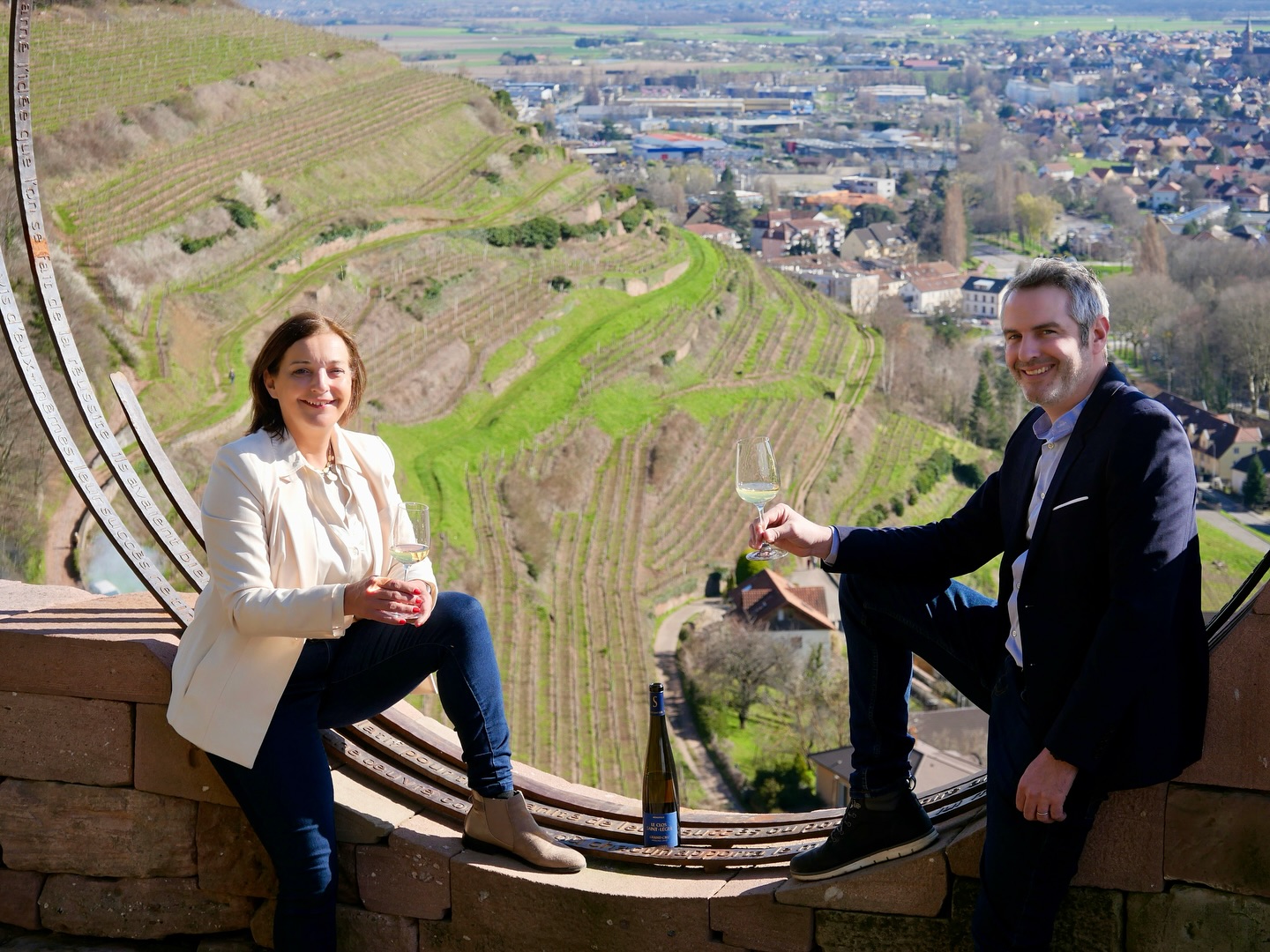
Séverine Schlumberger and
Thomas Schlumberger
Photo Credit: Domaines Schlumberger

Today, 7th-generation family co-owner Thomas Schlumberger runs Domaines Schlumberger with his sister Séverine, considering that his family has acquired the largest amount of Grand Cru vineyards with four different Grand Crus in total. They both realize they have a big responsibility and do not take it lightly. Thomas expresses deep gratitude for his family’s innate talent for identifying superior sites before the classified system existed and their resiliency to keep those precious sites under the toughest of circumstances.

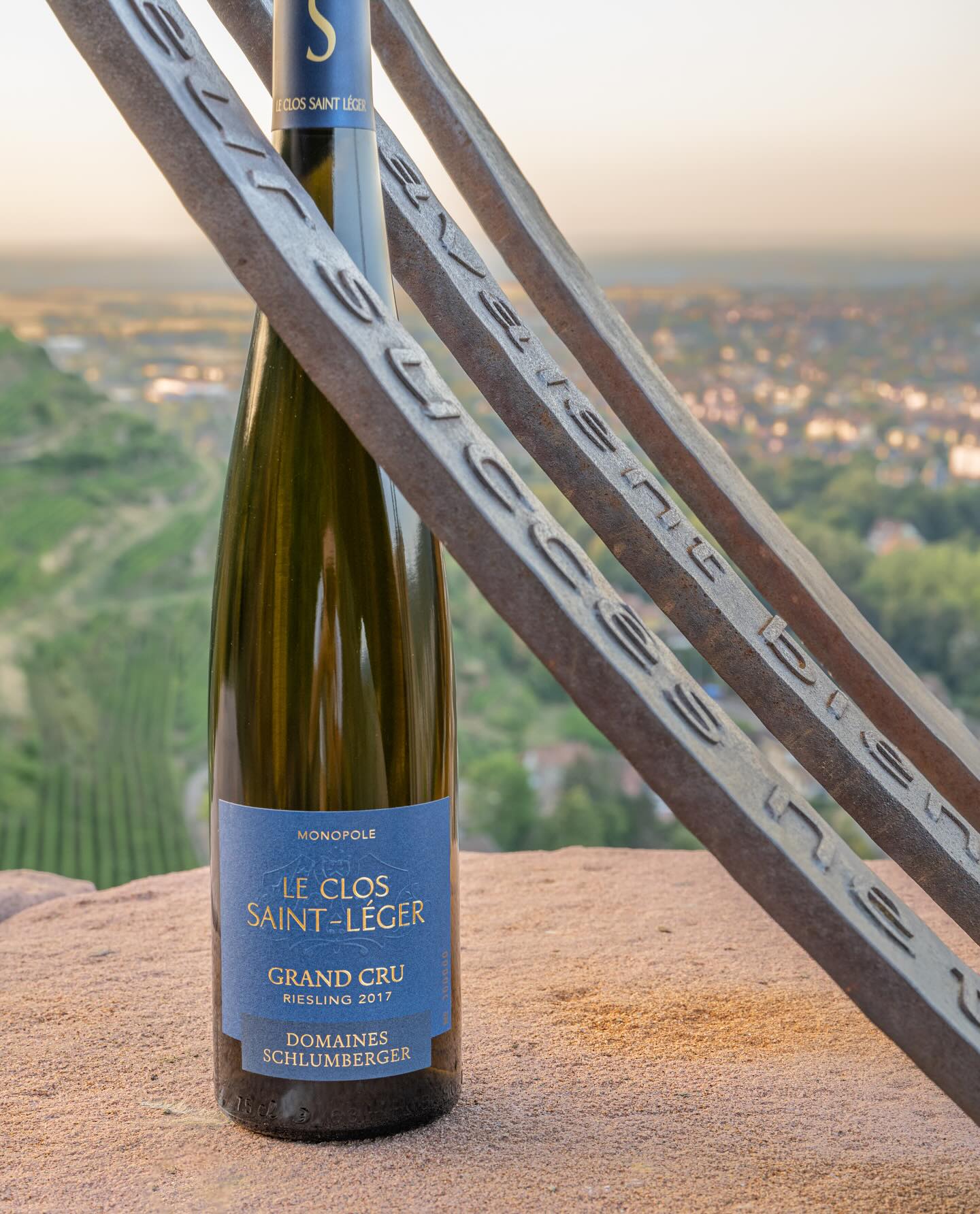
2017 Domaines Schlumberger ‘Le Clos Saint Léger’ Grand Cru Riesling
Photo Credit: Domaines Schlumberger

Thomas and his sister have moved to organic practices to bring more balance to the vines and introduced plowing with a horse (which is better for the environment and reduces soil compaction) and reduced yields, even though the tiny parcel of ‘Le Clos Saint Léger’ already has extremely low yields naturally. And when it comes to the release of the special bottling of ‘Le Clos Saint Léger,’ with 2017 being the inaugural vintage, they will hold back vintages until they are ready – Thomas did note that they think 2019 will be released before the 2018 as the 2018 seems like it will take a lot more time. He exclaimed that any vintage that doesn’t reach the highest standards will be skipped regarding the ‘Le Clos Saint Léger’ bottling.

The Schlumberger family owns 50 acres of the 64 acres of the Grand Cru Kitterlé area; hence, they are multi-generational experts of this stellar Grand Cru estate, knowing each tiny section of this spectacular site, which is only one of a couple of vineyard sites in Alsace that has this particular volcanic soil. So when they say that the ‘Le Clos Saint Léger’ parcel is the best site they have for Riesling, that is saying something remarkable as no one else has the amount of Grand Cru vineyards as they do, and they know most of the Grand Cru Kitterlé site intimately (an extraordinary site that demands extreme viticulture with steep slopes); a special section made by multi-generational experts within an already uniquely great vineyard equals the potential of an iconic wine in the making.

Link to original Forbes article: https://www.forbes.com/sites/cathrinetodd/2024/10/13/new-iconic-wine-from-rare-plot-within-a-top-european-white-wine-region/

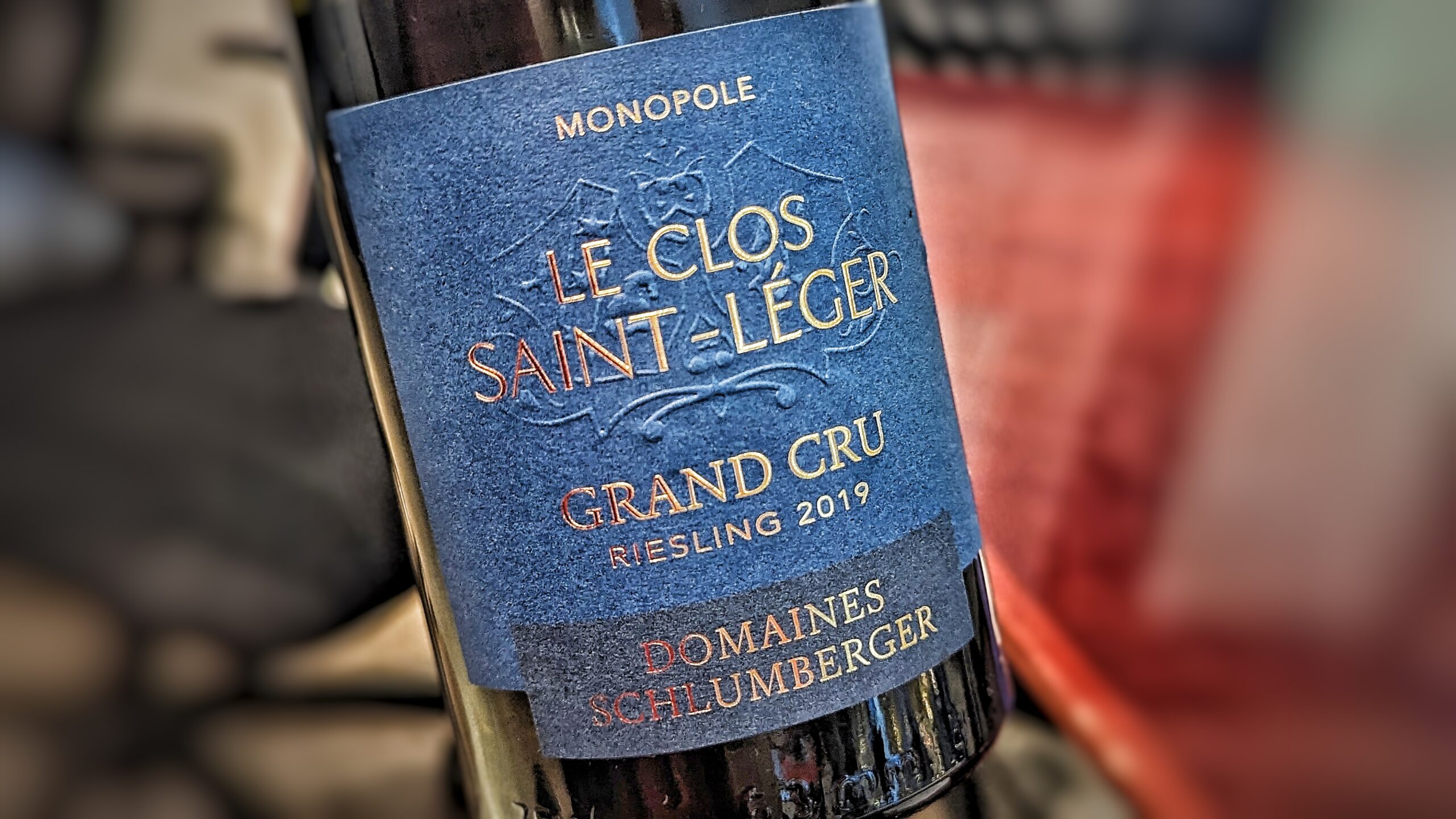
2019 Domaines Schlumberger ‘Le Clos Saint Léger’ Grand Cru Riesling
Photo Credit: Cathrine Todd

A couple of thousand bottles of the 2017 Domaines Schlumberger’ Le Clos Saint Léger’ Grand Cru Riesling have been made, with only 300 bottles sent to the U.S.

There are tasting notes for not only the 2017 below but also the 2018, 2019 and 2020, although only the 2017 is on the market in select places with the other vintages being cellared until they are ready to be released; each bottle is hand numbered.

2017 Domaines Schlumberger ‘Le Clos Saint Léger’ Grand Cru Riesling: 100% Riesling from ‘Le Clos Saint Léger’ parcel. A fantastic light golden color that glimmers in the light with intoxicating aromas of a smoky minerality, honeysuckle and incredible purity of fruit that has a beautiful richness on the palate balanced by mouthwatering acidity with a textural quality that gives it lift and precision on the long, expressive finish.

2018 Domaines Schlumberger ‘Le Clos Saint Léger’ Grand Cru Riesling: 100% Riesling from ‘Le Clos Saint Léger’ parcel. A nose that knocks one’s socks off with delectable notes of freshly made crêpes with lemon curd topped with candied violets that has a fierce backbone of saline minerality and bright acidity with hints of aniseeds dancing in the background.

2019 Domaines Schlumberger ‘Le Clos Saint Léger’ Grand Cru Riesling: 100% Riesling from ‘Le Clos Saint Léger’ parcel. A refined nose of wet river stones and juicy apricots with lots of dense fruit, such as caramel peaches, on the palate, balanced by zesty orange rind with a very structured body and a laser-focused finish with crisp acidity.

2020 Domaines Schlumberger ‘Le Clos Saint Léger’ Grand Cru Riesling: 100% Riesling from ‘Le Clos Saint Léger’ parcel. An exquisite bouquet of lemon blossom and a hint of jasmine with an underlying note of salty lemon confit and marked acidity bring fierce electricity to this wine with an incredible amount of tension.

Posted in Dame Wine | Tagged , , | Leave a comment

Top Italian White Wines, According To A New York City Master Sommelier

Corbuzz Wine Bar in NYC
Photo Credit: Corkbuzz Restaurant & Wine Bar

When Master Sommelier Laura Maniec recommends a wine region that always over-delivers, one listens, as she has been a superstar in the New York City area for well over a decade. One of her numerous accolades was becoming one of 2013’s “Sommeliers of the Year” by Food & Wine Magazine. Today, she is the owner and CEO of Corkbuzz, a NYC wine bar with anywhere up to 50 wines by the glass and four locations with special events and even classes. In a city where it is near impossible to survive past a handful of years, after over 12 years since her Union Square flagship location opened, it is still considered one of the best wine bars in NYC.

Regarding Laura’s go-to region for Italian white wines, she goes to the northeast region of Friuli-Venezia Giulia, with Collio being a particular favorite.

“This wine-producing region was one of the first for white wines in Italy that I thought of as premium wines,” noted Laura. Before she founded Corkbuzz, Laura was the wine and spirits director of a large restaurant group that once had four fine-dining Italian restaurants. The wine region Friuli-Venezia Giulia, “or more importantly,” she emphasized, the small high-quality designated area called Collio within the region was where she always went for expensive, premium white Italian wines.

Although they still over-delivered in the premium price category as the prices might have suggested that one is paying for only a very good wine, Collio white wines delivered a much higher outstanding quality, especially compared to other fine white wines from other countries that cost significantly more. Laura knew if a customer wanted an “intense, elegant white wine from Italy” that Collio was the ideal area to suggest. 

Collio DOC

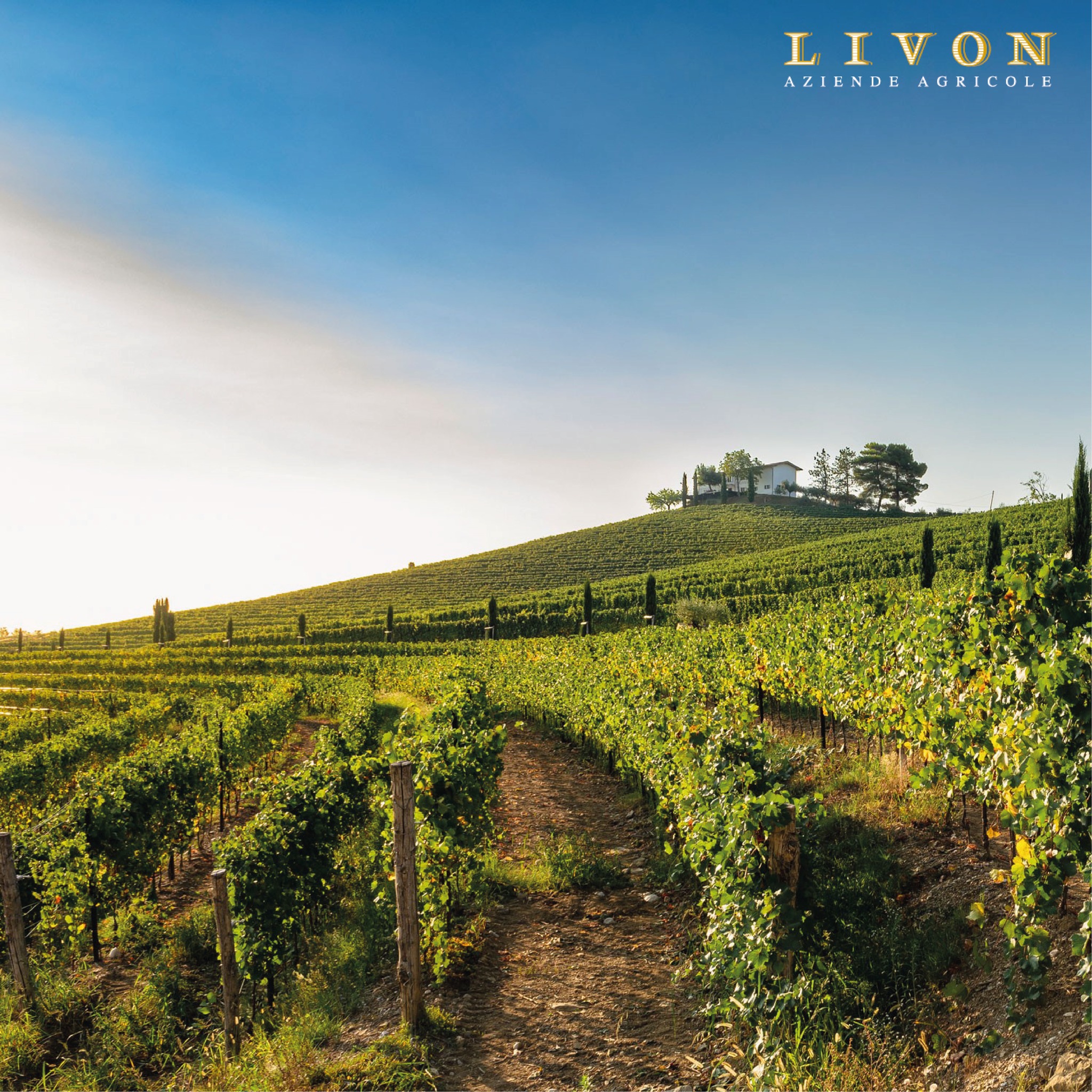
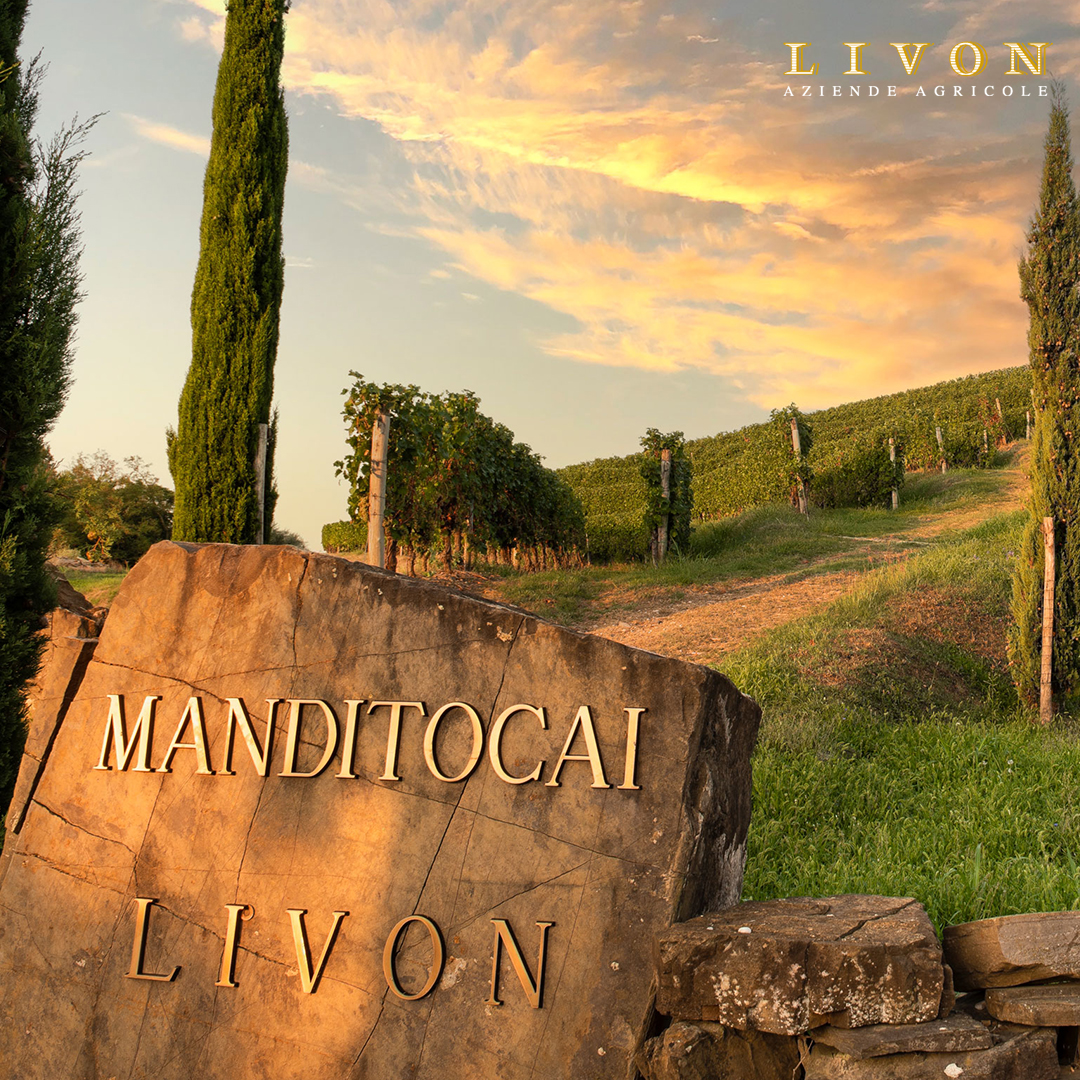
Livon hillside vineyards
Photo Credit:
Azienda Agricola Livon

The winegrowing area of Collio, with the status of DOC as it is deemed a high-quality Italian wine appellation, has a half-moon shape that can be noticed on a map. It enjoys vineyards on slopes gifted with lots of sunlight and winds from the Adriatic Sea that carry warm temperatures that help to grow white wine grapes with concentration, depth, and complexity, with the cooler nights retaining acidity and aromatics. Natural barriers, such as a multitude of forests and the Julian Alps, protect the vineyards from cold winds that could hamper grape maturation. A special quality to the profile of these Collio white wines is the combination of richness with typical notes of minerality and salinity, as usually it is the lean, fiercely acidic wines that display mineral and saline notes. However, the soils of Collio are mainly made up of stratified marl and sandstone, which they call “ponca,” formed around 50 million years ago and are noted for giving it this saline mineral quality.

Livon hilltop vineyard
Photo Credit:
Azienda Agricola Livon

Around a dozen white grape varieties are grown in Collio, including native varieties such as Friulano and Ribolla Gialla and others such as Pinot Bianco and Pinot Grigio. Yet this is not the Pinot Grigio that dominates the marketplace as it is anything but simple and quaffable – a Collio DOC Pinot Grigio will be multifaceted with incredible depth of flavor and multilayered aromas; this Pinot Grigio makes the case that it is a noble variety meant for premium wine, so for those who want to up their Pinot Grigio game, there is no better place than Collio.

The area has a wealth of history and culture as it borders Slovenia and Austria and was influenced by different iterations of empires, so at various times in the past, the land was controlled by different governing bodies. Many wine producers’ ancestry is a mix of Slovenian, Austrian and Italian cultures, yet they are all bonded as a premium Italian white wine region (when Italian red wines dominate the premium wine conversations) that would never give up on the idea of investing in the highest quality wines, even when the world had no interest.

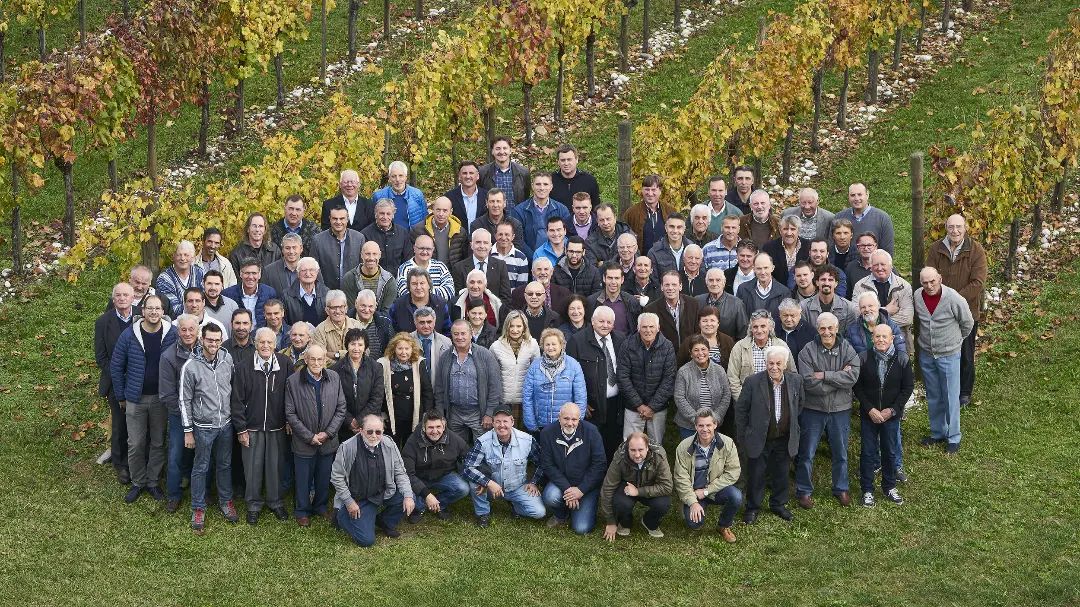
Members of Cantina Produttori Cormòns
Photo Credit: Cantina Produttori Cormòns

Some of these unrelenting wine warriors are the Muzic family who was first established in 1927, surviving devastating destruction during World War II and today they still have some plots that are 80-year-old vineyards, a cooperative called Cantina Produttori Cormòns that is operated by 120 local winemakers who call themselves a “family of families,” pooling money and resources so that they can afford the ideal practices in the vineyards and cellars, and the Livon family, who a month ago just celebrated their 60th anniversary as the founder’s children and grandchildren are all united in keeping the family passion and dream alive, even going to such great lengths as cellaring some of their top white wines for a few more years before they hit the market, such as their recently released 2021 Friulano.

Ideal Pairing

Laura Maniec spoke about the versatility of Collio white wines in pairing them with food, another reason why it is a go-to for her. But in other ways, it is a great pairing partner for Laura as she started Corkbuzz out of a mission to offer various wine experiences – a deep dive with classes, magical events for special occasions or a food and wine combination that blows one’s mind. Wine wisdom can be the purely sensory experience of a great lineup of wines, or it can be an abundance of knowledge about culture, technique and family stories or a little of both. The wines of Collio can over-deliver in every aspect and transcend most Italian white wine experiences as they awaken the wine drinker’s mind to a whole other level of possibilities.

Link to original Forbes article: https://www.forbes.com/sites/cathrinetodd/2024/10/04/top-italian-white-wines-according-to-nyc-master-sommelier/

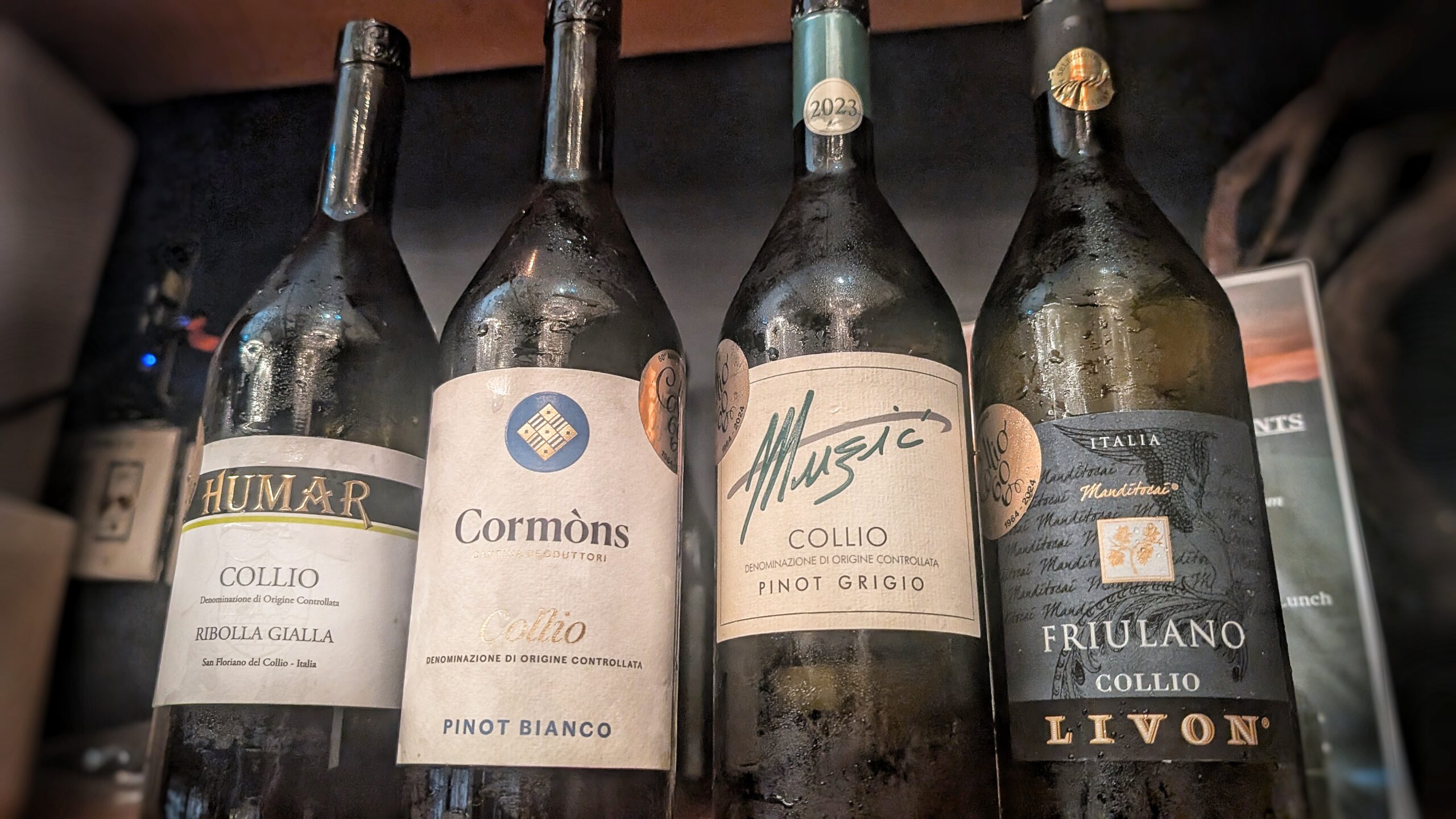
Lineup of some of the Collio wines
Photo Credit: Cathrine Todd

2023 Humar, Ribolla Gialla, Collio DOC, Friuli-Venezia Giulia, Italy: 100% Ribolla Gialla. A beautiful Ribolla Gialla wine that shows the lovely qualities of the variety such as floral notes that lean towards citrus blossom and juicy peach flavors on the palate with marked acidity and finishing with a saline minerality.

2023 Cantina Produttori Cormòns, Pinot Bianco, Collio DOC, Friuli-Venezia Giulia, Italy: 100% Pinot Bianco. There are some Pinot Bianco that could go head to head with some of the top elegant Chardonnay wines of the world as it has real weight on the palate that is mouth-filling with a softer acidity than the Ribolla Gialla and the layers of rich fruit flavors such as apple tart and lemon meringue pie has a backbone of intense minerality that takes this wine to the next level.

2023 Muzic, Pinot Grigio, Collio DOC, Friuli-Venezia Giulia, Italy: 100% Pinot Grigio. An outstanding example of a high-quality Pinot Grigio, and yes, they do exist! Complex nose of Brazil nut, wet stones and hint of white pepper with delectable plush apricot fruit and pear crisp with bright acidity and a long, flavorful finish.

Livon Manditocai vineyard
Photo Credit: Azienda Agricola Livon

2021 Livon, Friulano, Manditocai Vineyard, Collio DOC, Friuli-Venezia Giulia, Italy: 100% Friulano. Friulano is known as the grape variety which is the wine of Friuli-Venezia Giulia’s heart. An enticing nose with aniseeds, almond paste and honeysuckle with a real zingy quality on the palate, along with lemon sorbet flavors and citrus peel that give it an overall refreshing quality.

2023 Ronco Blanchis, Sauvignon Blanc, Collio DOC, Friuli-Venezia Giulia, Italy: 100% Sauvignon Blanc. Such a remarkable purity of fruit with a tropical flavor of ripe mango that dominates with a hint of fresh sage leaf and good weight on the midpalate that balances out the crisp acidity.

2021 Ferlat, Collio Bianco, Collio DOC, Friuli-Venezia Giulia, Italy: Although Collio Bianco can be a blend of varieties, in this case it is 100% Pinot Bianco. Delicious baked apple pie with hazelnut and baking spices with the lingering aromas of warm croissants.

2015 Castello di Spessa, ‘San Serff’ Collio Bianco, Collio DOC, Friuli-Venezia Giulia, Italy: The blend for this wine is not disclosed. This is a wonderful example of how well these Collio wines age, with almost a decade on this wine. A multifaceted nose with a smoky minerality, dried flowers and beeswax with lemon confit on the palate with pineapple upside-down cake and a powerful, focused finish that goes on and on.

Posted in Dame Wine | Tagged , | Leave a comment

Prestigious Wine Estate’s First Vintage Marks Leaving An Esteemed Bordeaux Classification

Panic and turmoil bubbled up in the exquisitely picturesque town filled with medieval Romanesque buildings. In this town, Saint-Émilion, tucked away in the Right Bank of the Bordeaux wine region of France, there were going to be three significant omissions in the distinguished St.-Émilion wine classification, established in 1955. Three out of the four top-ranking wine estates had decided to remove themselves from the classification and one in particular, Château Angélus, was the only estate to work itself up all the different levels of the classification, increasing quality to such a degree that it was finally listed as a Premier Grand Cru Classé A in 2012.

Château Angélus is celebrating the liberation from the classification by placing a special edition of the 2022 vintage on the market as a future that will arrive in 2025. And considering that 2022 is an excellent vintage for Saint-Émilion estates in particular excelling as well as a unique bottling design for the 2022 Château Angélus, featuring real 20-carat gold and mother of pearl, it is going to be a must-have bottle for Bordeaux collectors. Yet luckily, the second wine of Château Angélus, Le Carillon d’Angélus, will be released in November of this year.

Stéphanie de Boüard-Rivoal with her father Hubert de Boüard de Laforest
Photo Credit: Château Angélus

However, there have been many controversies throughout the years, as the 2006 classification was challenged by a few producers who were demoted. Then, in 2012, a few more producers claimed there were procedural errors in the selection process. Although Château Angélus climbed to the highest status of the classification, Premiers Grand Crus Classés A, it was time for them to leave: fellow estate owners were crossing the street to avoid each other in the beautiful town of Saint-Émilion because of bitter resentment and the owner/winemaker of Château Angélus, Hubert de Boüard de Laforest, and his daughter Stéphanie, felt that they didn’t want to be constrained by the classification in regards to expressing the pure terroir for each vintage. Hubert still respects the St.-Émilion Classification and thought they had always done a good job but the contentiousness that has only grown over time in his beloved birthplace of Saint-Émilion was a toxic energy taking too much focus away from his estate, so it was time to leave.

St.-Émilion Classification

Bell on top of Château Angélus Photo Credit: Château Angélus

The most famous wine classification is the 1855 Bordeaux Classification, which only lists wines located on the Left Bank, such as Château Lafite Rothschild. The Right Bank of the Bordeaux wine region, specifically in St.-Émilion, created its own classification in 1955. Instead of having the classification carved in stone (with a couple of exceptions), they decided to reevaluate the classified châteaux by checking their vineyards and a decade of vintages of their wines every ten years; it is the only classified wine area in Bordeaux that does such constant rigorous work in making sure that each spot is continually earned.

At the time, Château Angélus noted in a press release, “Once a source of progress, the Saint-Émilion classification has become a vehicle for antagonism and instability.” While they regretted the “deleterious context,” they were given no choice but to take “note of it.” 

A New Milestone

The de Boüard family has been in Bordeaux since the mid-1500s, and in the early 1900s, they acquired vineyards in St.-Émilion that included the section of vines that is known as Angélus. That section was always known to have outstanding potential but it is recognized that the Château Angélus wines did not live up to that potential until Hubert came back to his family’s estate in the 1980s after studying with the legendary enologist and researcher Émile Peynaud. The 1989 vintage was an excellent success for Château Angélus and many wine critics saw it as a rising star. Today, it is a well-established star that has reached the ultimate height in classification status.

Horse with Château Angélus
Photo Credit: Château Angélus

When it comes to the presentation of the design of the bottles, there have been three very important renditions that are rooted in the soul of Château Angélus. There is the historical label with the bell on it, which is known on the bottles of most vintages, as Château Angélus is in a natural amphitheater overlooked by three Saint-Émilion churches that would ring their angelus bells during time of prayer, letting the people working in the vineyards know it was a time for a short rest to reflect on the meaning of living a purposeful life.

Today, that bell holds an important meaning for Hubert and his daughter Stéphanie as it reminds them that they should never lose sight of the real work needed to make outstanding wines and always keep their minds steady on that primary purpose.

***Link to original Forbes article: https://www.forbes.com/sites/cathrinetodd/2024/09/29/prestigious-wine-estates-first-vintage-marks-leaving-an-esteemed-bordeaux-classification/

2022 Château Angélus
Photo Credit: Château Angélus

The second bottling edition was for the 2012 vintage, which celebrated their Premiers Grand Crus Classés A promotion in the Saint-Émilion classification and it was a stunning bottle with a raised gold inscription replacing the traditional paper label. Now, with the 2022 bottling, featuring real 20-carat gold and mother of pearl designed to represent astral constellations as in the words of Hubert’s daughter, Stéphanie de Boüard-Rivoal, illustrates their “unique path by freeing” Château Angélus from “certain constraints.” This bottling marks them entering another dimension that places them on a “quest for excellence” down to every little detail.

In a way, they have come full circle with a fierce recommitment to the values that Château Angélus was founded on, relentless work to accomplish a higher goal greater than any one person or organization. But today, their vineyards are managed with precise, organic practices spearheaded by Stéphanie and a high-tech winery with minimal intervention methods employed. Just like Hubert brought a new era for Château Angélus when he first started, his daughter has been doing the same since she joined full-time in 2012. Hubert made Château Angélus a star, and it seems that Stéphanie is aiming beyond the stars.

Posted in Dame Wine | Tagged , , | Leave a comment

The Wine Vintages That Overdeliver From Tuscan Red Wine Producer Grattamacco

The growing season of 2008 in the now famous area of Bolgheri, in Tuscany, Italy, was indeed a pleasure for chief winemaker Luca Marrone in every way, especially compared to his first vintage at Grattamacco, the pioneering, admirable Super Tuscan wine producer. He was unlucky to first deal with the extremely hot 2003 vintage when European producers weren’t used to such high temperatures. But in a way, 2003 threw him in the deep end right from the beginning and prepared him for anything that would come in the future, and a winemaker never knows what each year will bring. Five years after the 2008 growing season, with its moderate temperatures, 2013 turned out to be another gift to Luca, as not only did it avoid giving him the stress of a 2003 vintage but the wines showcased an incredible purity and vibrancy that made them stunning after at least 11 years worth of aging, in the case of the 2008 bottling, 16 years later.

Luca Marrone
Photo Credit: Stefano Casati

Yet both 2008 and 2013 vintages were underrated, in Luca’s opinion, and as one tastes these wines today, their outstanding qualities certainly bear out the truth.

As Luca Marrone learned from one of his mentors, Giulio Gambelli, considered one of the great masters of the Sangiovese grape yet also taught profound lessons that could be applied to working with various grape varieties, that one should never be immediately wowed by overwhelming power in a wine but to strive to make wines that didn’t wear a heavy mask; as if it had nothing to hide and everything to give.

Looking To Nature

“In nature, you always have the answer,” Gambelli would tell Luca whenever he felt that a wine was missing something.

Although the 2008 and 2013 vintages were exactly the pure expressions of wines that Gambelli would think of as being the best, since they weren’t very ripe, powerfully structured wines, they were still undervalued as they didn’t give an immediate punch on release that creates a lot of hype and buzz about a vintage.

Punching down the grape skins in the Grattamacco winery
Photo Credit: Stefano Casati

In the case of 2013, Luca thought there was too little structure, and despite being overtly enthusiastic about the remarkable purity of fruit, for balance, he needed to give the wines a small amount of tannic structure. Now, there are a few ways a winemaker can add tannins to the wines, but when it came to Luca’s choice, he first thought about what Gambelli said about looking to nature when a winemaker is trying to balance the wine. And so, Luca used a method based on how the Ripasso wines are made in the prestigious Italian wine area of Valpolicella, which is in the Veneto region.

The Ripasso wines use a double fermentation technique where the first fermentation turns the grapes into wine. Then, that wine is placed through a second fermentation process that is activated by adding skins from previous wine production. But instead of using previously fermented skins, Luca sacrificed some of his top-quality grapes to add a multifaceted structure to his 2013 wines, and the finished product is outstanding.

Expanding To Higher Vineyards

White clay in Grattamacco vineyards
Photo Credit: ColleMassari Wine Estates

Grattamacco is known for its vineyards on Grattamacco Hill, which is about 330 feet in elevation and has a significant dominance of white clay in the soil. Besides the clay being highly beneficial during the hot vintages, as it has a great capacity to retain water, it also gives a unique quality to the Grattamacco wines that proved itself while it was part of a three year research project at U.C. Davis which showed a distinct difference in analysis between the grapes from Grattamacco compared to other top Bolgheri wine producers.

Yet their rare terroir has been expanded by adding a special plot that Grattamacco bought, 325 feet above the Grattamacco Hill, a place with its own microclimate. It is a tiny haven that is called Casa Vecchia, where they have planted 25 acres of vines starting in 1998, surrounded by forests, being one of the first to pioneer this site that grows grapes with a harmonious quality, incredible freshness, intense power and aromatic complexity. A few other top Bolgheri wine producers have planted a few acres here and there but there is no more room to plant, and Grattamacco has planted the most vines in this little oasis.

Grattamacco vineyards are located on some of the highest hills in Bolgheri
Photo Credit: Stefano Casati

As the vines have matured in Casa Vecchia, Luca has used more and more in their top red wine, the Bolgheri Rosso Superiore.

Pioneering To Reinforce Values

Luca talked about the rare qualities of his boss, the owner of Grattamacco, Claudio Tipa, as a man who is not afraid to take giant leaps to pioneer a new path, raising the bar for higher quality. Yet, he never strays from the values of the original owner, Piermario Meletti Cavallari. As Piermario reached his golden years, he had no one to take over his precious Grattamacco estate so he decided to lease it for ten years to Claudio, who was extremely interested in the property in 2002. Within five years, Piermario could see the passion Claudio placed into the estate, making fantastic wines by going to significant lengths within the vineyards and winery. Piermario sold Claudio the estate with still five more years of his lease to go, as he had found the right person to carry on his legacy.

Whether it is working organically and biodynamically, searching for special sites, sacrificing grapes to allow a very good vintage to become an excellent one or keeping the wine fresh and elegant during trends for big, overripe wines, Claudio Tipa allows Luca to do whatever it takes to live up to the original owner’s dream. And it is a rare man who pioneers for the sake of someone else’s legacy instead of his own ego, as Claudio knows Grattamacco is bigger than any one person. It takes a rare person to truly appreciate a rare estate, where even the vintages with less hype can be superstars in their own right.

Link to original Forbes article: https://www.forbes.com/sites/cathrinetodd/2024/09/20/the-wine-vintages-that-over-deliver-from-tuscan-red-wine-producer/

Grattamacco Vertical
Photo Credit: Cathrine Todd

1991 Grattamacco, Vino da Tavola di Castagneto, Bolgheri, Tuscany: The classification which is known today as Bolgheri Rosso Superiore wasn’t approved until 1994, hence why this 1991 is under the classification of Vino da Tavola di Castagneto. 50% Cabernet Sauvignon and 50% Sangiovese. The 1991 is a great example of an underrated vintage that has held up beautifully for 33 years. It has stunning vitality and overall freshness with layers of complex notes such as broken earth, dried herbs and worn leather balanced with pure red cherry fruit flavors and a saline finish. An underrated vintage that over delivers.

1995 Grattamacco, Bolgheri Rosso Superiore, Bolgheri, Tuscany: Blend of 65% Cabernet Sauvignon, 20% Merlot and 15% Sangiovese. 1995 was one of the top three vintages of the ’90s and it is undoubtedly a stunner with an aromatic nose filled with a bouquet of dried flowers and hints of incense with a plusher body with rich red cherry pie and blackberry preserve flavors yet it does not seem better than the 1991, only different.

2008 Grattamacco, Bolgheri Superiore, Bolgheri, Tuscany: Blend of 65% Cabernet Sauvignon, 20% Merlot and 15% Sangiovese. One of the underrated vintages with cooler weather and no extreme events during the growing season with a lovely brightness with aromas of blackcurrant leaves and freshly picked raspberries with an underlying note of stony minerality. An underrated vintage that over delivers.

2009 Grattamacco, Bolgheri Superiore, Bolgheri, Tuscany: Blend of 65% Cabernet Sauvignon, 20% Merlot and 15% Sangiovese. 2009 was a very warm, dry summer but the white clay in the Grattamacco vineyards helped as it had retained plenty of water from the previous rain to keep the vines healthy. Dark, brooding fruit with layers of licorice and lavender sea salt with lots of density on the palate and rich blueberry tart flavors.

2012 Grattamacco, Bolgheri Superiore, Bolgheri, Tuscany : Blend of 65% Cabernet Sauvignon, 20% Merlot and 15% Sangiovese. A hot year, but Grattamacco was still able to produce wines with freshness and vitality, and Luca says it indicates how well their organic and biodynamic practices keep the vines balanced even in extreme years. Opulent mulberry compote and blackberry scones with touches of fresh tarragon with lush texture yet lots of mouthwatering acidity.

2013 Grattamacco, Bolgheri Superiore, Bolgheri, Tuscany: Blend of 65% Cabernet Sauvignon, 20% Merlot and 15% Sangiovese. A cooler vintage that was underrated like the 2008 but shows grace and aristocratic-level elegance with vibrant red raspberries, a touch of spice with rose oil and finely etched tannins that has a long finish with an overall finesse. An underrated vintage that over delivers.

2016 Grattamacco, Bolgheri Superiore, Bolgheri, Tuscany: Blend of 65% Cabernet Sauvignon, 20% Merlot and 15% Sangiovese. A very warm vintage that made ripe, big, powerful wines yet the Grattamacco freshness and precision is still present. Deliciously decadent with black cherry cobbler flavors and baking spices balanced by complex notes of asphalt and graphite intermixed with wild Mediterranean herbs with an ultra-smooth texture and long length of flavor.

2021 Grattamacco, Bolgheri Superiore, Bolgheri, Tuscany: Blend of 65% Cabernet Sauvignon, 20% Merlot and 15% Sangiovese. Wine Spectator has already said that the 2021 vintage, “might be the best vintage in Tuscany’s modern era,” and this wine is already showing an outstanding quality with captivating aromas of smoldering earth, forest floor and candied violets combined with tantalizing flavors of cherries jubilee and blackberry syrup drizzled over spice cake with a silky texture and ultra-fine tannins with a very long finish.

Posted in Dame Wine | Tagged , | Leave a comment